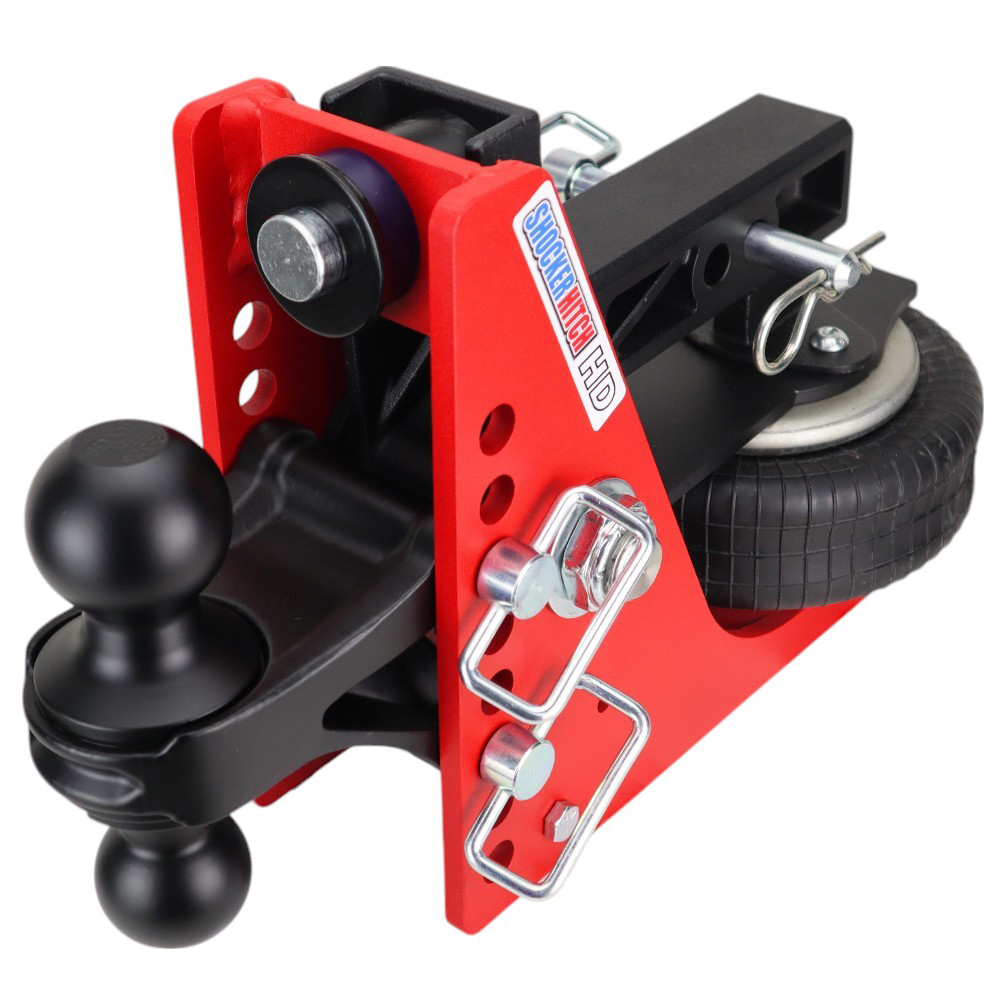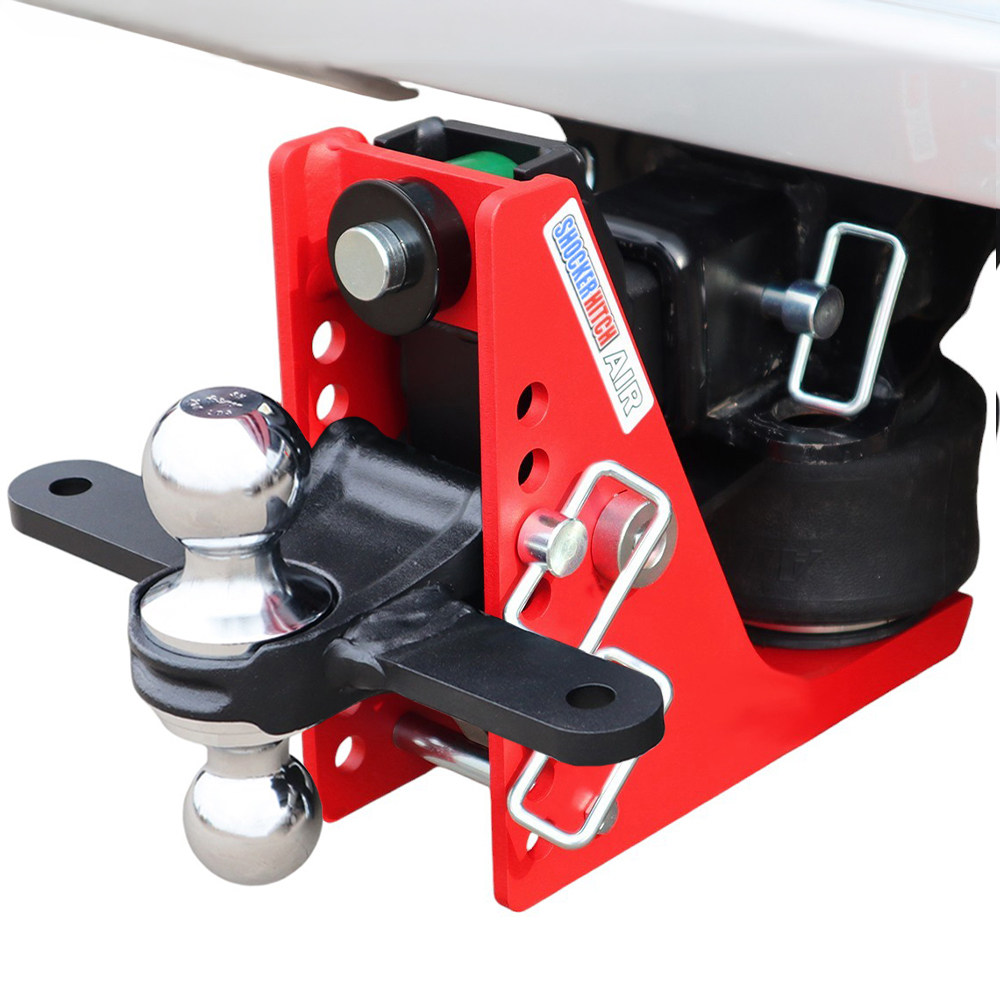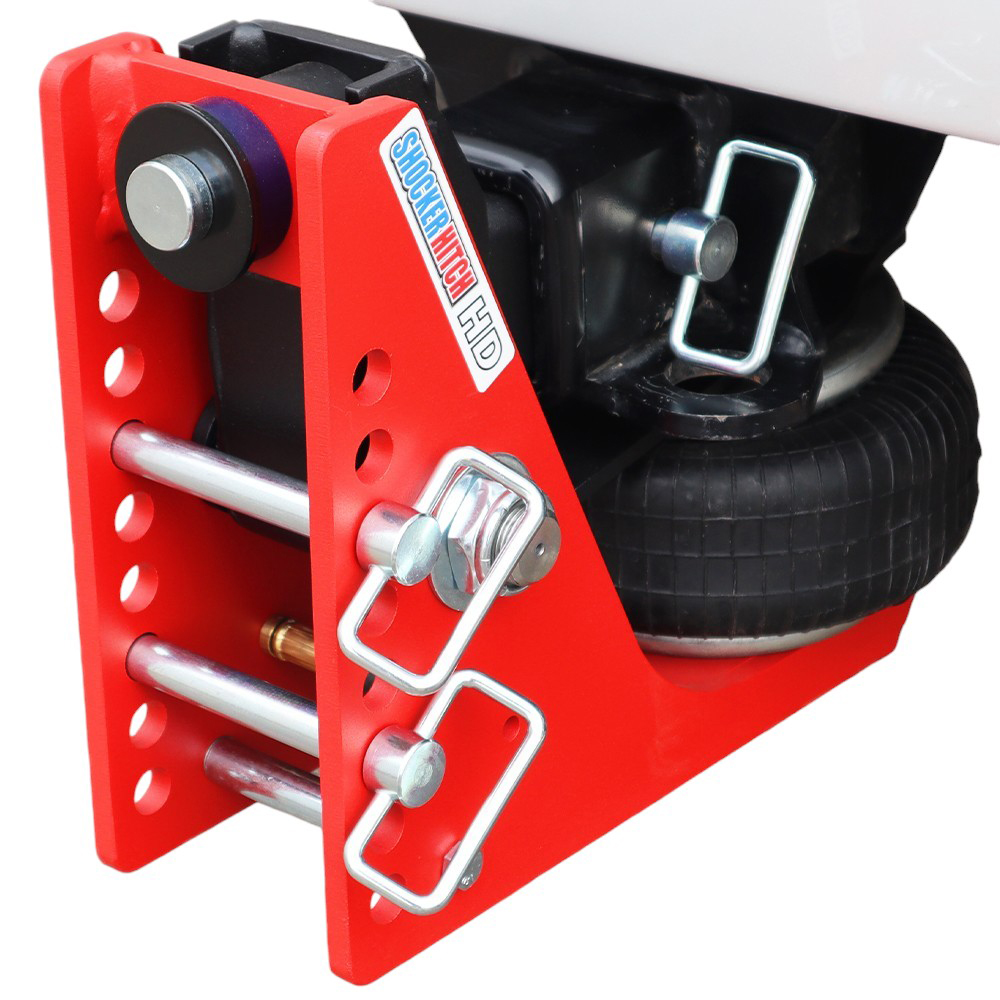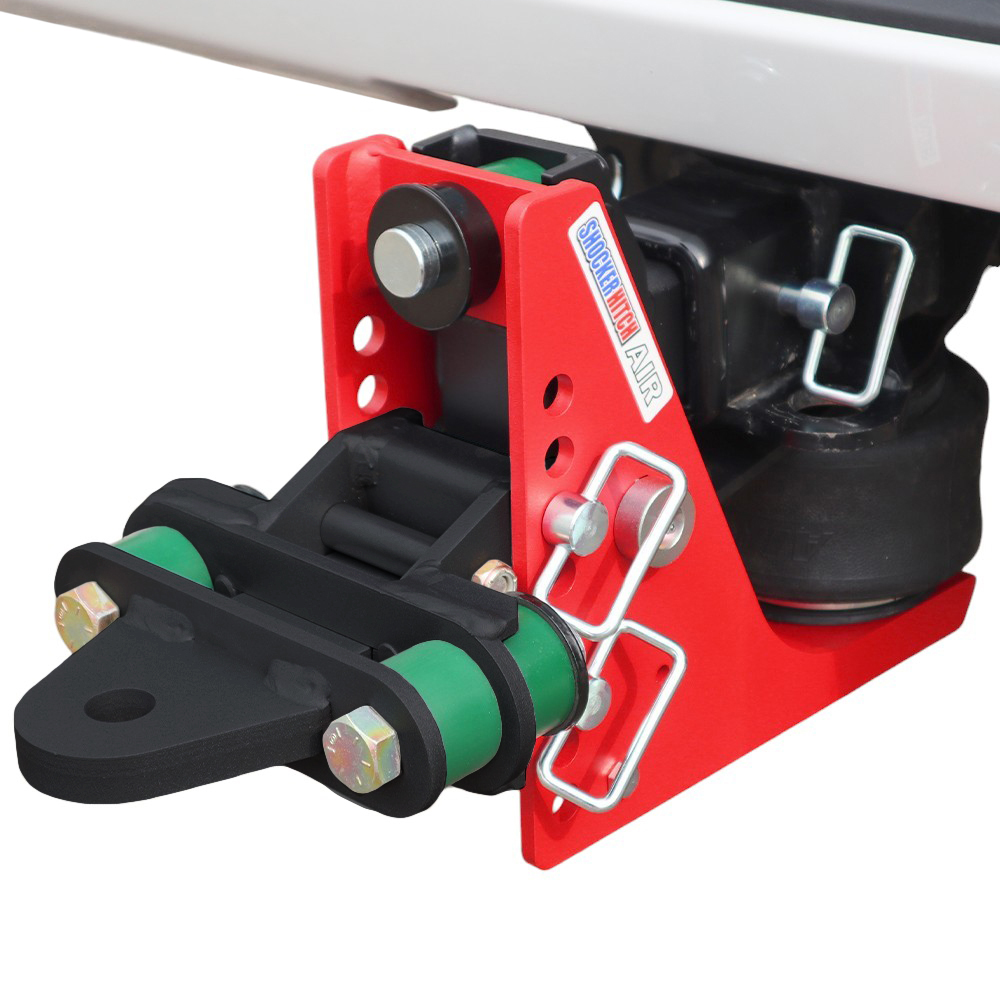

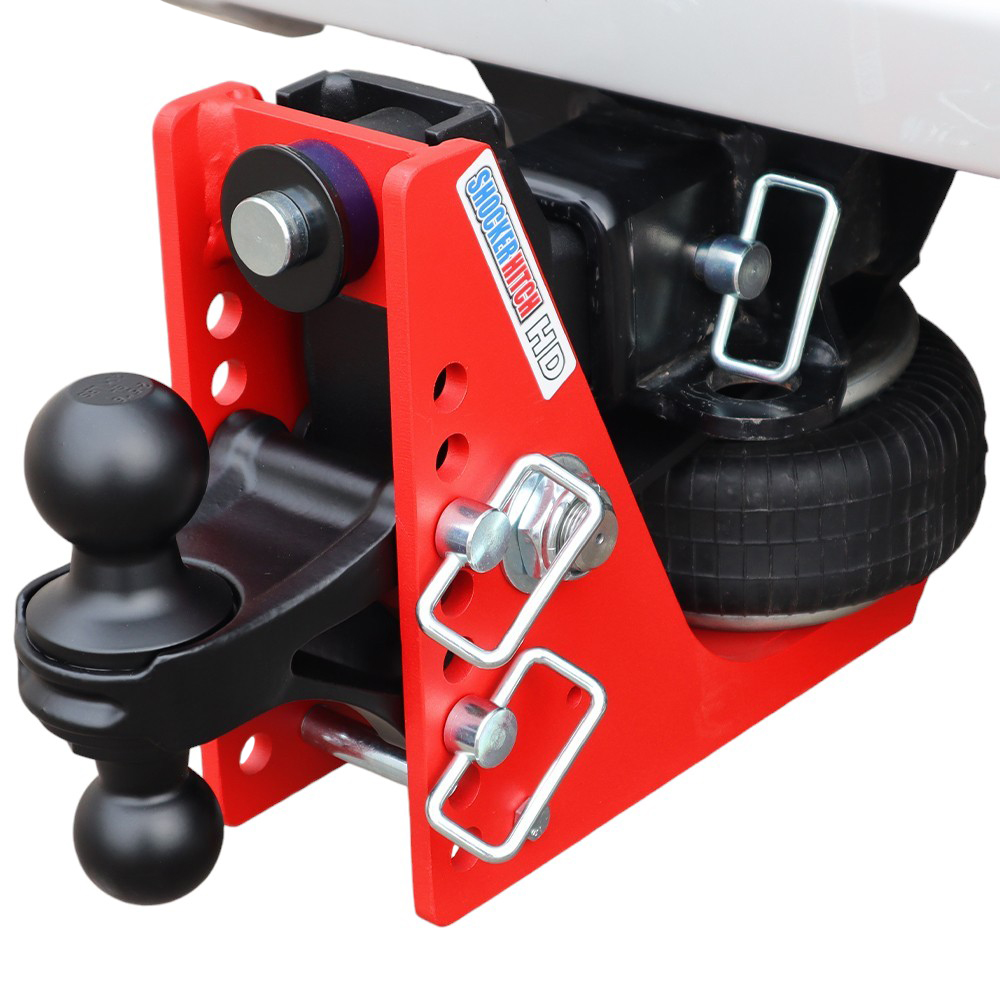
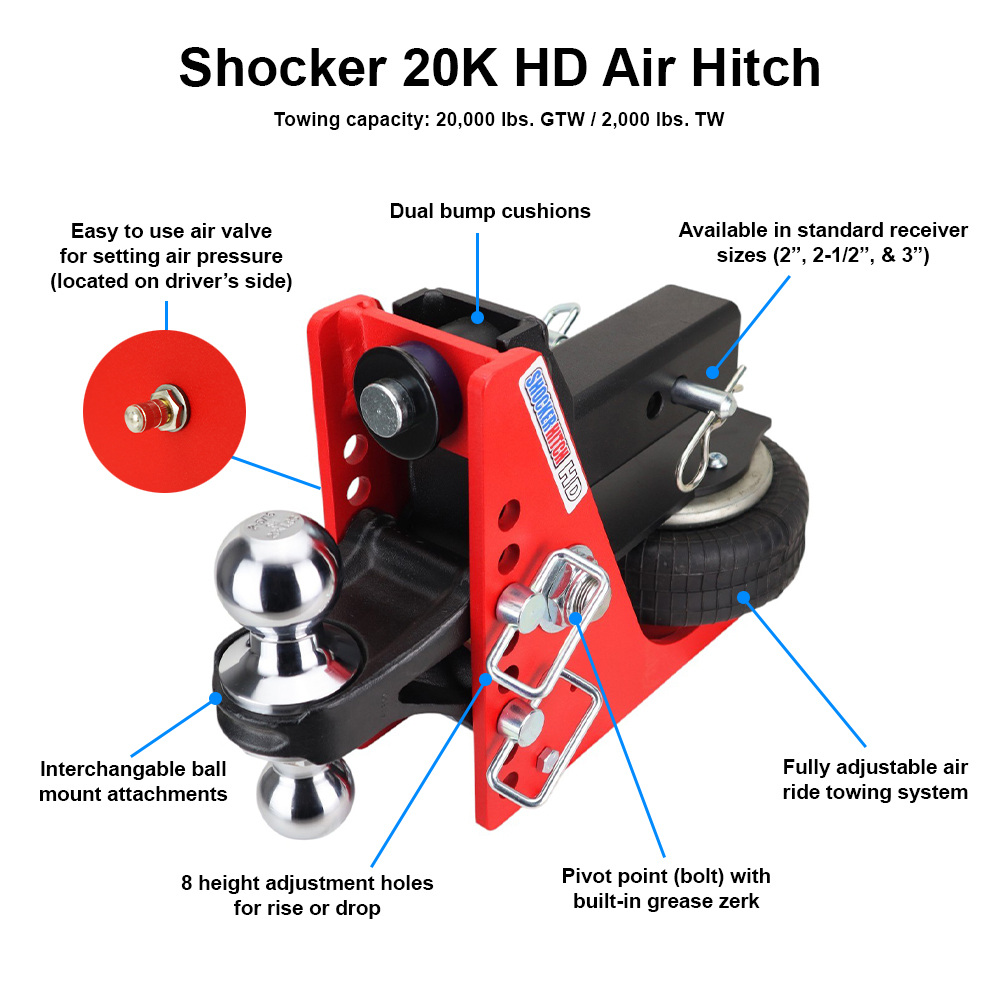
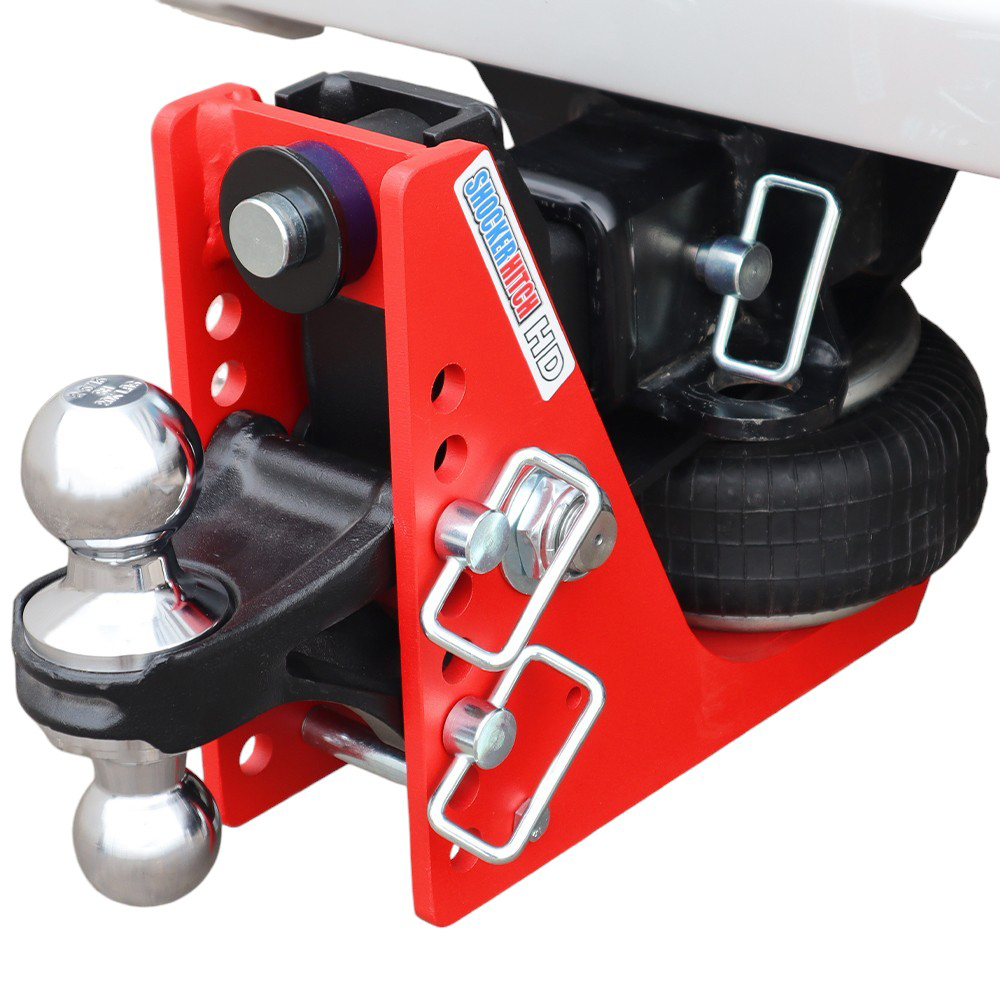
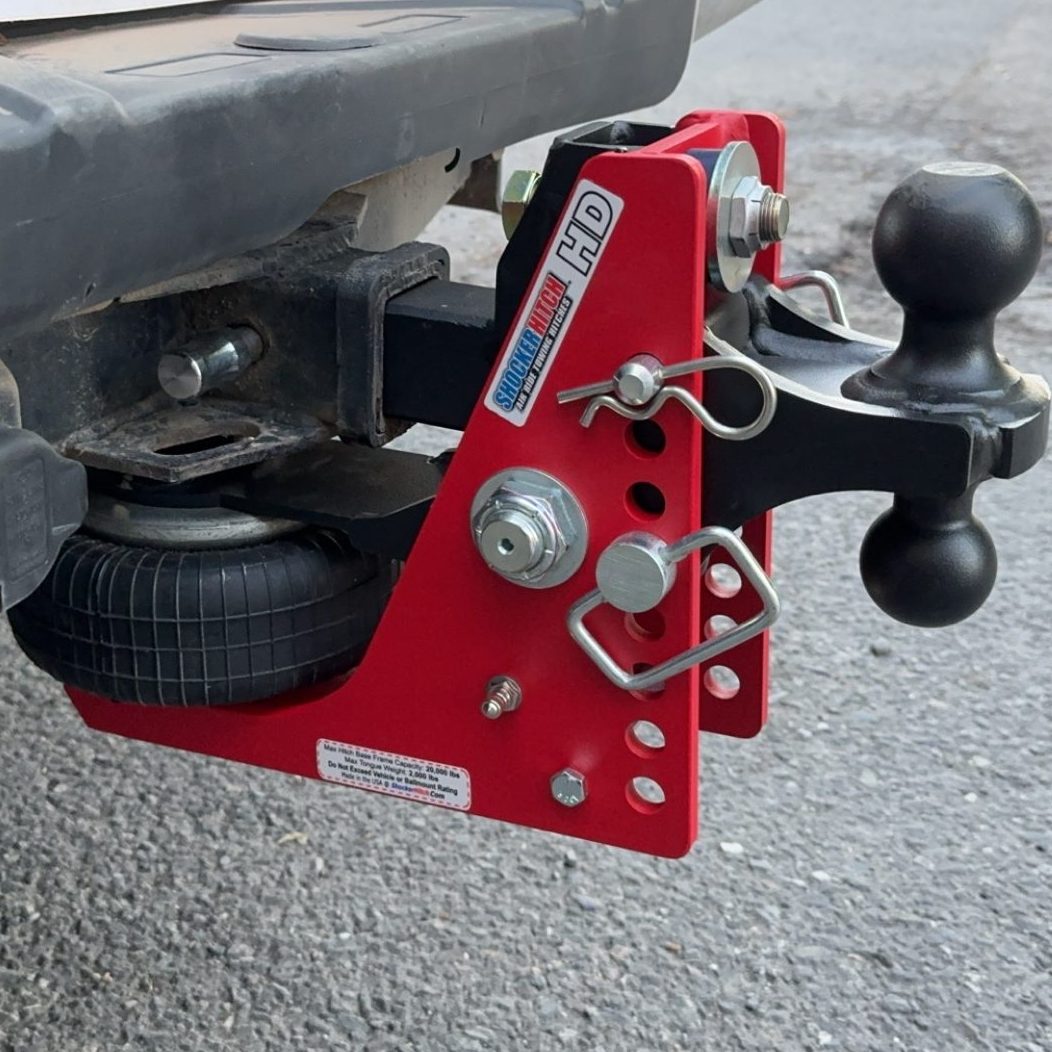
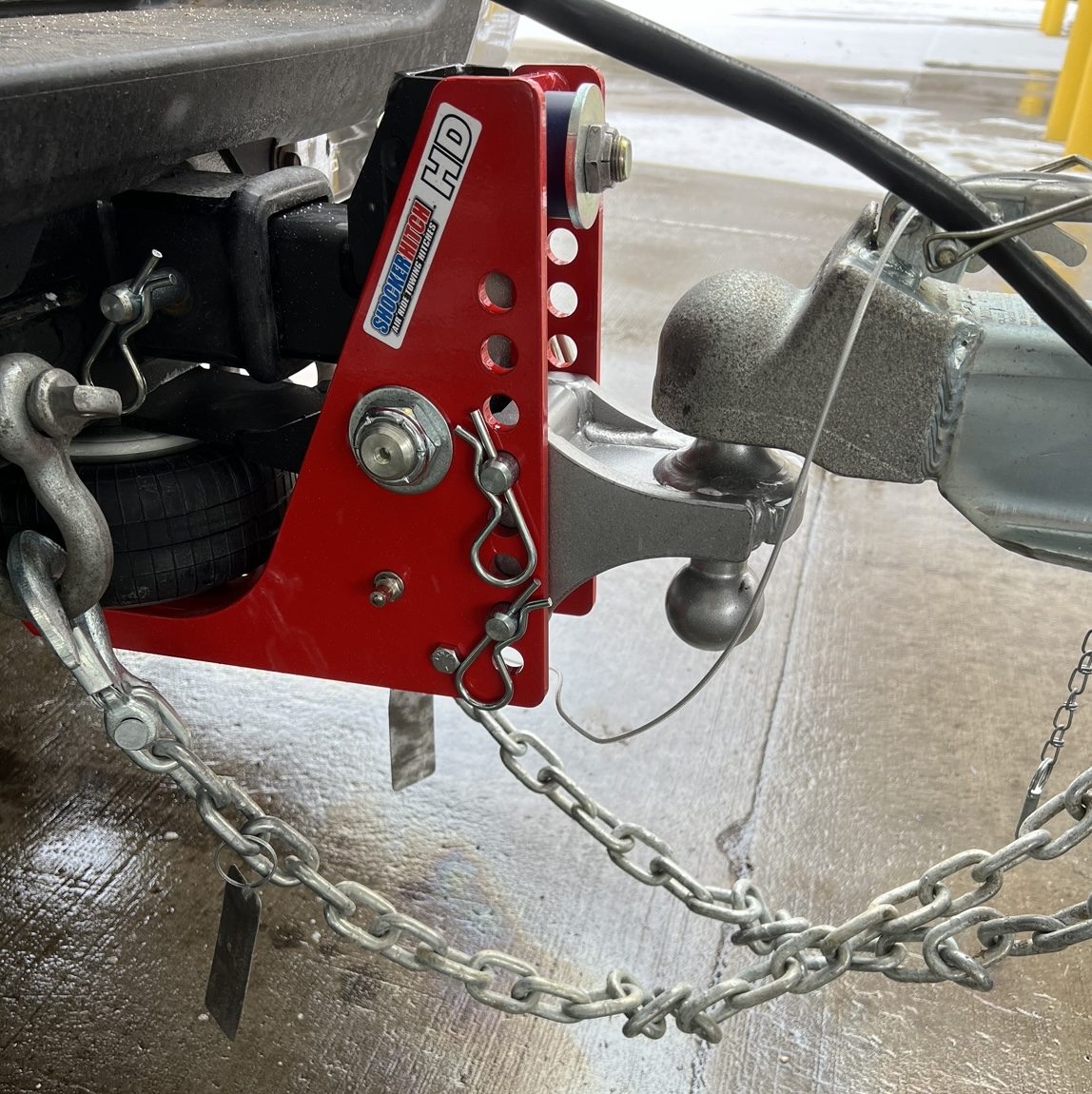
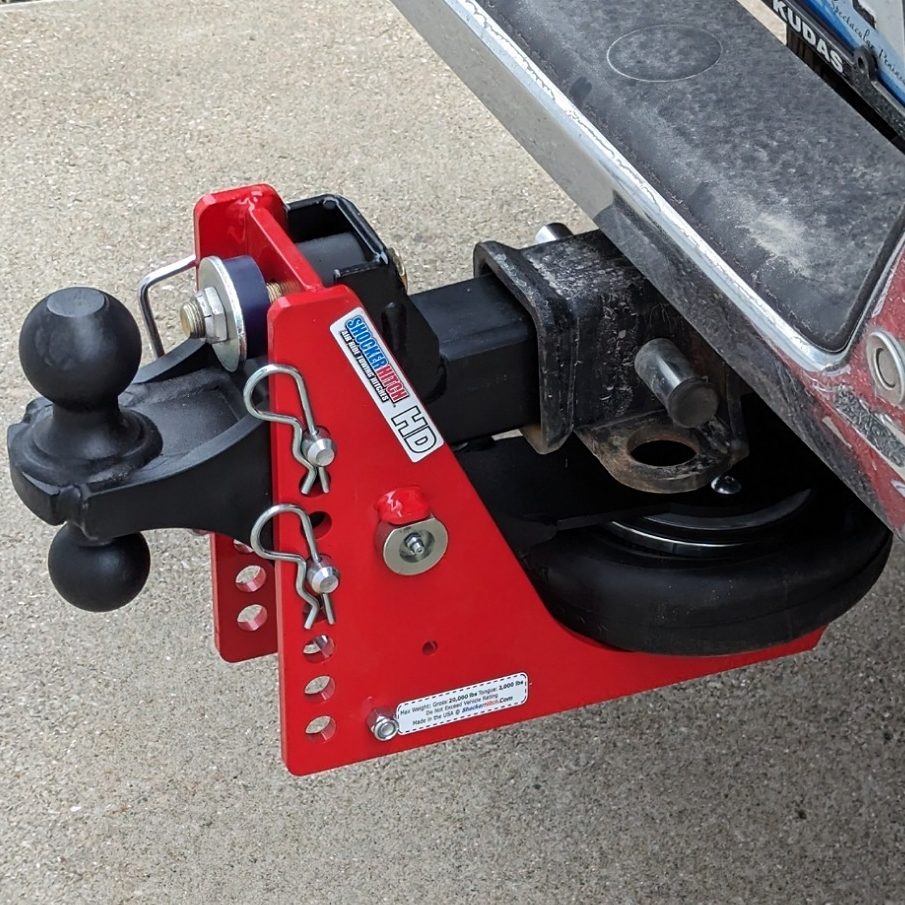
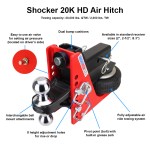
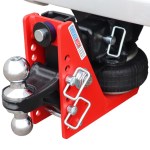
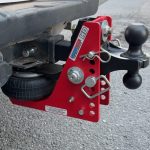

Shocker 20K HD Air Drop Hitch with Combo Ball

Rated 4.97 out of 5 based on 33 customer ratings

Shocker 20K HD Air Drop Hitch with Combo Ball

Rated 4.97 out of 5 based on 33 customer ratings

$749.99 – $799.99$789.99 – $839.99

Usually Ships on or Before Mon 10/05/26
Clear

Additional Add-Ons

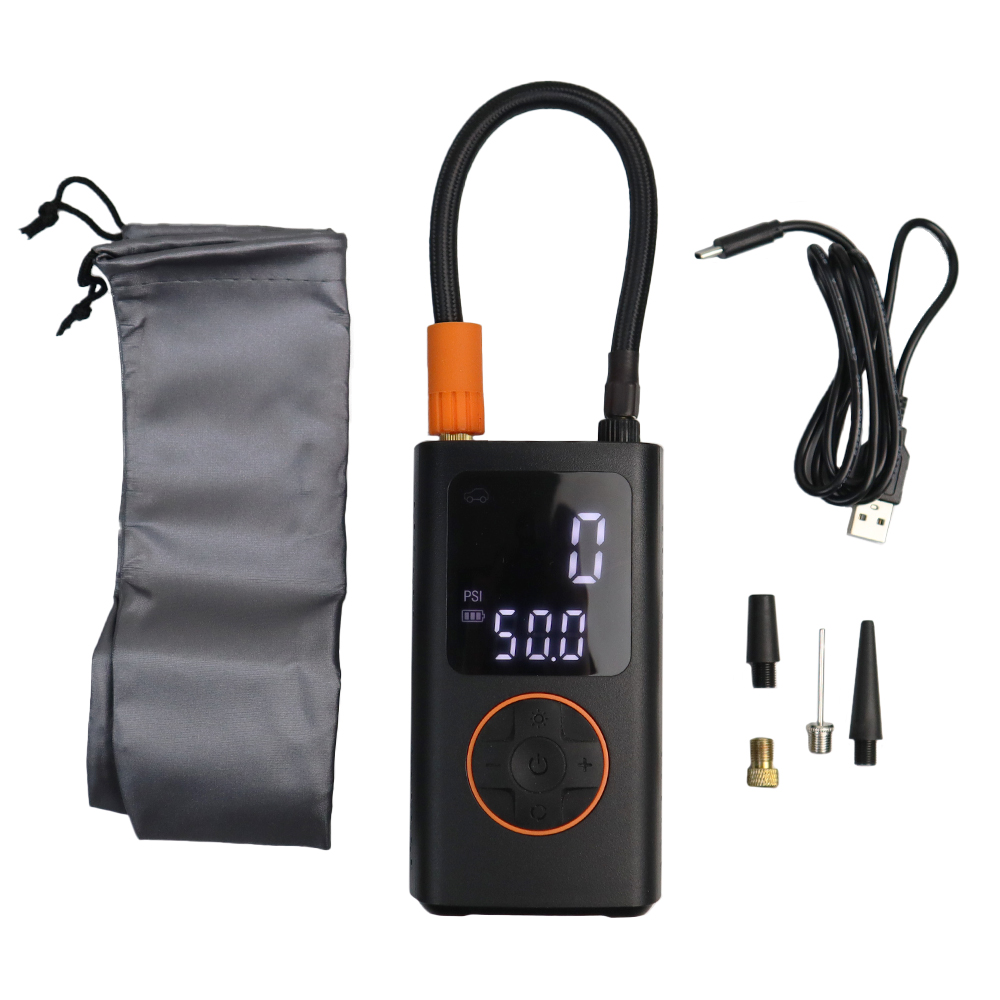
Shocker Compact Portable Air Compressor with Digital Gauge
Compact Portable Air Compressor with Digital Gauge
$69.99
|
SKU: SH-5625
3-Pack (2 Mount & 1 Receiver Pins)
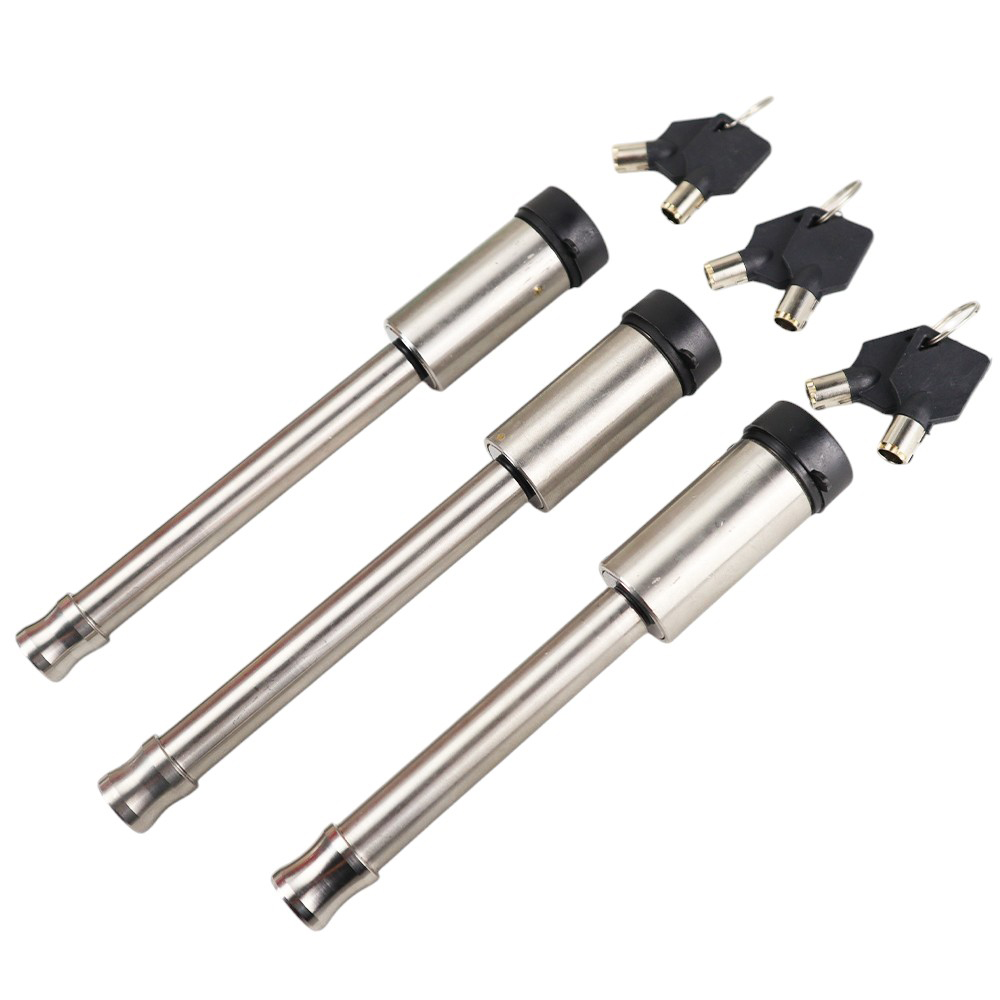
Locking Hitch Pin & 2 Ball Mount Attachment Locking Pins - Fits Base Frame & Receiver
$62.01
|
SKU: SH-317-2-318
OR
Dealer Button

-

  • Videos arrow

    Videos

    Shocker HD Air Ride Receiver Hitch Videos

  • Drop/Rise Guide arrow

    Drop/Rise Guide

    Receiver Hitch Drop, Rise & Tow Rating Guides

    Never exceed the lowest applicable gross trailer weight or tongue-weight rating of any component in your towing setup. Evaluate each limit separately. Attachment ratings do not increase the hitch base’s ratings. In the table, each pair means maximum trailer weight / maximum tongue weight in pounds. Attachment ratings do not increase the hitch base rating.

    Choose the section for your hitch type and frame. Ranges are attachment-specific; do not use a different hitch type’s table. For Original 7-hole, Trail Force 10-hole or Super Drop 12-hole air receivers, use the dedicated guide on that product page.

    Air receivers — 8-hole frame

    Maximum attachment ratings in pounds: trailer weight / tongue weight.
    Attachment Drop / rise range Maximum trailer weight / tongue weight (lb)
    Combo Ball Level to 4.5″ Drop 2-5/16″ ball: 20,000 / 2,000
    2″ ball: 10,000 / 1,000
    Drop Ball 4.5″ to 8.5″ Drop 2-5/16″ ball: 20,000 / 2,000
    2″ ball: 10,000 / 1,000
    Raised Ball 2″ Rise to 2″ Drop 2-5/16″ ball: 20,000 / 2,000
    2″ ball: 10,000 / 1,000
    Pintle Hook (SH-333) 3″ to 7″ Drop 20,000 / 2,000
    Raised Pintle Hook (SH-335) Level to 5″ Drop 20,000 / 2,000
    Pintle & Ball — Complete SH-334-2 / SH-334-25 Attachments 3″ to 7″ Drop Pintle mode (with proper ball installed): 16,000 lb GTW / 3,000 lb TW.
    2″ ball mode (SH-334-2): 12,000 lb GTW / 3,000 lb TW.
    2-5/16″ ball mode (SH-334-25): 16,000 lb GTW / 3,000 lb TW.
    Drawbar Level to 4.5″ Drop 20,000 / 0
    Clevis Mount 3.5″ Drop to 7.5″ Drop 20,000 / 0

    Impact / Impact Max cushion hitches

    Hitch base limits: Impact: 14,000 lb trailer weight / 1,400 lb tongue weight. Impact Max: 20,000 lb trailer weight / 2,000 lb tongue weight.

    Maximum attachment ratings in pounds: trailer weight / tongue weight.
    Attachment Drop / rise range Maximum trailer weight / tongue weight (lb)
    Combo Ball 4″ Rise to 4″ Drop 2-5/16″ ball: 20,000 / 2,000
    2″ ball: 10,000 / 1,000
    Drop Ball Level to 7.5″ Drop 2-5/16″ ball: 20,000 / 2,000
    2″ ball: 10,000 / 1,000
    Raised Ball 5″ Rise to 3″ Drop 2-5/16″ ball: 20,000 / 2,000
    2″ ball: 10,000 / 1,000
    Pintle Hook (SH-333) 1″ Rise to 6.5″ Drop 20,000 / 2,000
    Raised Pintle Hook (SH-335) 3.5″ Rise to 4″ Drop 20,000 / 2,000
    Pintle & Ball — Complete SH-334-2 / SH-334-25 Attachments 1″ Rise to 6.5″ Drop Pintle mode (with proper ball installed): 16,000 lb GTW / 3,000 lb TW.
    2″ ball mode (SH-334-2): 12,000 lb GTW / 3,000 lb TW.
    2-5/16″ ball mode (SH-334-25): 16,000 lb GTW / 3,000 lb TW.
    Drawbar 4″ Rise to 4″ Drop 20,000 / 0
    Clevis Mount 1.5″ Rise to 5.5″ Drop 20,000 / 0

    XR series — 8-hole frame

    For the XR 10-hole frame, the existing specification adds 2 inches of drop and rise. Confirm the selected frame and attachment.

    Maximum attachment ratings in pounds: trailer weight / tongue weight.
    Attachment Drop / rise range Maximum trailer weight / tongue weight (lb)
    Combo Ball 4″ Rise to 4″ Drop 2-5/16″ ball: 20,000 / 2,000
    2″ ball: 10,000 / 1,000
    Drop Ball Level to 7-1/2″ Drop 2-5/16″ ball: 20,000 / 2,000
    2″ ball: 10,000 / 1,000
    Raised Ball 5″ Rise to 3″ Drop 2-5/16″ ball: 20,000 / 2,000
    2″ ball: 10,000 / 1,000
    Pintle Hook (SH-333) 1″ Rise to 7″ Drop 20,000 / 2,000
    Raised Pintle Hook (SH-335) 3.5″ Rise to 4″ Drop 20,000 / 2,000
    Pintle & Ball — Complete SH-334-2 / SH-334-25 Attachments 1″ Rise to 7″ Drop Pintle mode (with proper ball installed): 16,000 lb GTW / 3,000 lb TW.
    2″ ball mode (SH-334-2): 12,000 lb GTW / 3,000 lb TW.
    2-5/16″ ball mode (SH-334-25): 16,000 lb GTW / 3,000 lb TW.
    Drawbar 4″ Rise to 4″ Drop 20,000 / 0
    Clevis Mount 1-1/2″ Rise to 6-1/2″ Drop 20,000 / 0

    Sway-control-tab mounts: Use the range and ball rating for the corresponding combo, drop or raised ball mount. Confirm compatibility with your selected hitch.

    No Ball Mount: A compatible, properly rated attachment is required for towing; the base alone does not provide a towing connection.

    Choose the drop or rise your trailer needs

    Measure on level ground with the trailer level. “Level” means zero drop or rise. How to choose the right drop hitch (opens in a new tab).

    Follow the lowest rating: These are attachment ratings, not a guarantee of your complete hitch capacity. Never exceed the lowest applicable trailer-weight or tongue-weight limit of the vehicle, receiver, hitch base, attachment, ball or trailer. A higher-rated attachment does not increase a lower-rated hitch base’s capacity. Use the marked tongue-weight rating; it is not calculated from towing capacity.

    Drawbar, cushioned drawbar and SH-360 clevis: 0 lb vertical tongue load; these mounts are not for use with a hitch ball.

  • Install arrow

    Install

    Choose your air receiver hitch model

    Select your hitch to jump to its installation instructions.

    Set up your air receiver hitch

    Follow the installation steps for your model, then adjust air pressure with your trailer loaded for travel. Use these shortcuts for setup help and maintenance.

    Set air pressure for your loaded trailer

    100 PSI MAXIMUM — not the target setting.
    Use the truck-side bump cushion to judge the correct adjustment for your load. Never exceed 100 PSI.

    1. Load and connect your trailer. Follow your model’s installation steps and set up the trailer as you normally would for travel.
    2. Add air at your model’s valve. The photos below show where the air compressor connects.
    3. Watch the truck-side bump cushion. Stop adding air once the main frame lightly compresses the cushion closest to the truck (tailgate side). Follow the detailed instructions for your model below.
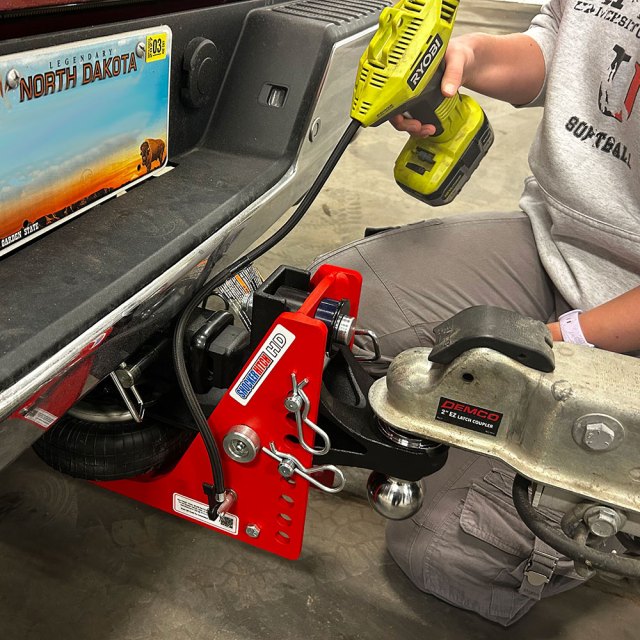
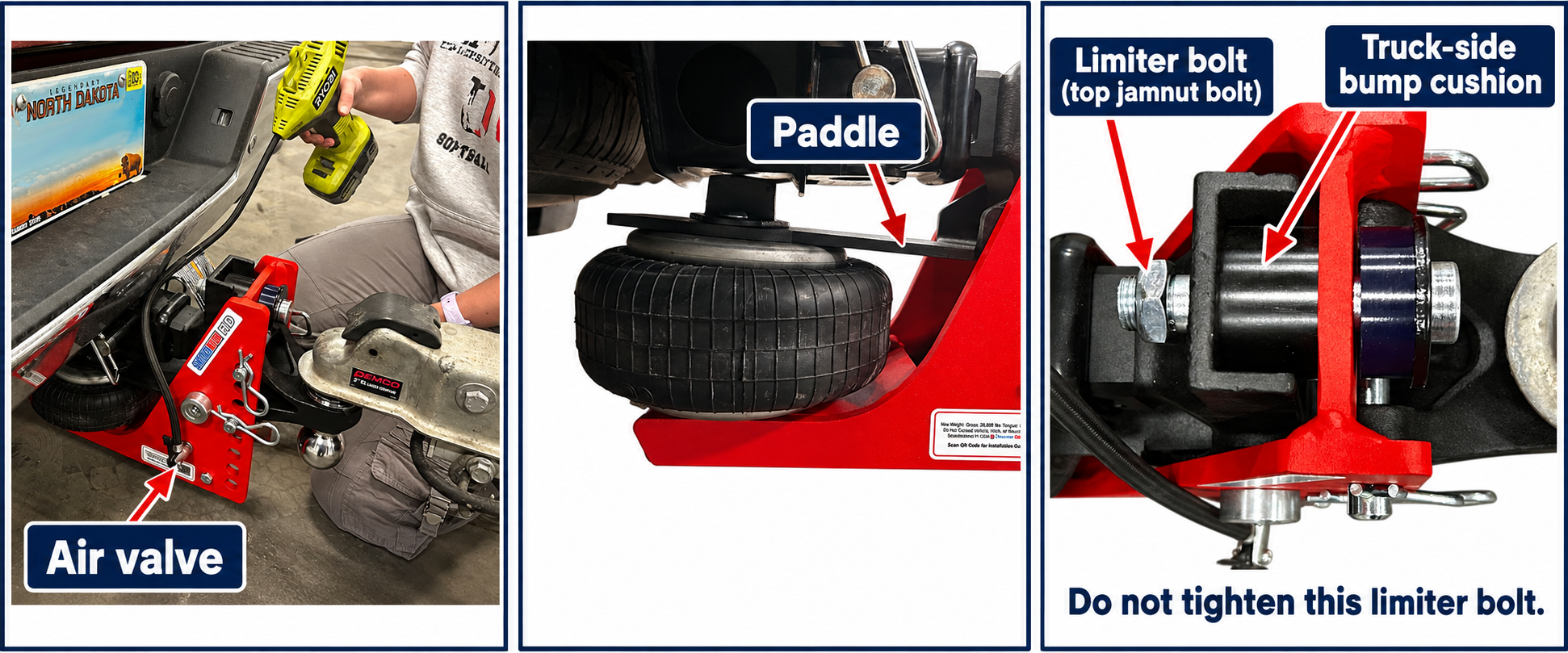
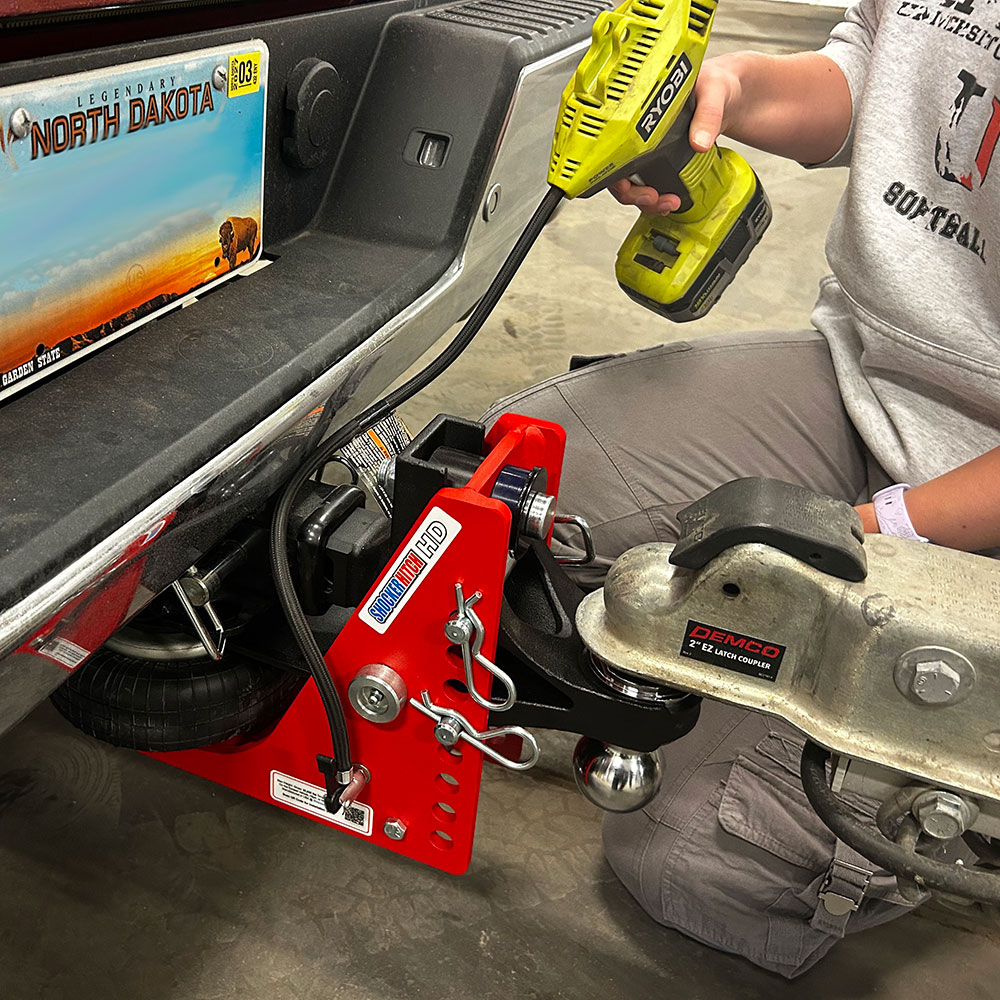
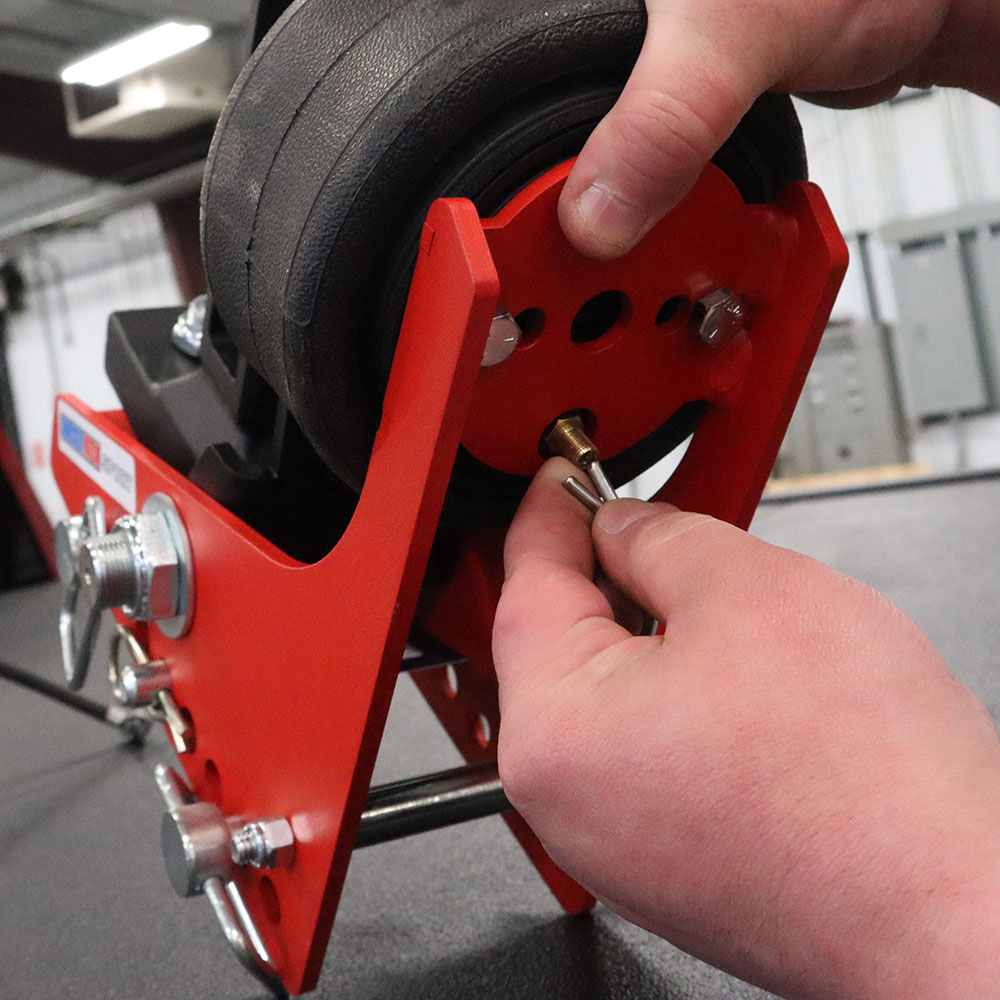
    Air compressor connected to the standard and HD air receiver hitch valve
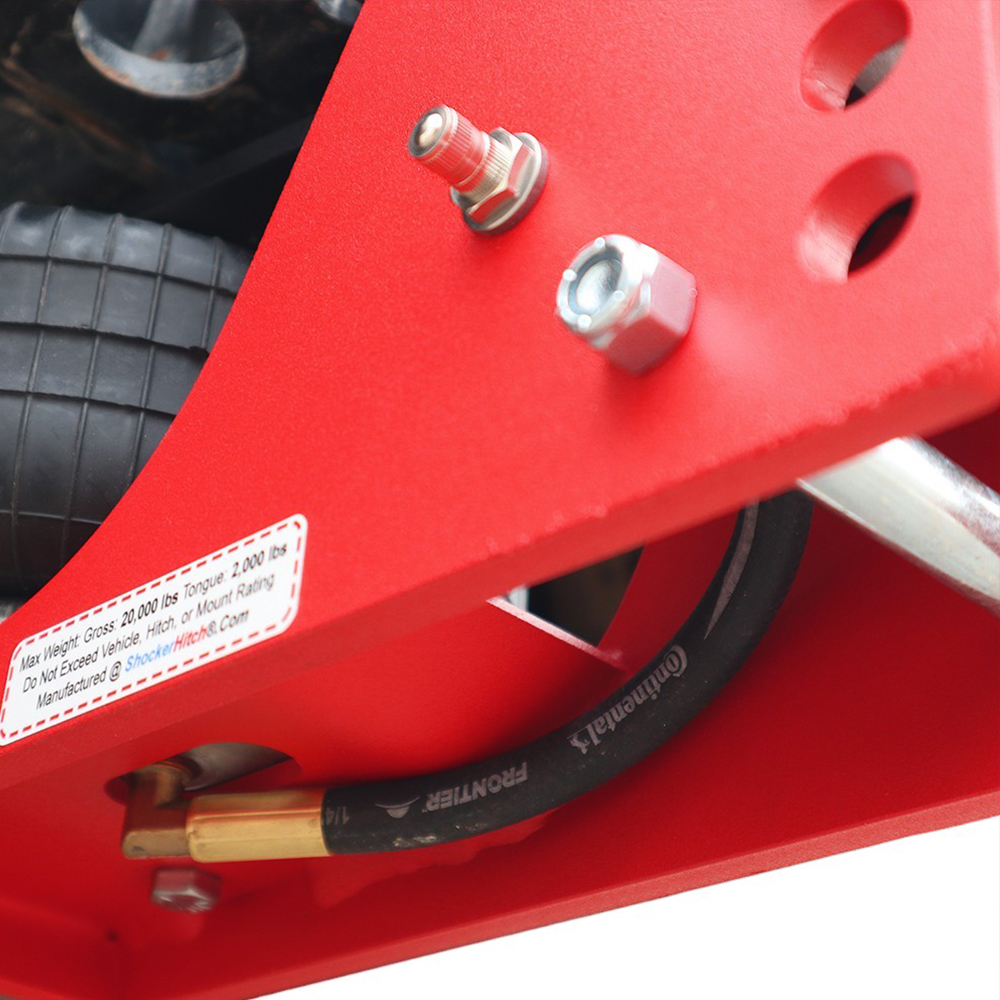
    Standard / HD air receivers
    Add air at the valve shown where the compressor connects. Air-pressure steps
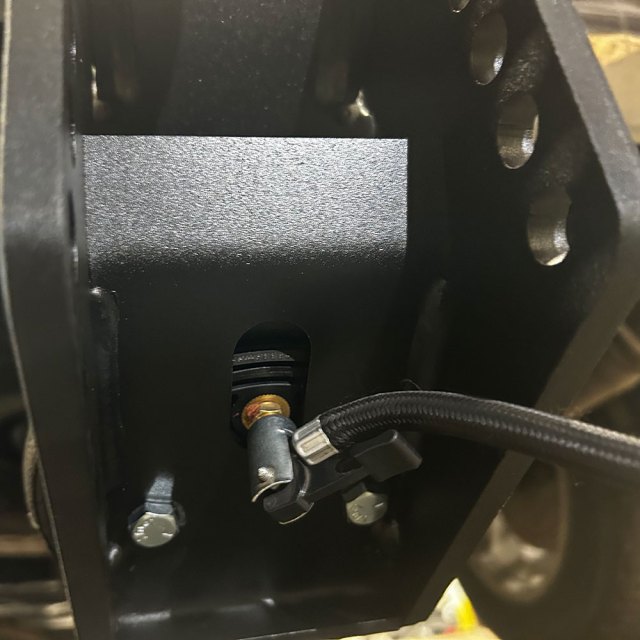
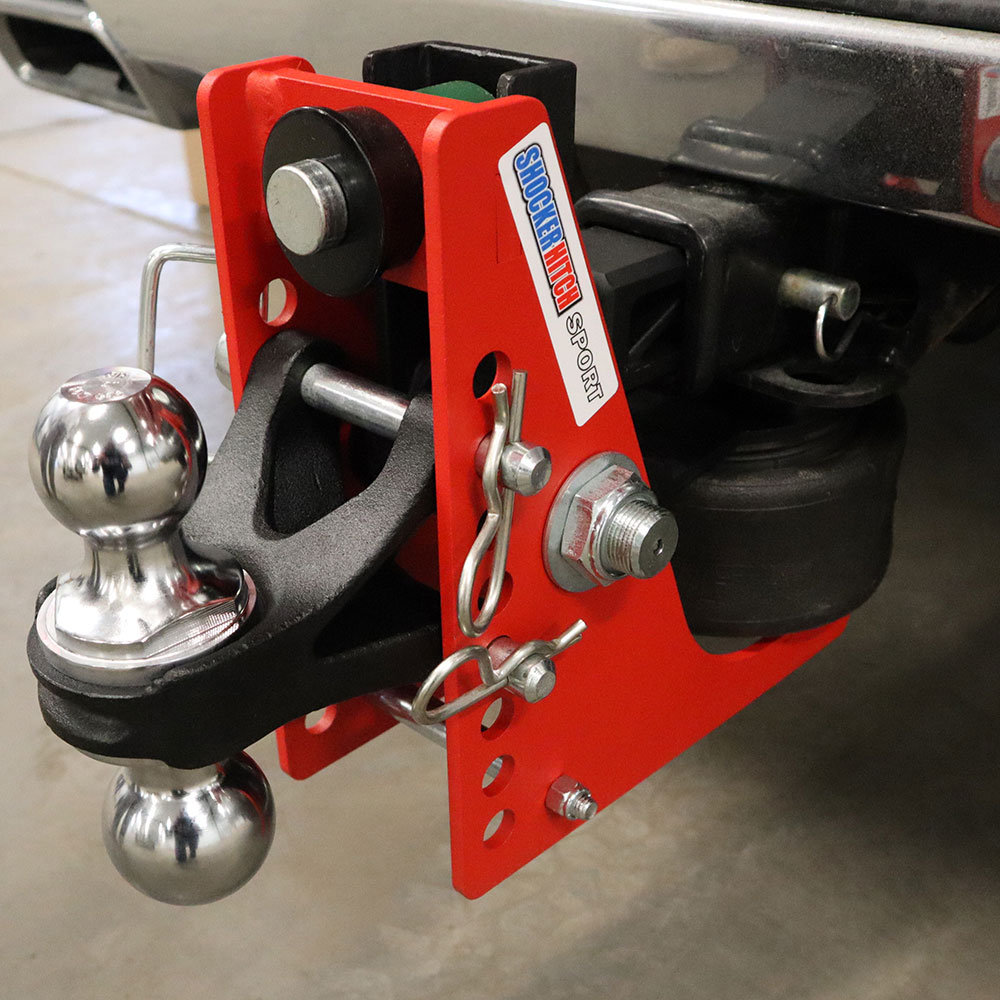
    Air compressor connection at the Sport air receiver hitch valve
    Sport™ air receiver
    Locate the valve shown in this close-up. Air-pressure steps
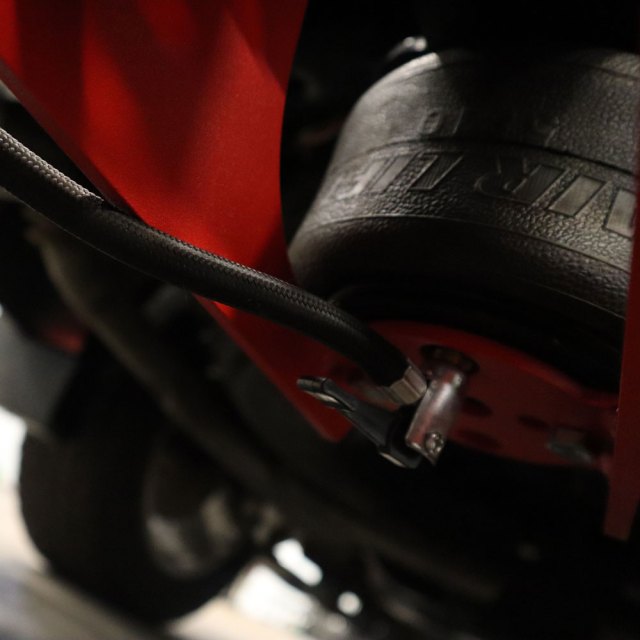
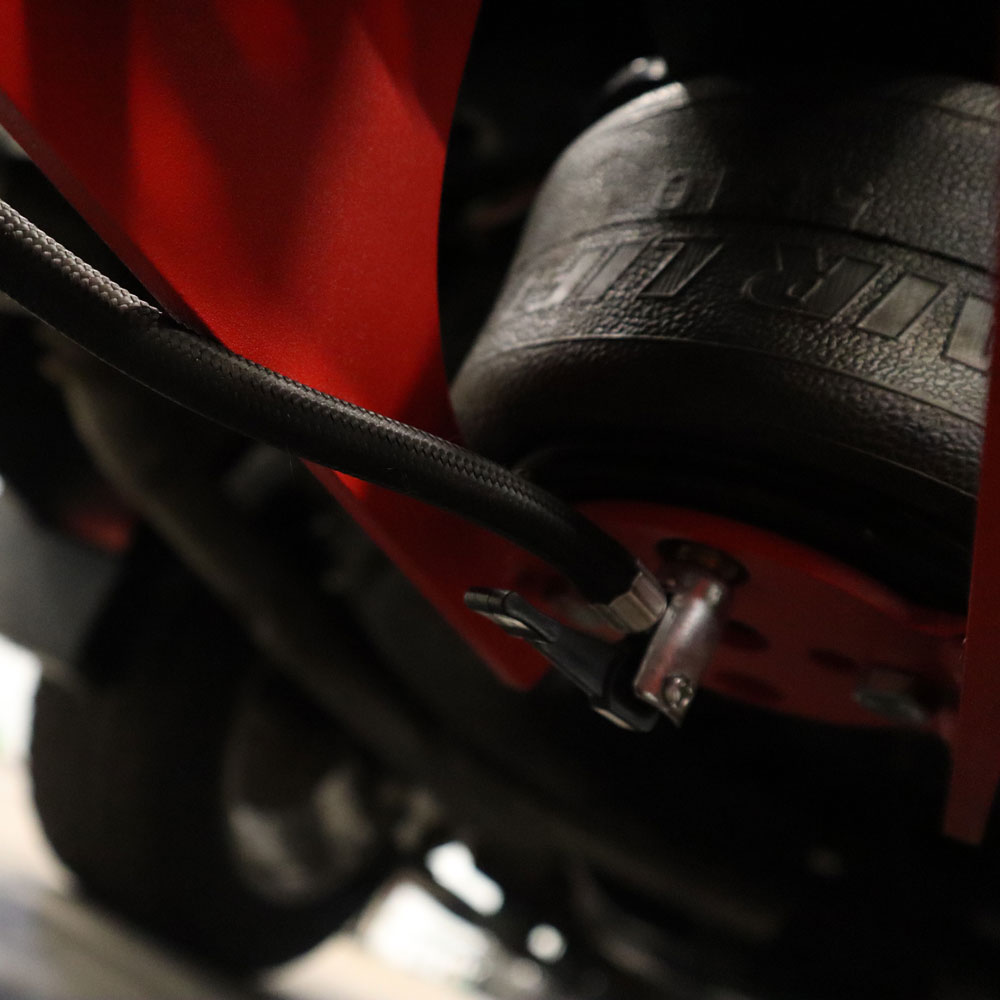
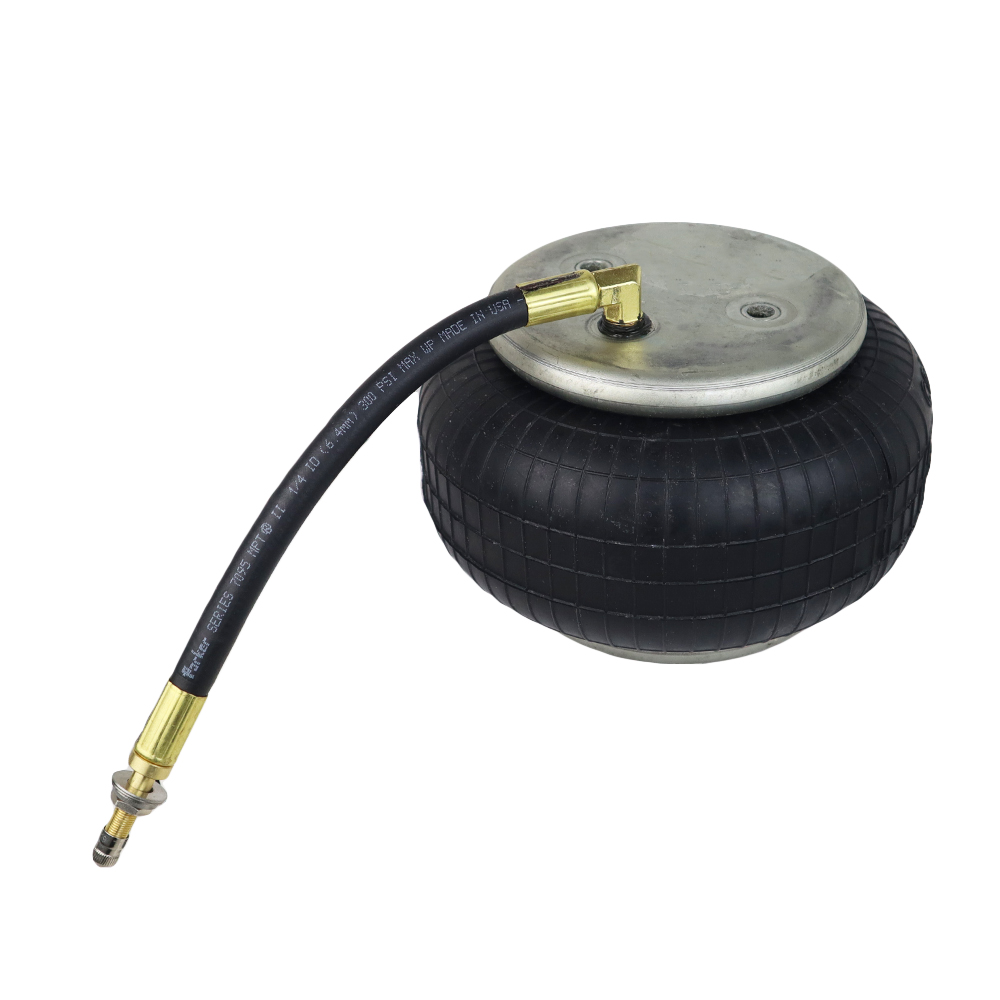
    Trail Force air hitch valve below the air spring with an air hose attached
    Trail Force® air receiver
    The air valve is below the air spring. Air-pressure steps
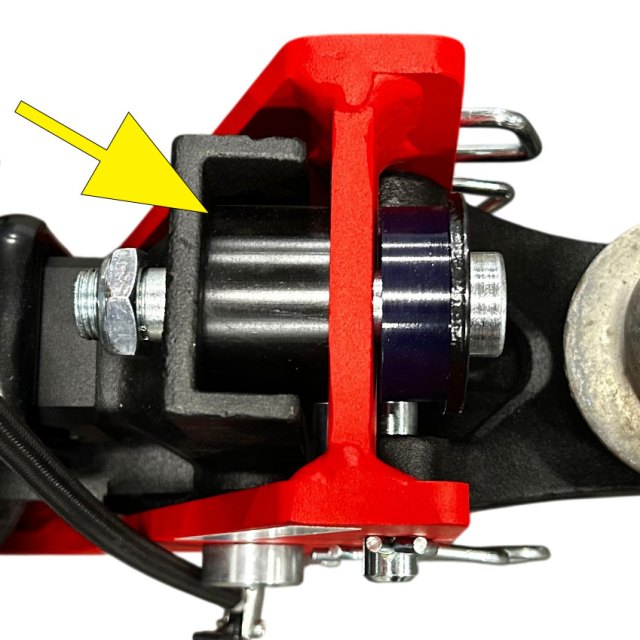
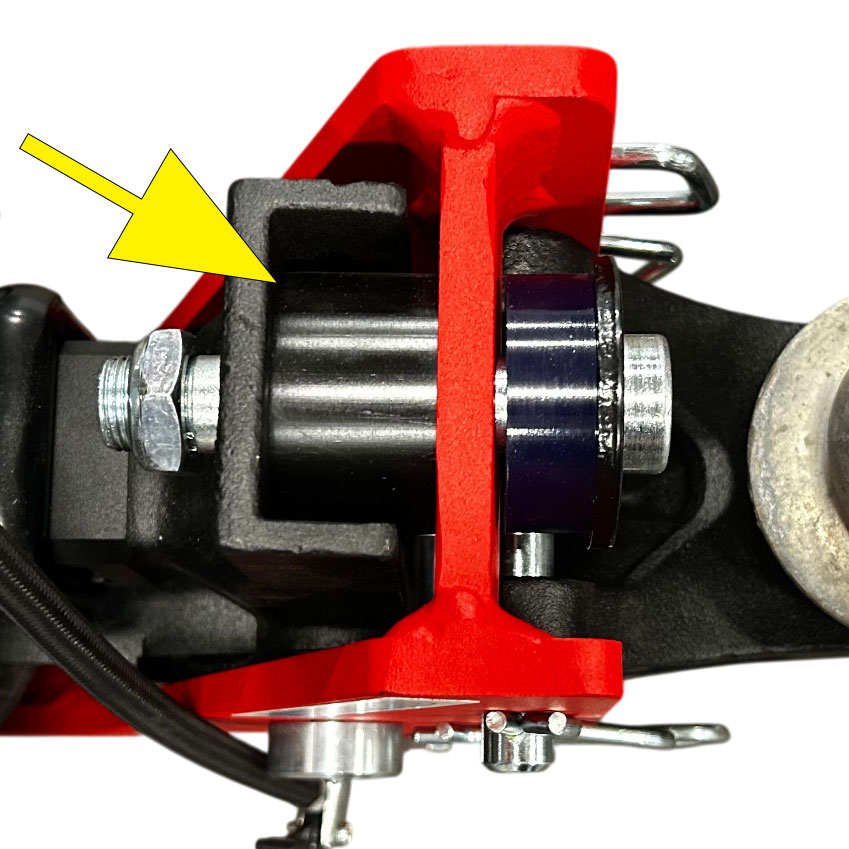
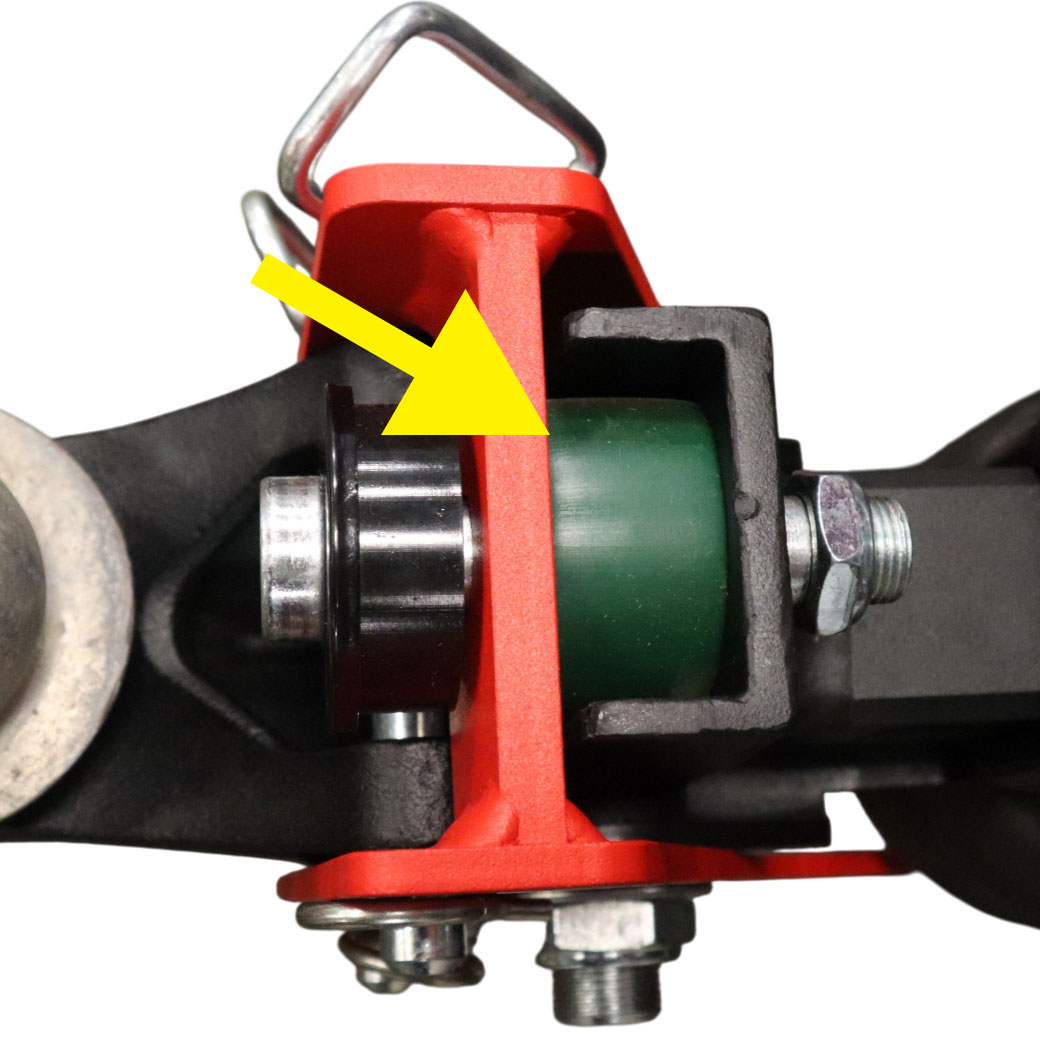
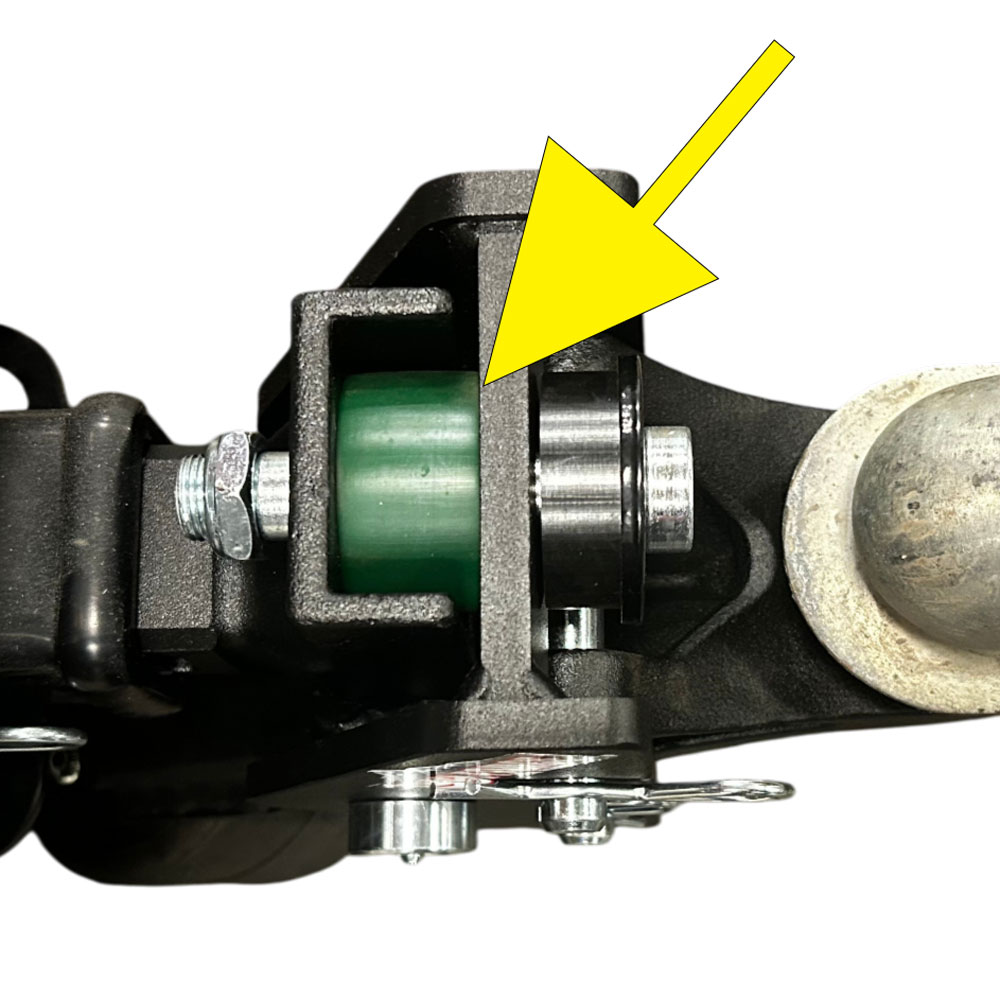
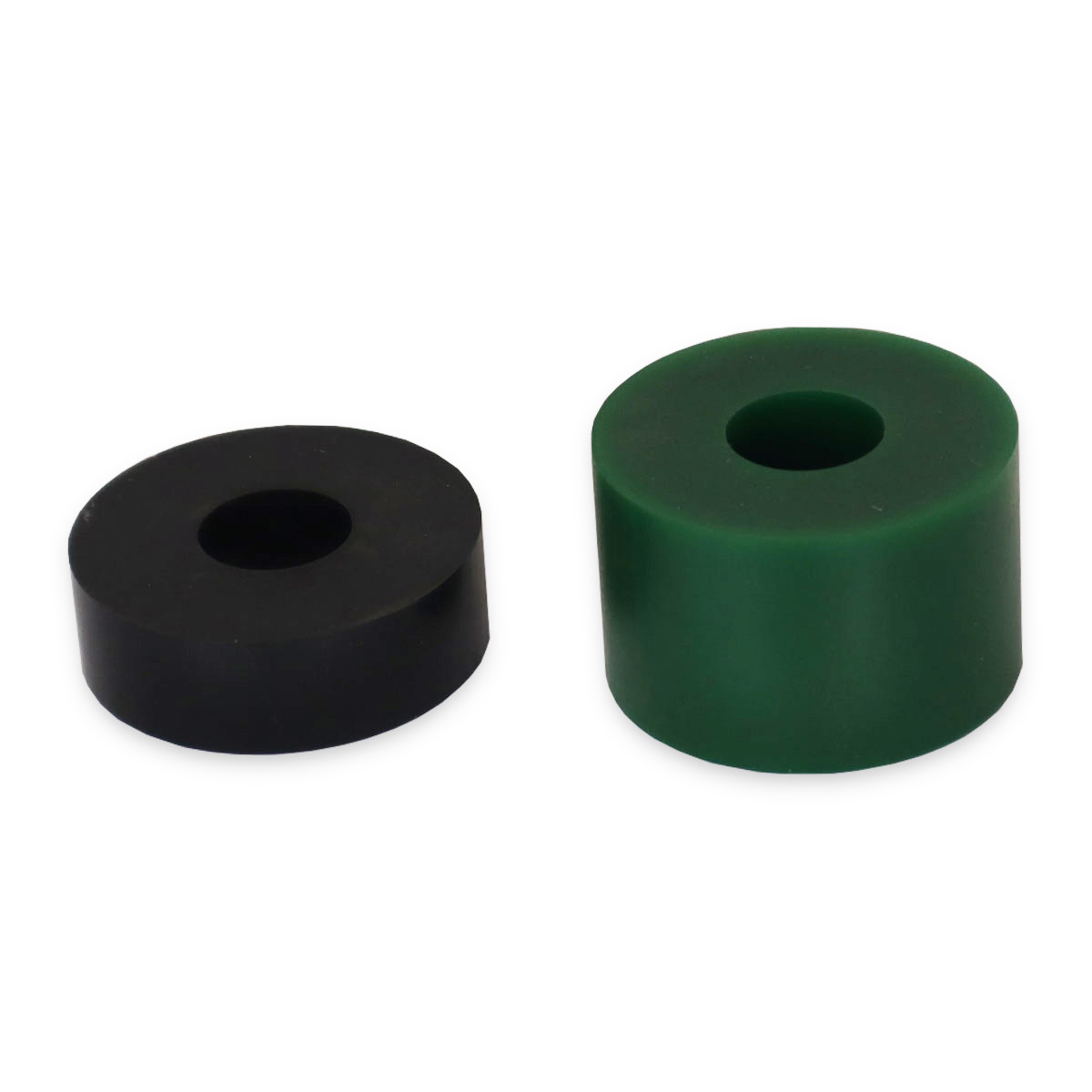
    Close-up of the truck-side bump cushion lightly compressed by the air receiver hitch frame
    Truck-side bump cushion at the correct light compression.

    Watch this cushion—not a preset PSI number

    Observe the cushion closest to the truck. With the trailer loaded, add air until the main frame lightly compresses that cushion. The pressure needed depends on the load.

    Recheck the adjustment when your trailer load changes. The 100 PSI limit is a ceiling, not an instruction to inflate to 100 PSI.

    See the add-air / stop-adding-air photos ↓

    Know your air receiver hitch components

    Select any photo to open the full-size labeled guide in a new tab.

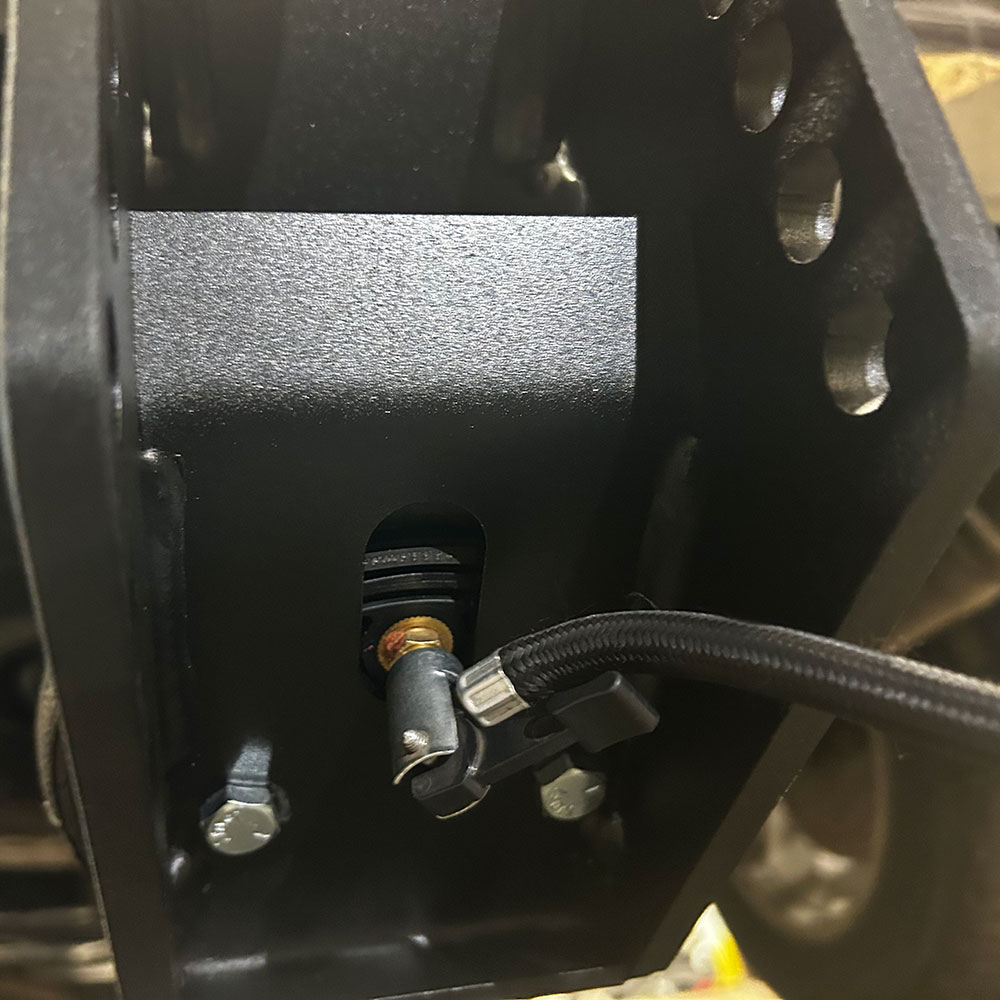
    Air valve labeled where the compressor hose connects to the air receiver hitch
    Air valve — add air at the valve shown. Enlarge photo
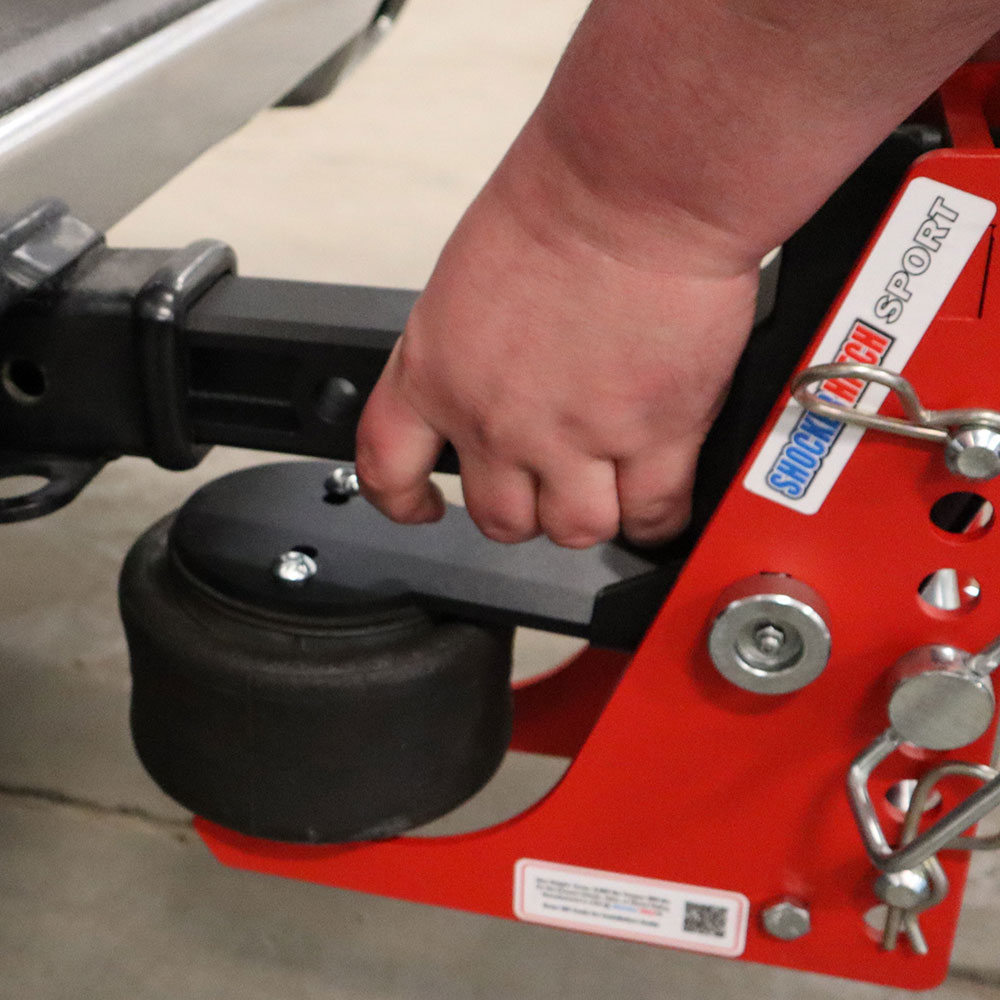
    Paddle labeled on the flat steel plate above the air spring; spacer block shown on top
    Paddle — the flat steel plate above the air spring. This example also shows an installed spacer block. Enlarge photo

    Shocker Air Receiver Hitch Install Video

    Note: Always use a good hitch ball rated for the recommended tow weight.

    Safety Notice: Towing capacity is limited by the lowest rated component.

    Shocker Air Receiver Hitch Installation Instructions

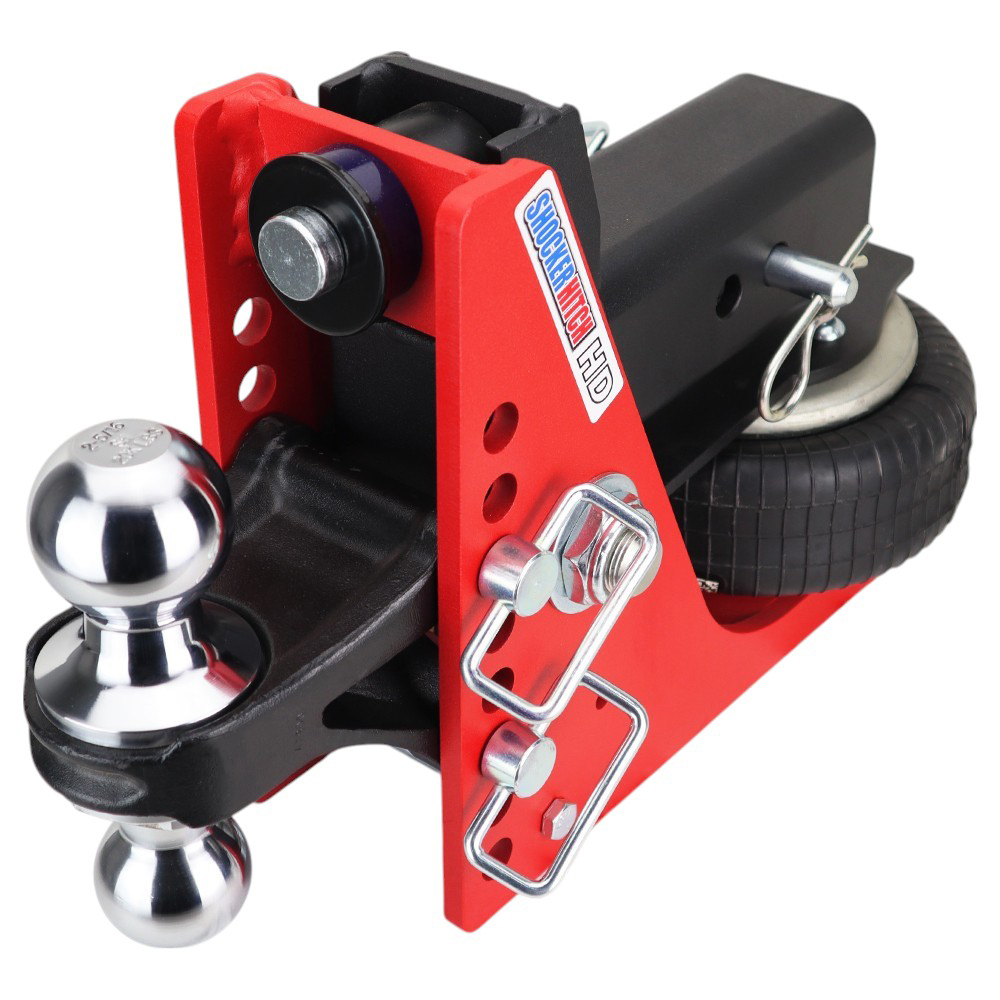
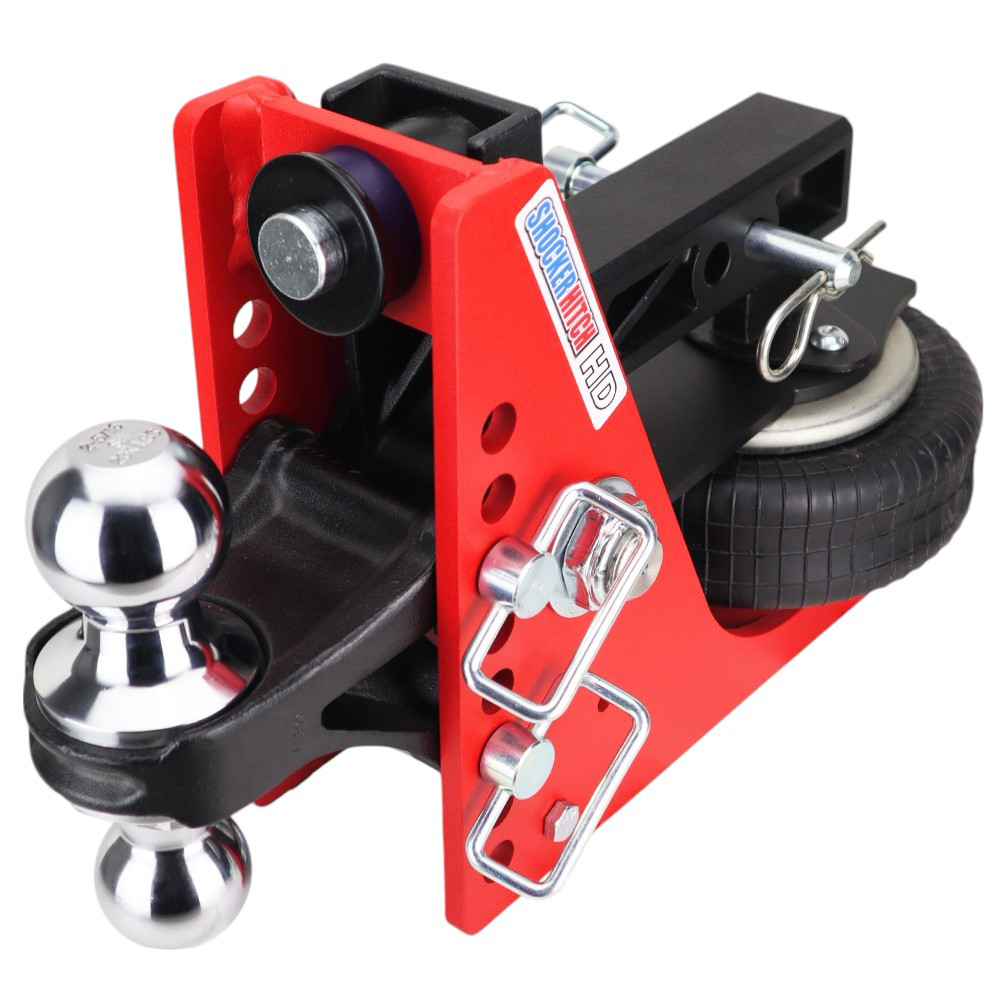
    1. Compressing Air Spring (BEFORE INSTALLATION)

    • Release Pressure: Use the provided cotter pin clip to push in on the valve core to release air pressure from the back.

    • Compress: While releasing pressure, simultaneously push down on the air spring paddle or squeeze the plates together to exhaust the remaining air.

    Releasing air pressure with cotter pin clip and pressing down on paddle simultaneously
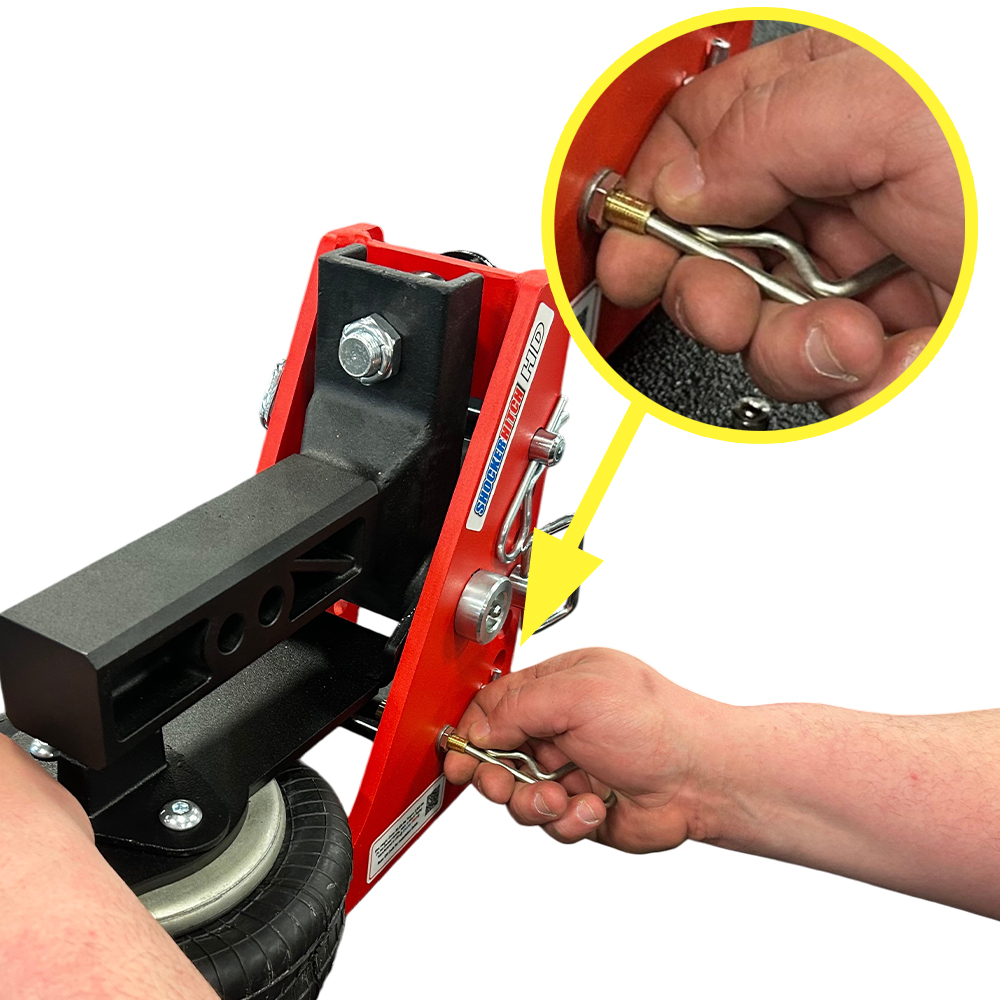
    2. Installing the Shocker Hitch into the Receiver

    • Mounting: Slide the hitch shank fully into the receiver tube of your tow vehicle.

    • Align and Secure: Align the pin holes and insert the 5/8” hitch pin. Lock it in place with the cotter pin clip.

    Shank inserted into receiver tube and secured with pin and cotter pin clip

    3. Install Attachment Ball Mount

    • Selection: Choose an attachment that allows your trailer to sit level. Refer to “WHAT SIZE DROP HITCH DO I NEED” and “GROUND CLEARANCE GUIDE” for more information.

    • Attachment: Install your chosen mount into the Shocker Hitch Frame.

    • Secure: Use the hitch pins and cotter pin clips provided to lock the ball mount into place.

    Ball mount installed and secured with hitch pins and cotter pin clips

    4. Setting Air Pressure

    • Load the Trailer: Hook up your trailer and load it as you normally would for travel.

    • To Set Air: Hook up trailer using a properly selected ball adaptor and height adjustment to level trailer when loaded. Next, inflate the air spring. As air pressure increases, the unit will rotate, lifting the hitch point. Install enough air until the top of the hitch frame touches the top (tailgate side) bump cushion, or for heavy loads, until it compresses the tailgate side bump cushion by approximately 1/8″.

    Filling up air ride system using an air compressor on the valve stem

    The “Sweet Spot”

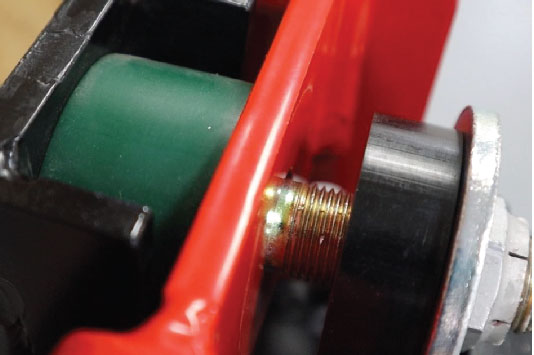
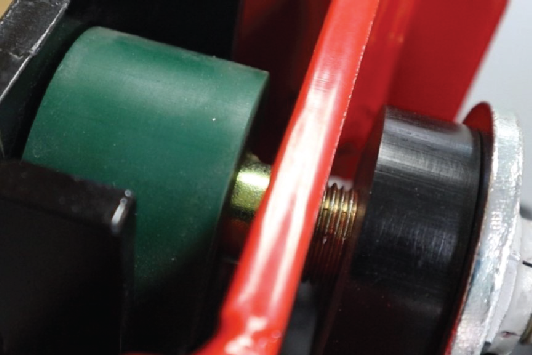
    Stop adding air once the main frame lightly compresses the truck side bump cushion.

    Truck side bump cushion compressed slightly showing proper air compression

    Proper Air Pressure Guide

    Spacer-block decision guide

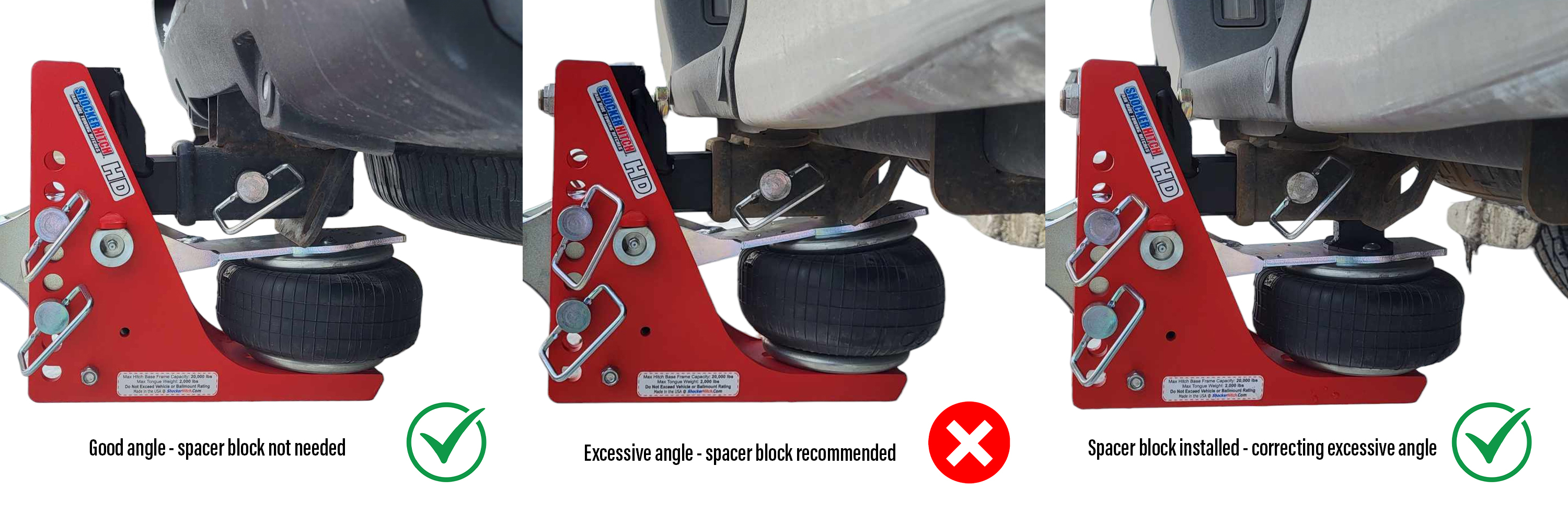
    Check alignment with your trailer connected, loaded for travel and the air pressure correctly set. The paddle above the air spring should be approximately parallel with the receiver tube.

    When is a spacer block needed?

    Correct paddle alignment without a spacer block
    1. Correct alignment
    Paddle approximately parallel with the receiver tube. A spacer is not needed to correct the angle shown.
    Excessive paddle angle before installing a spacer block
    2. Excessive angle
    If the paddle angle is more than 10 degrees with pressure correctly set, follow the spacer-block guidance for your model.
    Spacer block installed above the paddle to correct excessive angle
    3. Corrected alignment
    The spacer sits on top of the paddle against the underside of the receiver tube, correcting the excessive angle.

    Model notes: 20K HD hitches with a 2-inch receiver come with the spacer installed. Some HD models with a 2-1/2-inch receiver include it in the box. A spacer is generally not needed on 14K air receiver hitches because their air spring is 1 inch taller than the HD air spring.

    Maximum air pressure: 100 PSI. Do not use extra air pressure to exceed this limit while checking alignment. Read the full spacer-block guide.

    Watch: when do you need a spacer block?

    Use this short video alongside the alignment photos above to understand the spacer-block setup.

    Watch on YouTube

    Additional Set Up Notes:

    • When towing heavy trailers or trailers with high wind resistance, it may be necessary to increase air pressure in the Shocker.
    • It is highly recommended that the hitch ball be greased to reduce wear and improve shocker action.
    • Ensure you have connected your safety chains and electrical cord before towing.
    • DO NOT TIGHTEN THE TOP BOLT, IT IS A LIMITER STOP ONLY.

    Maximum Air Pressure: Do not exceed 100 psi in the air spring, as it may damage the air spring.

    Will the Shocker Air Bumper Hitch work with Equalizer or Weight-Distribution?  If you have an equalizer or weight distribution hitch, then it will not. However, check out our Shocker Air Equalizer for weight distribution hitches. If you are just using friction sway bars that hook to a mini ball (such as the shocker sway control arm bar kit), then yes, if you also have one of our sway bar tab mounts, such as the combo sway control ball mount attachment. 

    Sport Air Receiver Hitch Installation Instructions

    1. Compressing Air Spring (BEFORE INSTALLATION)

    • Release Pressure: Use the provided cotter pin clip to push in on the valve core to release air pressure from the back.

    • Compress: While releasing pressure, simultaneously push down on the air spring paddle or squeeze the plates together to exhaust the remaining air.

    Releasing air pressure with cotter pin and pressing down on paddle

    2. Installing the Shocker Sport Hitch into the Receiver

    • Mounting: Slide the hitch shank fully into the receiver tube of your tow vehicle.

    • Align and Secure: Align the pin holes and insert the 5/8” hitch pin. Lock it in place with the cotter pin clip.

    Shank inserted into receiver tube and secured with pin and cotter pin clip

    3. Install Attachment Ball Mount

    • Selection: Choose an attachment that allows your trailer to sit level. Refer to “WHAT SIZE DROP HITCH DO I NEED” and “GROUND CLEARANCE GUIDE” for more information.

    • Attachment: Install your chosen mount into the Shocker Sport Hitch Frame.

    • Secure: Use the hitch pins and cotter pin clips provided to lock the ball mount into place.

    Ball mount installed and secured with hitch pins and cotter pin clips

    4. Setting Air Pressure

    • Load the Trailer: Hook up your trailer and load it as you normally would for travel.

    • To Set Air: Hook up trailer using a properly selected ball adaptor and height adjustment to level trailer when loaded. Next, inflate the air spring. As air pressure increases, the unit will rotate, lifting the hitch point. Install enough air until the top of the hitch frame touches the top (tailgate side) bump cushion, or for heavy loads, until it compresses the tailgate side bump cushion by approximately 1/8″.

    Filling up air spring using an air compressor on the valve stem

    The “Sweet Spot”

    Stop adding air once the main frame lightly compresses the truck side bump cushion.

    Truck side bump cushion compressed slightly showing proper air compression

    Trail Force Receiver Hitch Installation Instructions

    1. Installing the Trail Force Air Hitch into the Receiver

    • Mounting: Slide the hitch shank fully into the receiver tube of your tow vehicle.

    • Align and Secure: Align the pin holes and insert the 5/8” hitch pin. Lock it in place with the cotter pin clip.

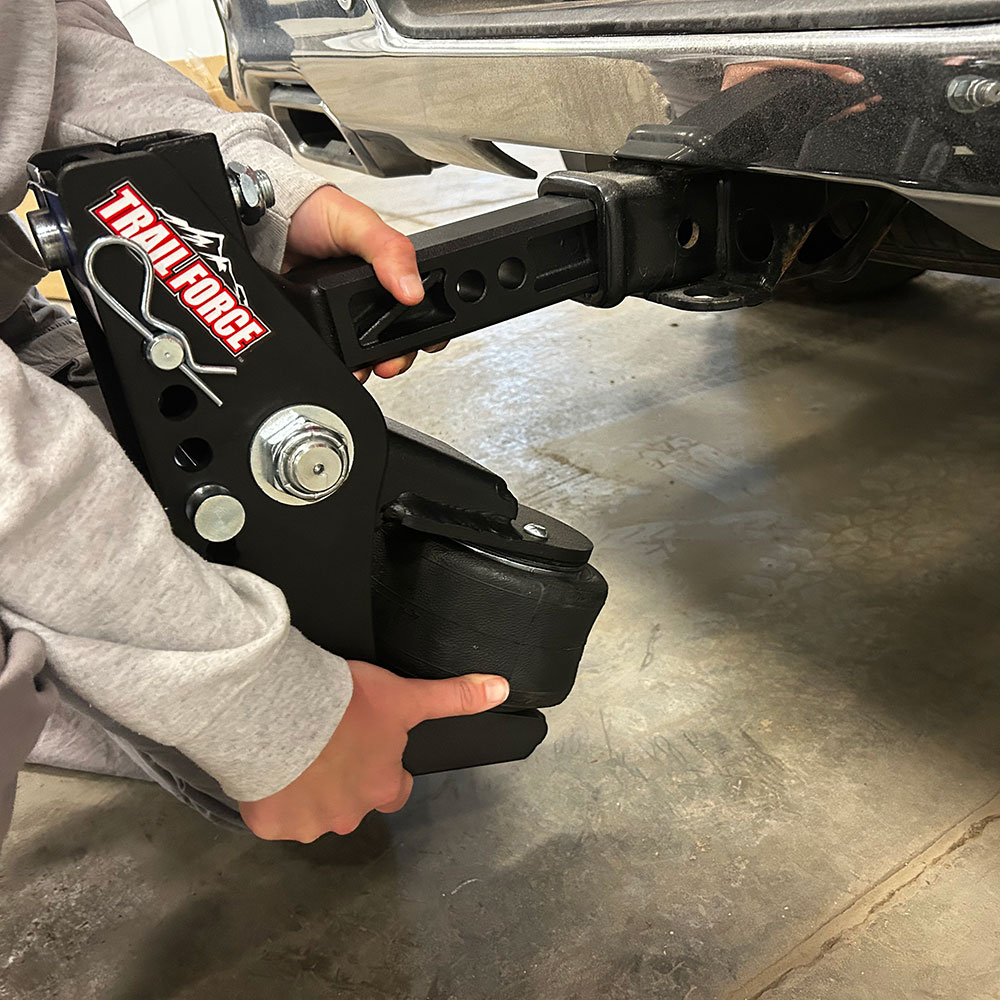
    Shank inserted into receiver

    2. Install Attachment Ball Mount

    • Selection: Choose an attachment that allows your trailer to sit level. Refer to “WHAT SIZE DROP HITCH DO I NEED” and “GROUND CLEARANCE GUIDE” for more information.

    • Attachment: Install your chosen mount into the Trail Force Hitch Frame.

    • Secure: Use the hitch pins and cotter pin clips provided to lock the ball mount into place.

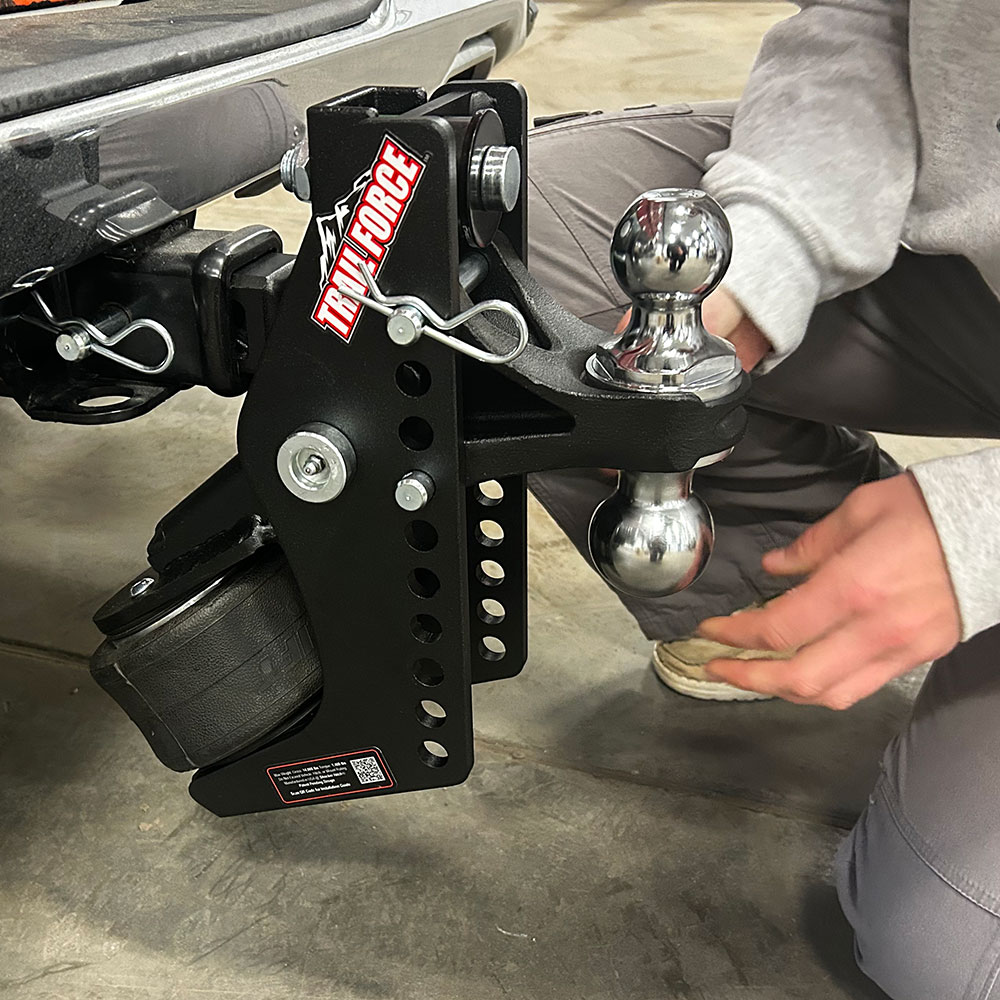
    Ball mount installed and secured with hitch pins and clips

    3. Setting Air Pressure

    • Load the Trailer: Hook up your trailer and load it as you normally would for travel.

    • To Set Air: Hook up trailer using a properly selected ball adaptor and height adjustment to level trailer when loaded. Next, inflate the air spring. As air pressure increases, the unit will rotate, lifting the hitch point. Install enough air until the top of the hitch frame touches the top (tailgate side) bump cushion, or for heavy loads, until it compresses the tailgate side bump cushion by approximately 1/8″.

    Filling up air spring using an air compressor on the valve stem

    The “Sweet Spot”

    Stop adding air once the main frame lightly compresses the truck side bump cushion.

    Truck side bump cushion compressed slightly showing proper air compression

    Download Shocker Air Receiver Hitch Install Instructions

    Download: Shocker Air Bumper Hitch Installation Manual

    Shocker Air Receiver Hitch Air Pressure PSI Tuning Video

    Air receiver hitch troubleshooting

    Start with your trailer connected and loaded for travel. Follow the instructions for your model above; do not use extra air pressure or bolt adjustments to compensate for an incorrect setup.

    The ride feels stiff

    Recheck the air setting against the truck-side bump cushion rather than aiming for a preset PSI. The main frame should lightly compress that cushion. Check routine lubrication, too.

    Do not tighten the top jamnut bolt (limiter bolt). If it has already been adjusted, contact our team before making further adjustments.

    See the labeled bolt and cushion · Maintenance steps

    The hitch seems to be losing air

    A changed trailer load, temperature change or a new air spring settling can affect pressure. Recheck the loaded setup. Persistent or substantial pressure loss needs a leak check; use the air receiver section of our detailed guide.

    Never inflate an air spring outside its hitch frame. If the spring will not hold air or appears damaged, contact our team before towing.

    Air-pressure loss troubleshooting

    The paddle angle looks excessive

    With air pressure correctly set, compare your setup with the three alignment examples. The paddle above the air spring should be approximately parallel with the receiver tube. Spacer requirements depend on the model and receiver size.

    Never exceed 100 PSI to try to correct alignment.

    Check the spacer-block decision guide

    Routine Maintenance Guide:

    1. Routine Lubrication
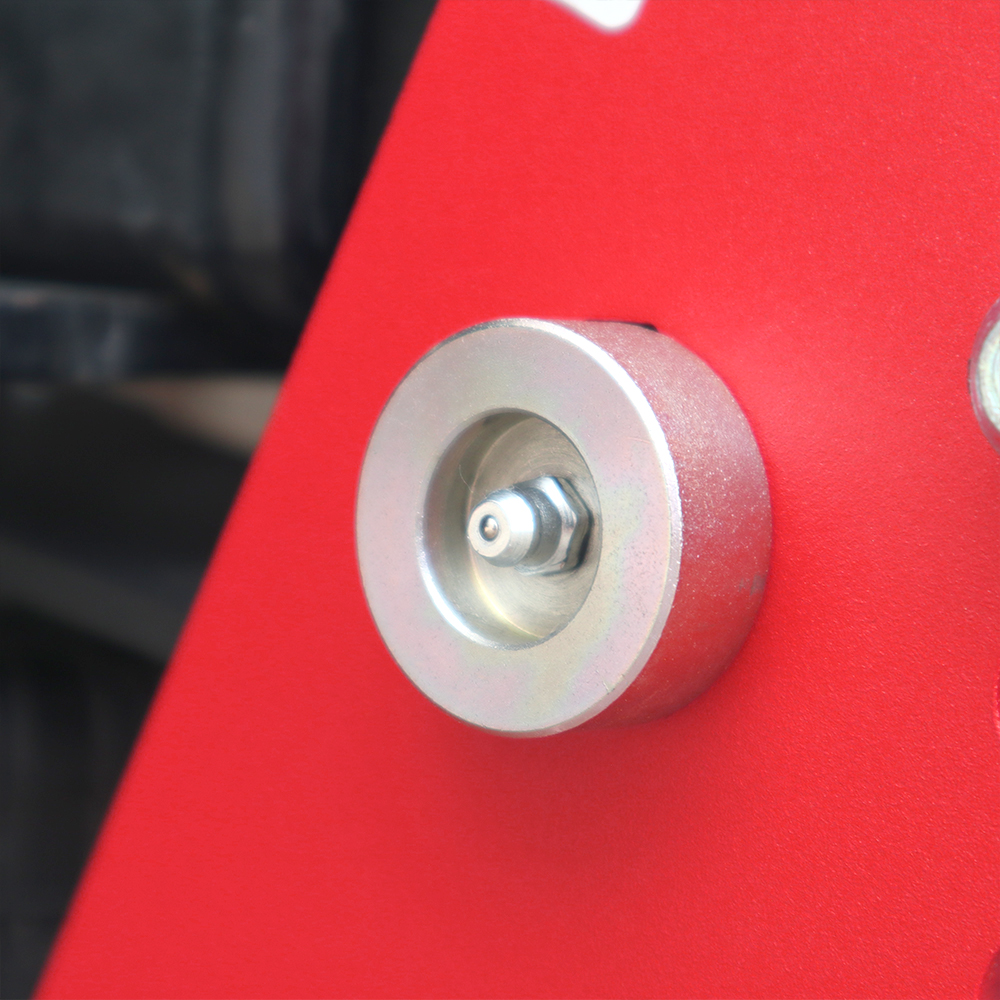
      • Pivot Bolt: Regularly grease the Shocker Hitch unit using the built-in grease zerk located on the main pivot bolt.
      • Over-Greasing: You cannot over-grease the unit; frequent lubrication ensures the air-ride pivot remains fluid and responsive.
      • Hitch Ball: It is highly recommended to grease the trailer coupler ball to reduce friction and prevent premature wear.
    2. Critical Adjustments
      • Top Jamnut Bolt: DO NOT tighten the top jamnut bolt.
      • Factory Specs: This bolt is set to factory specifications out of the box; overtightening will cause a stiff towing experience and limit the airbag’s effectiveness.
      • Attachment Swapping: When changing between different ball mounts (Combo, Pintle, Clevis, etc.), ensure the pins and cotter pin clips are fully seated and locked.
    3. Air System Integrity
      • Max Pressure: Never Exceed 100PSI in the air spring.
      • Component Protection: Excessive pressure can lead to permanent damage to the air spring or the internal bump cushions.
      • Pre-Tow Inspection: Always check your air pressure after loading the trailer to ensure the frame is lightly compressing the bump cushion.

    Common Replacement Part:

    Air receiver hitch installation FAQs

    Quick answers for standard and HD air receivers, Sport™ and Trail Force® models.

    How much air pressure should I use?

    There is no single PSI setting for every trailer. With the trailer connected and loaded, add air until the main frame lightly compresses the truck-side bump cushion, following your model’s steps. Recheck after changing the load. 100 PSI is the maximum, not the target.

    See the air-pressure photos and steps

    Which valve and bump cushion should I look at?

    Use the air valve shown for your model. Watch the cushion nearest the truck, also called the tailgate-side cushion. The paddle is the flat steel plate above the air spring; the limiter bolt is not an air-pressure adjustment.

    View the labeled component photos

    Do I need a spacer block?

    Check the paddle angle with the trailer loaded and air pressure set. An angle greater than 10 degrees calls for reviewing the spacer guidance for your model. The 20K HD with a 2-inch receiver comes with the spacer installed; some HD 2-1/2-inch models include it in the box. A spacer is generally not needed on 14K air receivers.

    Read the full spacer-block guide

    How do I choose the receiver size and ball-mount height?

    Measure the inside opening of your vehicle’s receiver and match the hitch shank to it. Select a ball mount with enough drop or rise to keep the loaded trailer level, then check ground clearance.

    Measure receiver size · Drop hitch calculator · Ground-clearance guide

    Can I use a weight-distribution hitch or friction sway control?

    The air receiver hitches covered here are not for use with a weight-distribution system. See the Shocker Air Equalizer for that application and confirm compatibility with your setup. Friction sway control requires the appropriate sway-bar-tab ball mount and compatible sway-control components; it is a different setup from weight distribution.

    Sway-control guide · Ask about compatibility

    Does adding air increase my towing capacity?

    No. Stay within the vehicle, receiver, hitch, ball mount, ball, coupler and trailer ratings. The lowest-rated component limits the setup, including its applicable tongue-weight limit.

    Understand towing capacity

    What should I check before the first tow?

    Check that the receiver pin, attachment pins and their retaining clips are fully secured; the coupler is locked on the correct ball; and the safety chains and electrical connection are in place. Confirm loaded trailer height, ground clearance and air adjustment, then complete the full pre-tow checks.

    Open the towing checklist

    How do I choose a replacement air spring or cushion?

    Match the part to your exact hitch model and air-valve or air-line configuration. Do not select by appearance alone. Use the replacement-part links on this page, or send our team your model number and a photo before ordering.

    View replacement parts · Get setup help

    We’re here to help. Contact Us

  • Warranty arrow

    Warranty

    This product is backed by the Shocker Hitch Manufacturer Warranty and the Shocker Hitch ✅ 60 Day Money Back Smooth Towing Guarantee!. View our online Warranty Registration Form to register your Shocker Hitch.
    60-DAY MONEY BACK GUARANTEE

    60-DAY MONEY BACK GUARANTEE

    We want you to be 100% satisfied. You’ve got 60 days to ensure your hitch fits your lifestyle.
    SMOOTHER TOWING

    SMOOTHER TOWING

    We guarantee whatever you are towing, the ride on your pickup and trailer will be smoother with any of our air & cushion products period.
    FREE SHIPPING* & FREE RETURNS

    FREE SHIPPING* & FREE RETURNS

    If you are not satisfied, you can return it for free the first 60 days. See our free shipping* & free return policy.
    HOMETOWN CUSTOMER SERVICE

    HOMETOWN CUSTOMER SERVICE

    We are here to help. We are happy, when you are happy.
    INSTALL HELP

    INSTALL HELP

    We’re glad to answer any questions you have. support is here 8am‐5pm, Mon‐Fri at 701-707-2666 or you can email anytime.
    MADE IN THE USA

    MADE IN THE USA

    All of our products are custom made with good all American folks in Jamestown, ND USA
    The Shocker Hitch Guarantee applies to products purchased from ShockerHitch.com.
  • FAQ arrow

    FAQ

    Answers to Frequently Asked Questions

    How much air do I put in the Shocker Air Bumper Mount Receiver Hitch?
    Hook up a trailer using a properly selected ball mount attachment and height adjustment in order to a level trailer when loaded. Next, inflate the air ride system. As air pressure increases, the unit will rotate lifting the hitch up. Add air pressure until the top of the hitch frame touches the (tailgate side) top bump cushion. Add enough air pressure to lightly compress top bump cushion or until top (tailgate side) bump cushion is compressed is approximately 1/8″.  If the weight of your trailer changes or there is a huge temperature, you may need to add or reduce air pressure. See our quick How To Set PSI in Shocker Bumper Hitch Video.

    Will the Shocker Air Bumper Hitch work with Equalizer or Weight-Distribution?  If you are just use sway bars that hook to a mini ball, then yes, if you order the combo sway control ball mount attachment. If you have a equalizer or weight distribution hitch then it will not. However, check out our Air Equalizer for weight distribution hitches.  Note: If your pickup suspension can handle the weight of your trailer and doesn’t “squat” when you hook up your trailer to pickup, then you really don’t need a weight distribution hitch. A load leveling weight distribution hitch, distributes the weight between the pickup and trailer and is generally used if your pickup can’t handle the static trailer tongue weight load.

    How long will it hold air? This is a sealed system that will hold air for weeks or months. If you haul the same trailer with the same load weight, it should be good for quite some time.

    How long will the airbag last? Our airbags are an industrial bag and will last for years and years. They are similar to truck airbags but have been beefed up internally for our towing applications.

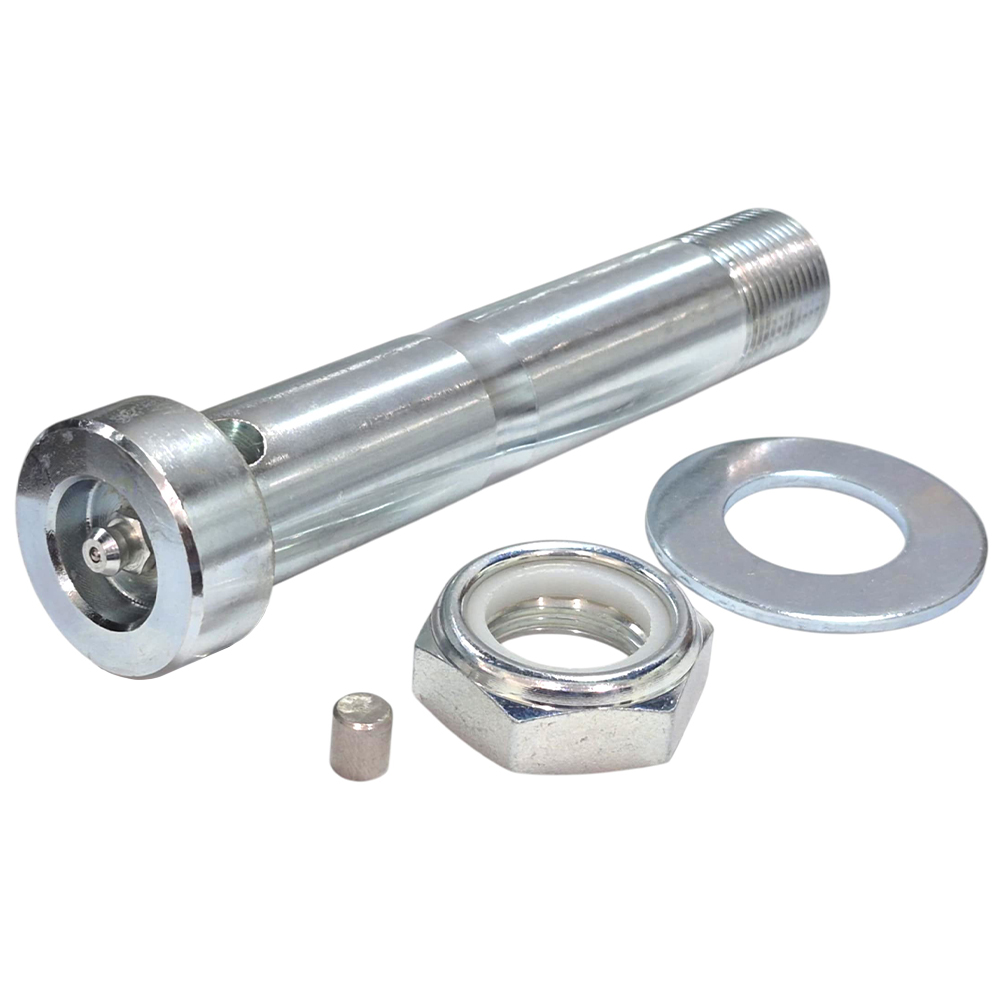
    How strong is the center pivot bolt?  The main pivot bolt with grease zerk, or center pivot bolt, used on the shocker air bumper hitch, is a custom made 1 inch diameter 1045 medium carbon steel bolt. Strategically heat treated to prevent wear and includes a machined grease passage for easy lubrication and maintenance. It should be noted that the yield strength of the 1″ pivot bolt exceeds the two 5/8″ bolts used to hold the typical ball coupler or receiver hitch.

    How do I know the Shocker Air receiver hitch will fit my truck?
    We have made sure that the receiver air shocker will fit into most Ford, Chevy, GMC Dodge, Toyota, Nissan & Honda Pickups, Vans & SUV’s (SUV’s were the receiver is under the bumper). There are some clearance issues with the Chevy Envoy, Ford Explorer, some imports and service body vehicles where the body extends below the receiver tube or the receiver tube is inside the bumper.  The Shocker Air receiver hitch is available in a 2″, 2 1/2″ & 3″ shank.

    How far below my pickup does the receiver air shocker hang? Five inches below bottom of receiver tube.

    How often do I grease it? The grease does not just lube the pivot; it also keeps water and dirt out. You cannot over grease it, once every few months should do it.

    Does the receiver air hitch work with sway bars?
    Yes, it works with the friction style sway control bar, however you want to order a ball mount with sway bar tabs. See our sway bar tab ball mount attachments.

    How does the Air hitch work? The Receiver air shocker is like a teeter totter. One end is an air bag, a pivot in the middle, and a ball at the other end. This gives a “pillow” effect at the ball end.

    Should I tighten up the top jam nut on the receiver shocker? No. The air shocker needs at least one half inch of play to work properly.

    How long do the bump cushions last? This depends on if the hitch is left on the truck year round or not. If they bump cushions become mushy, you should replace them. Typical life expectancy is 5-7 years.

    How much does an Shocker Air bag receiver hitch weigh? The Receiver Air Shocker weighs 50-55 pounds

  • Q & A (3) arrow

    Questions and answers of the customers

      I have a Shocker HD 20k. My tongue weight is only 1000lbs. Thought It would end up being more but it isn’t. Do I need a 14k hitch for better performance.
    1. 0 votes
      Q I have a Shocker HD 20k. My tongue weight is only 1000lbs. Thought It would end up being more but...... Read more
      A

      You will get great performance out of your 20k model with your 1,000lbs of Tongue Weight. That is the beautiful advantage of our Air Receiver Hitches! The air pressure is adjustable to accommodate a wide range of different trailers for the best ride! Simply, after you hook up your trailer to your ball, you will then add air to the hitch up until the black bump cushion is compressed 1/8"! 

    2. Is the HD 20,000lb version physically larger than the 12,000 lb version?
    3. 0 votes
      Q Is the HD 20,000lb version physically larger than the 12,000 lb version?
      A

      The HD 20,000 lb Shocker Hitch is still comparable in size and weight to the 12k version. The main difference you will notice is that the bag is a heavier duty bag, as well as the bump stop cushions, and hardware have all been changed to a heavier grade for a more durable hitch. 

    4. I have a 2019 1/2 ton Silverado will this hitch allow me to tow more weight?
    5. 0 votes
      Q I have a 2019 1/2 ton Silverado will this hitch allow me to tow more weight?
      A No, our hitch is rated for 20K, but that only matters if your truck has that towing capacity. Our hitches will not increase your trucks individual towing capacities.
      A No, our hitch is rated for 20K, but that only matters if your truck has that towing capacity. Our hitches will not increase your trucks individual towing capacities.

  • Reviews (33) arrow

    Customer Reviews

    1. Rated 5 out of 5

      I have had this 20k air hitch on my truck for 2 years now. I pull dumptrailers daily and my camper often on trips it has absolutely blown me away how much everything rides. I wouldn’t go with any other company. I love this hitch so much I bought the gooseneck air hitch.

      – Preston perdue
    2. Rated 5 out of 5

      I had been looking at Shocker Hitches for quite a while and always wondered if they were worth the investment. I’ve towed a variety of utility and flatbed trailers over the years, but it wasn’t until we purchased a travel trailer that I really noticed how harsh and jarring my standard drop hitch was.

      After only two trips with the camper using my old hitch, I decided to bite the bullet and order the Shocker Hitch. All I can say is, WOW! The difference was night and day.

      The towing experience improved dramatically. The constant jolts and shock loads I was feeling through the truck and trailer were significantly reduced. No more white-knuckle driving through mountain roads, over bridges, or on rough stretches of highway. The annoying “wave” or bouncing effect after hitting dips, expansion joints, or uneven pavement is virtually gone.

      Not only is the ride smoother, but towing feels more controlled and much less stressful overall. Looking back, this is a purchase I should have made years ago. If you’re towing a travel trailer, or really any trailer on a regular basis, I highly recommend giving a Shocker Hitch a try. It has completely changed my towing experience for the better.

      – Reese
    3. Rated 5 out of 5

      Heavy duty hitch. Appears well built and makes for a noticeable difference in how smooth the towing experience is now.

      – Dillon Holtan
    4. Rated 5 out of 5

      Easy installation process, noticed a vast improvement with trailer surging the first time using it.

      – Michael Hsu
    5. Rated 5 out of 5

      Excellent, takes out 90% of the bounce, pulling a long empty trailer

      – Daniel Cottyn
    6. Rated 5 out of 5

      Works as described it definitely doesn’t jerk on the truck like a conventional receiver

      – Jeff Nicks
    7. Rated 5 out of 5

      This hitch is amazing, I can’t believe the ride is that much better.

      – hilbigdr
    8. Rated 5 out of 5

      I can’t believe the hitch made that big of a difference in the ride.
      I have a shocker hitch for trailers on my 1/2 ton, I purchased the HD Air Hitch for heavier trailers on my HD pickup. The ride is so much smoother, I may want the lighter Air Ride hitch for 10-12k trailers.

      – hilbigdr
    9. Rated 5 out of 5

      WOW! What a difference! Highly recommend to anyone looking for a smoother ride while towing. I haul 8,000-10,000 regularly on a bumper pull and I couldn’t be happier with the SH-HD620-200. Definitely worth the money.

      – CIMRSales&Service
    10. Rated 5 out of 5

      First off I have to say that the customer service department is excellent. They went above and beyond to resolve an issue I had when I received my hitch. Once I installed the hitch, I hooked up the trailer loaded up a piece of equipment and aired up the bag. Immediately I could tell a difference. Night and day. I highly recommend this hitch to anyone that does any towing on a regular basis.

      – Curtis Boland
    11. Rated 5 out of 5

      Best hitch for comfort during towing! Second one I have purchased. First hitch 2 years old and no issues at all. Highly recommend. Worth the price.

      – Nate Krieser
    12. Rated 5 out of 5

      It definitely softened the ride of our 34’ Winnebago Travel Trailer (about 9,500 lbs) that we tow behind our F350. I plan to purchase the pintle hitch to tow my tractor, tractor and trailer are about 15,000 lbs.

      – Champ Edmunds
    13. Rated 5 out of 5

      Levels up trailer nicely. Much better pulling experience. Softer ride.

      – Ronald C Blankenship
    14. Rated 5 out of 5

      Its a game changer it is a smooth smoother ride. There is no more bumping jerking all in all it’s just a very comfortable safe and secure tow

      – Eddie Phelps
    15. Rated 5 out of 5

      I regularly tow 6K-15K lb at least 3-4 days of the week, all year. I have a Shocker hitch on one truck but got one for the second truck recently b/c it really reduces the bumps and jarring (by about 50%) I experience on washboarded dirt roads. I’ll be getting the trailer Shocker soon once my dump trailer hitch fails, which it invariably will. I’ll probably be getting the gooseneck Shocker as well once I go down that rabbit hole. I highly recommend the Shocker!

      – Christian
    16. Rated 5 out of 5

      Great Quality and it significantly reduces the towing motions of the trailer and hence a smooth ride for me. Awesome product! Thanks

      – Joe Mazero
    17. Rated 5 out of 5

      I purchased the shocker hitch HD to eliminate the jerking motion as you come to stop. This hitch did just that. I have a PJ tilt deck trailer that I haul with most of the time. This hitch has made hauling much more comfortable on the harsh MN roads. I do like to run rock tamers when I haul. This is something I wish shocker hitch would have provided from the beginning. I did fabricate some brackets myself. Now the hitch is complete. Thanks shocker hitch for your outstanding work.

      – Tyler Kleinhuizen
    18. Rated 5 out of 5

      Works awesome takes away the harsh ride love it!

      – Jason Weiler
    19. Rated 5 out of 5

      Super fast shipping and GREAT product! 10/10 would recommend!

      – Pete Fuhr
    20. Rated 5 out of 5

      I have used the hitch for about a week and noticed big difference in the ride of tow vehicle. Also, it can be adjusted if the trailer is empty or loaded.

      – EUGENE KRABER
    21. Rated 4 out of 5

      Product is great! Wish they made one for Sway Control. Thanks, Bob!

      – Sal Mascareno
    22. Rated 5 out of 5

      I went with the hd air hitch and love it. I’m always pulling heavy trailers and this air hitch can simply be adjusted by adding air or letting air out to make the best ride possible. One of the bumper hitch trailers I tow is really heavy on the tongue and this hitch takes all the bucking and jerking out of this trailer.

      These guys are very helpful and know what they are doing at shocker hitch. They shipped mine to me while I was at a Minnesota fair last year and I had it the very next day after ordering it and speaking with them over the phone. All my questions and concerns were answered.

      Best hitch I’ve ever owned!!

      – Mike Pilcher
    23. Rated 5 out of 5

      I have brought and used shocker hitches for many years. Everyone of them (5 or 6 including a goose neck) are still in use and performing as new. I recently added the Heavy Duty version for a new F350 Super Duty and could not be more pleased. We regularly haul a fork lift to job sites and this required us to use a different hitch because the tongue weight was just to high for the standard hitch. The new hitch handled it with ease. I also can now have the adjustment in the ball height I needed to get the trailer level with the new higher trucks. Shocker always seems to be working on new products and Bob and the team are always helpful in explaining the new product capabilities.

      – Mike Hodde – Houston, TX
    24. Rated 5 out of 5

      Absolutely never haul a heavy hitch tow without one! This is my second one. It saves your trailer and vehicle from excessive movement, saves fuel and makes the tow safer.

      – John Crenshaw
    25. Rated 5 out of 5

      I love my shocker hitch

      – SHERMAN SMITH
    26. Rated 5 out of 5

      Best hitch on the market! It does everything it says it will do. A very smooth ride.

      – Mathew S.
    27. Rated 5 out of 5
      – David Munro
    28. Rated 5 out of 5

      I purchased the receiver hitch and I was amazed, I have a 22′ poontoon, dual wheel trailer with surge brakes. At 55 mph it would walk all over the road. With the shocker I traveled 70-75 on I 81 to Douglas lake and couldn’t tell the boat was behind me without looking in the mirror. Thanks, I know you say it may help with sway, well it did for me and I say great hitch.

      Barry D.
      Williamson, WV

      – Barry D. Williamson, WV
    29. Rated 5 out of 5

      It’s a refreshing change to purchase something and it exceeds your expectations. I used the Receiver Mount Shocker Hitch for the first time Friday when I moved my boat about 80 miles to the marina and I could not believe how much better it travels. You’ve got a great product and its well worth the money. Thanks.

      Bruce M.
      Lexington, KY

      – Bruce M
    30. Rated 5 out of 5

      We have a family farm business that requires us to pull many different trailers ranging from 12′ and just a few thousand pounds to 25+’ wide-load 14,000 pound+ loads. I have used many different types of hitches and load lever bars various attempts to ease the bounce and general rough rides associated with long, empty trailers. What opened our eyes to the Shocker hitches is about $6000 worth of damage to our RV trailer from pulling with a 1-ton truck and conventional weight distributing hitch. The rough ride destroyed the front frame of our Aerolite trailer (I would not recommend Aerolite trailers to anyone – turns out you can make a trailer too light!). I’m convinced this damage would not have occurred had I been using a Shocker hitch all along. After purchasing a unit (primarily for the RV), I began using it for all my farm towing needs. Eric and Bob were very helpful in supplying all the various adapters to pull all my trailers, and it has become an indispensable part of my farm! You will be amazed on how much the hitch improves the ride, and I can’t say enough about the quality, design and even the finish of the Shocker hitches. Please feel free to give my phone number out to prospective buyers it they would like to chat about my very positive experiences regarding your products and customer service!

      Lance F.
      Sedro Woolley, WA

      – Lance
    31. Rated 5 out of 5

      I haul trailers from Indiana to Winnipeg 6 or 7 times a month. They range anywhere from 21 feet to 42 feet long and found that the Shocker Hitch can handle them all with just a slight adjustment of air. The hitch is an amazing unit and I would never go back to using a steel hitch. The difference it makes is hard to discribe untill you actually use one. I have found that with this hitch I can pull longer trailers without the use of equalizing bars by just adding air to the hitch.I have been using the hitch now for over two years and have found the ride and stability using it is truely amazing. I would reccomend this hitch to anyone pulling a trailer, once you have tried it, I don’t see you going back to a regular steel hitch.The interchangeable hitch applications are amazing just pull two pins and you can change the hitch application in seconds.One thing I have to say is the service they provide is fantastic. If you need something or have any questions they are there to help just pickup the phone or stop by like I did. They went over the hitch and explained how to use the hitch, not many companies I have ever delt with stop working and go one on one with a customer to go over their product.Oh, and by the way 8 or 9 of my friends also use the hitch and are totally happy with it, and they dont haul for a living, they use it for personnel use. Thanks again BOB and THE OTHER GUY .

      Richard Giesbrecht,
      Winnipeg Manitoba Canada

      – Richard G
    32. Rated 5 out of 5

      In 2009 I purchased my 1st receiver hitch from ShockerHitch. I was executor of my Aunts Estate in Ft Worth Tx, and I live near Lubbock Tx, 6 hrs 1 way driving distance. I was pulling an enclosed 14 ft tandem trailer to haul estate “stuff” to various kinfolk. Needless to say the ride in the pickup was rough, when pulling the trailer with a regular ball hitch, to say the least. I purchased the Receiver Hitch, after seeing it advertised in Farm Show Magazine. My wife said, “You paid how much for a trailer hitch”. But after 1 hr of travel – pulling the trailer attached to the ShockerHitch – my tough critic became a believer, saying it was the best money I ever spent. She could do her NeedlePoint work, read, and relax without the constant banging, joshling, and rough riding caused by the trailer being pulled.

      Christmas, 2010, I purchased 3 more receiver hitches for my 2 sons and 1 son in law. They already enjoyed the hitch, as they have borrowed mine when they had any serious, long hauling. To anyone who pulls a trailer and is tired of the constant banging, jarring ride, it will be money well spent to purchase a shockerhitch. Many things purchased today don’t work as advertised, this ShockerHitch works as good or better than its advertisement. It Works.

      Sincerely,

      Earle Hutson
      Idalou, TX

      – Earle H.
    33. Rated 5 out of 5

      I purchased the Heavy duty receiver hitch to pull my 27′ RV and a 20′ trailer for work. This hitch has been great. Not only did it stop the shock in the road bumps it also eliminated the shock in the starting to roll and the stop of the truck. This was one feature i did not understand when i purchased the hitch. This has made our travel so enjoyable. Thank you very much for you design and customer service.
      Roger B.
      Houma, LA

      – Roger B

    33 reviews for Shocker 20K HD Air Drop Hitch with Combo Ball

    Add a review

    Your email address will not be published. Required fields are marked *

You may also like…

  • All Shocker Receiver Hitch Attachments and Mounts

    Shocker Receiver Hitch Attachments

    From:  $64.99
    Rated 5.00 out of 5

    -

  • Quick Latch Towing Mud Flaps

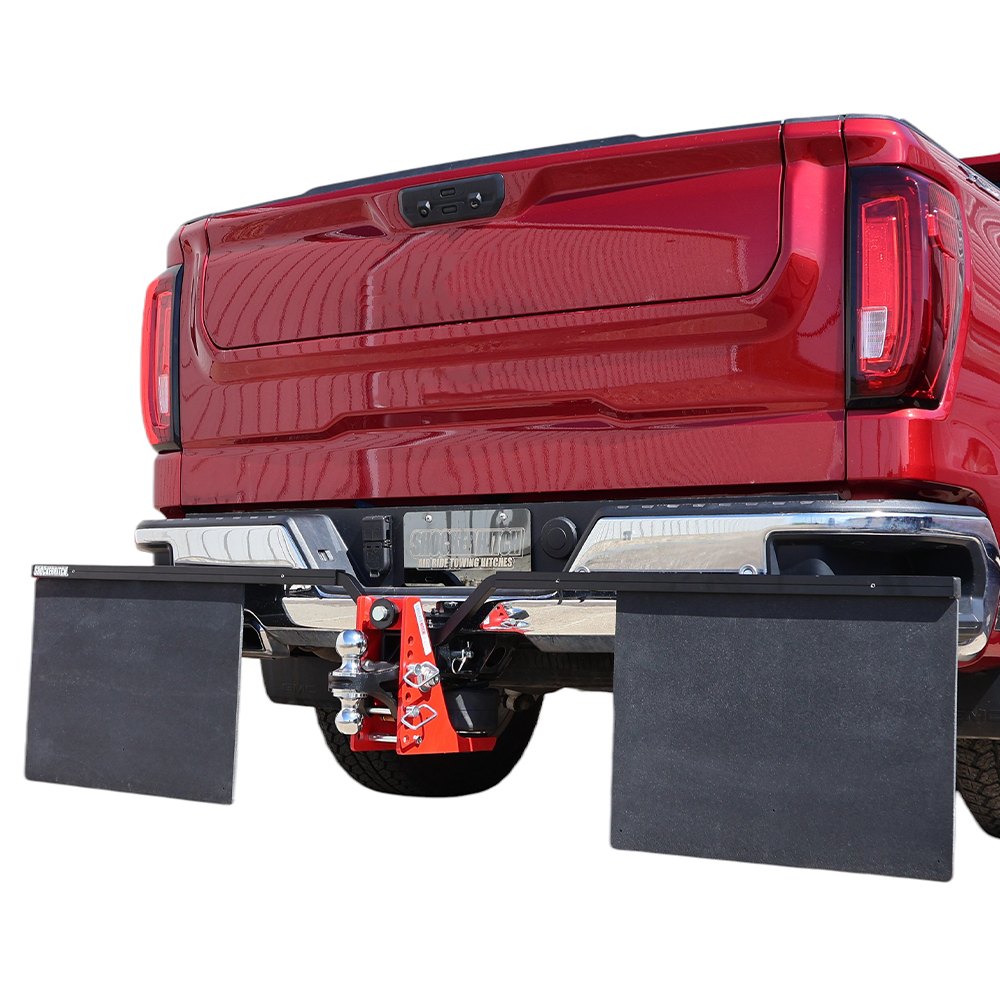
    Shocker Hitch Quick Latch Towing Mud Flaps

    From:  $439.99
    Rated 5.00 out of 5

    -

  • Shocker Compact Portable Air Compressor with Digital Gauge

    Shocker Compact Portable Air Compressor with Digital Gauge

    From:  $69.99
    Rated 5.00 out of 5

    -

  • Extra 10% offShocker Gooseneck Rollup Tonneau Cover

    Shocker Gooseneck Roll Up Tonneau Cover

    From:  $373.49$414.99
    Rated 4.88 out of 5

    -

  • Extra 22% off3-Pack (2 Mount & 1 Receiver Pins)

    Shocker Receiver Hitch Locking Hitch Pins

    From:  $22.23$28.50
    Rated 4.86 out of 5

    -