



Air receiver hitch setup
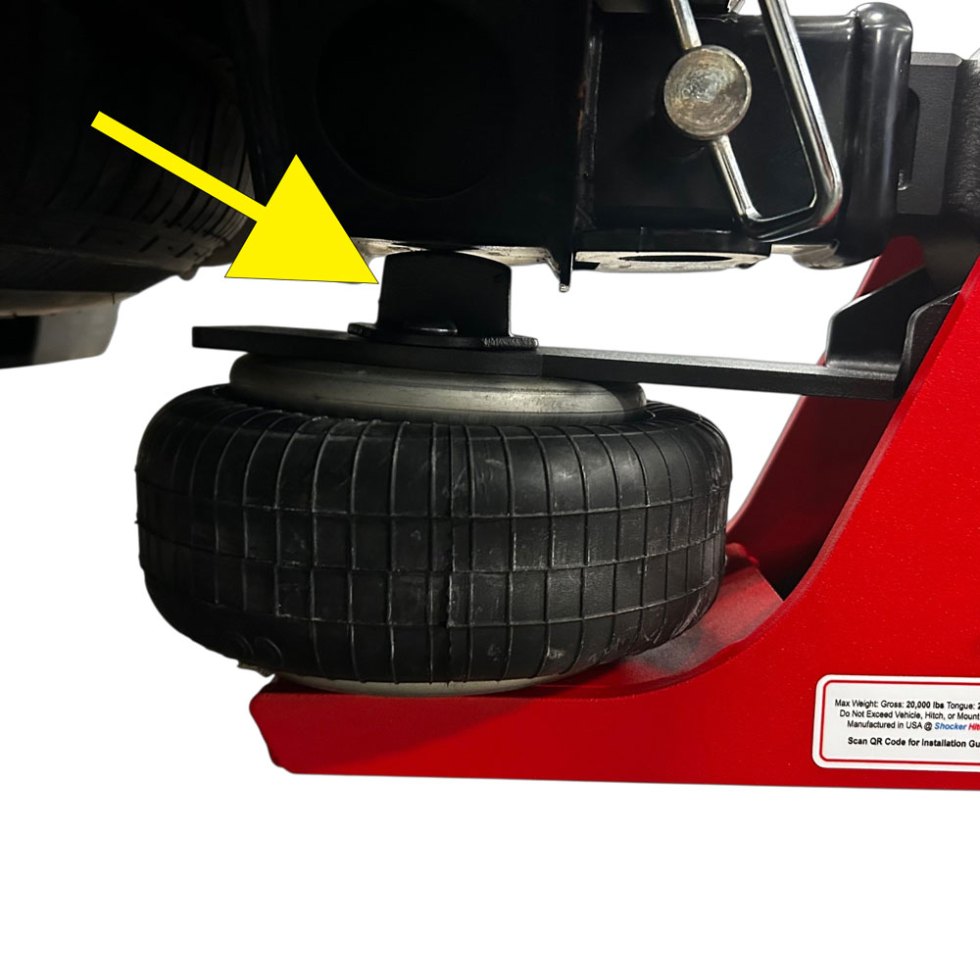
A spacer block helps correct an excessive angle between your truck’s receiver tube and the paddle above the air spring bag. Check the fit with your trailer hooked up, loaded and properly aired up.
Not every Shocker Air Receiver Hitch needs a spacer. Your hitch model, receiver size and the way the paddle sits determine whether one is needed.
How to tell if you need a spacer block
- Hook up and load the trailer. Check the hitch in the condition you normally tow, following your installation guide.
- Set the air pressure correctly. For the air receiver models covered by the linked manual, add air until the main frame lightly compresses the truck-side bump cushion. Never exceed 100 PSI.
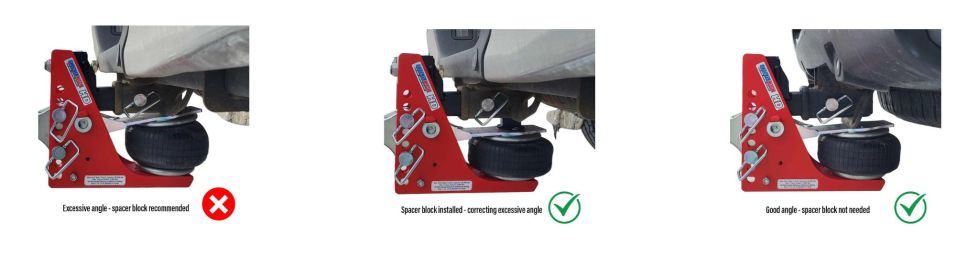
- Look at the paddle above the air spring bag. The paddle or installed spacer should press against the bottom of the receiver tube. Compare the angle with the diagram below.
- Check for excessive tilt. If the paddle is tilted more than 10 degrees after proper setup, a spacer block can help level it. If the fit is unclear, send our team a side-view photo before making changes.
Compare a good paddle angle with excessive tilt
The paddle is the upper mounting plate above the air spring bag. Receiver designs vary, so the same hitch can sit differently on different trucks. A spacer fits on top of the paddle to help maintain the air spring bag’s intended operating position.
Which air receiver models use a spacer?
20K HD with a 2-inch shank
The installation manual specifies a spacer block supplied already installed. Check that it is present and that the setup matches the guide.
20K HD with a 2½-inch shank
A spacer is supplied in the box for use when needed. Check the paddle angle with the trailer loaded and the air pressure set.
14K and other air receiver models
The 14K air spring bag is taller than the HD bag, so a spacer is generally unnecessary. Some receiver designs may still require one; confirm fit for your exact model.
These checks concern an air receiver hitch’s paddle spacer. Follow the installation instructions for your specific hitch, including older 8K and 10K models.
Set air pressure before judging the angle
Use the air-pressure setting guide and the correct installation manual. The 100 PSI limit is a maximum, not a target. A spacer does not increase towing capacity or replace choosing the correct drop or rise to level your trailer.
Before installing a spacer
Confirm the part and procedure for your hitch. Unhook the trailer, support the hitch securely and release the air pressure before removing air spring hardware.
The spacer mounts on top of the paddle using the air spring bag’s upper retaining bolts. The existing guide specifies the included Allen wrench and two ⅜-inch × ¾-inch bolts. Follow your model’s instructions and contact our team if your hardware differs.
After installation, reconnect and load the trailer, reset air pressure and recheck paddle contact and angle.

Watch: why your air hitch may need a spacer
Spacer-block questions
Do all HD air receiver hitches need a spacer?
The manual specifies one installed on 20K HD models with a 2-inch receiver shank. For 2½-inch HD models, check the fit and use the supplied spacer when needed.
Does a 14K air receiver hitch need one?
Generally no. Its air spring bag is taller than the HD bag, but receiver geometry can make a spacer necessary in some setups.
Will a spacer fix the trailer’s towing height?
Its job is to correct the paddle’s operating angle. Use the drop and rise guide to choose the correct ball-mount height.
What should I send if I’m unsure?
Send your hitch model, receiver size and a side-view photo showing the receiver tube, paddle and air spring bag with the loaded trailer connected and air pressure set.
Need help checking your spacer fit?
Have your hitch model, receiver size and a side-view photo ready. Our team can help you confirm the paddle angle and the correct part for your setup.
Related help: Measure your receiver · Pre-trip towing checklist · All towing tips