



Trailer towing guide
Air ride adds suspension. Cushion softens impacts. Solid keeps the connection rigid.
All three can pull a trailer. The difference is what happens when the truck and trailer push, pull, bounce and move against each other. These principles apply to receiver hitches, gooseneck trailers and 5th wheel campers. The connection and the location of the cushioning change with your trailer type.
Receiver / bumper-pull trailers
Air Ride, Cushion & Solid Receiver Hitches
For trailers that connect behind the truck, the hitch slides into the rear receiver. Here are the three receiver-hitch styles. Towing from the truck bed? Jump to gooseneck trailers or 5th wheel campers.
Air ride
Think: Real suspension
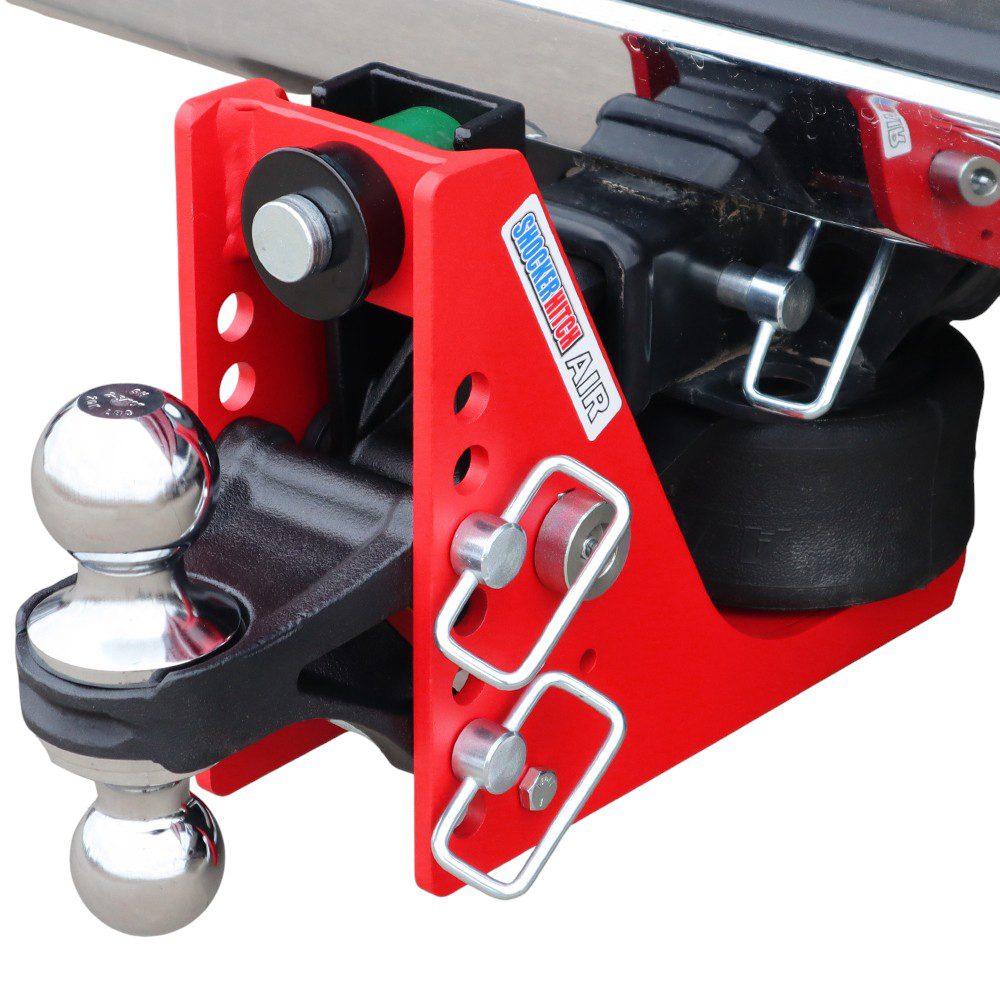
- Adjustable air pressure for your load
- Engineered suspension travel
- Greatest potential for a smoother ride
Cushion
Think: Rubber mallet
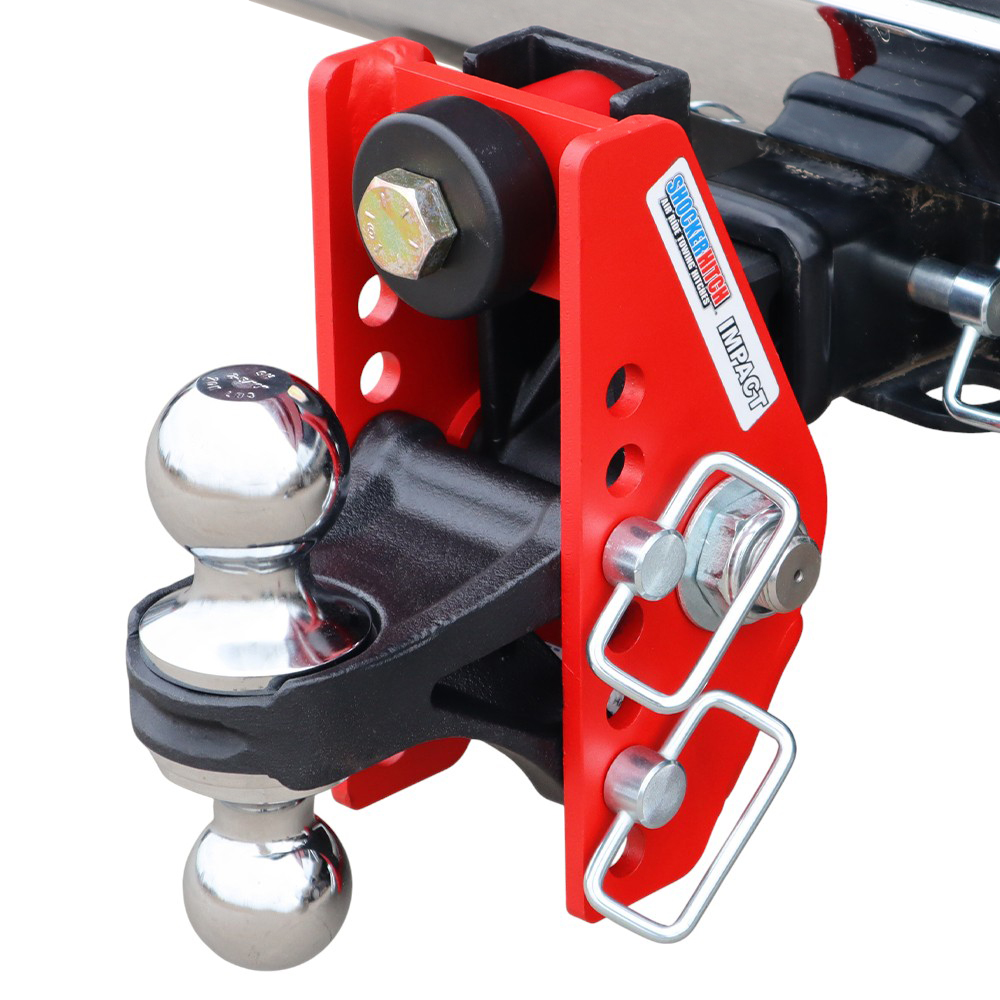
- Fixed cushioning to soften impacts
- Simple system with no air to adjust
- A balance of comfort and cost
Solid / XR
Think: Steel hammer
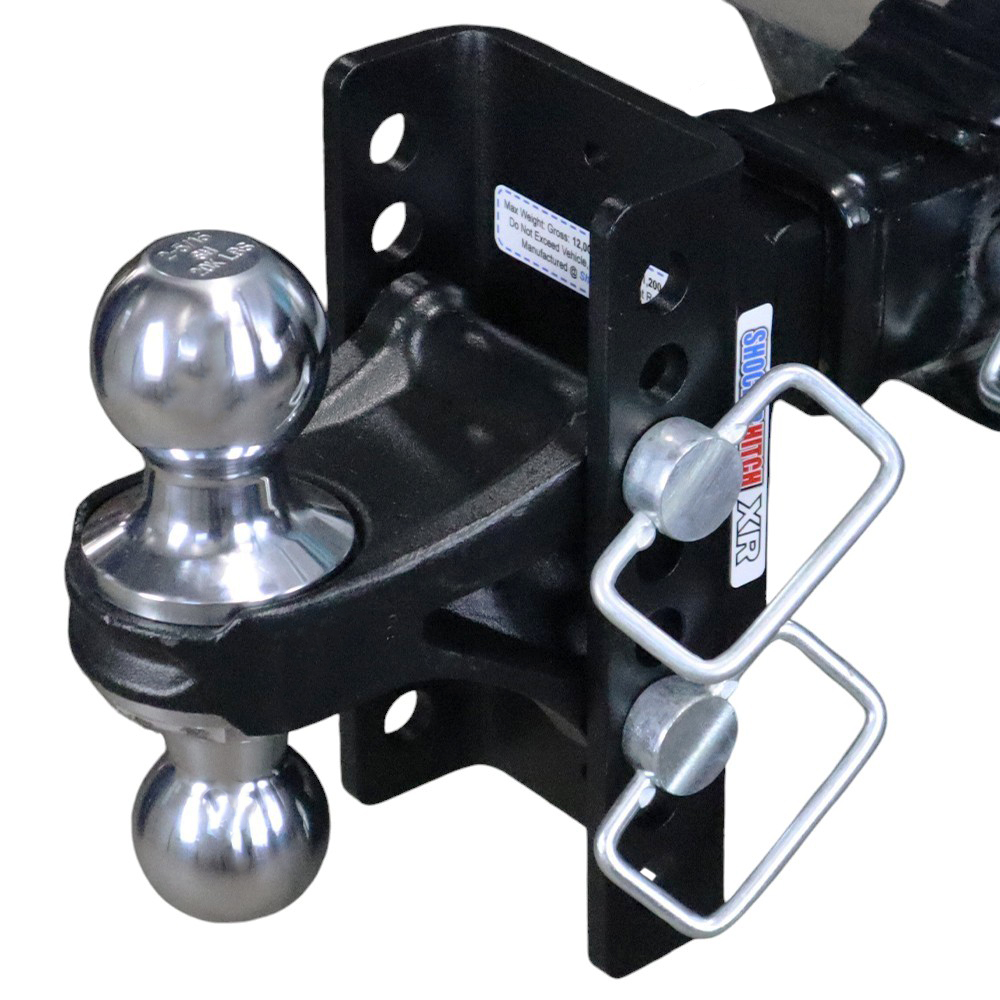
- Rigid, straightforward connection
- No built-in hitch cushioning
- Simplicity and lower cost
The differences at a glance
Receiver Hitches: Quick Comparison
Start with what matters most to you: adjustable ride comfort, simple cushioning or a straightforward connection.
| What matters | Air ride | Cushion | Solid / XR |
|---|---|---|---|
| Hitch-level cushioning | Adjustable air suspension | Fixed rubber / urethane cushion | No built-in cushion |
| Adjustable for load | Yes — change air pressure | No — fixed cushion characteristics | No — rigid connection |
| Suspension travel | Engineered movement | Limited cushion movement | Essentially none |
| Chucking & jerking | Can drastically reduce trailer chucking | Helps soften the motion | More directly transferred |
| Maintenance | Check air pressure and components | Inspect cushion and components | Fewest cushioning components |
| Cost & best fit | Premium: ride comfort and adjustability | Mid-range: cushioning and simplicity | Lower cost: a simple connection |
On a phone, swipe the chart sideways to compare all three hitch types. Cost and performance vary by model, load and setup.
For ride quality and adjustability, start with air ride. Choose cushion for added comfort without an air system, or solid for simplicity and lower cost.
Match the hitch to your towing
Which Receiver Hitch Is Right for You?
Think about how often you tow, the roads you travel, your loaded trailer weight and how much ride comfort matters to you.
Choose an air ride hitch for comfort and adjustability
An air ride hitch places an air spring into the towing connection. It allows controlled movement between the truck and trailer, so the air spring can compress and recover as towing forces change.
A Shocker air ride hitch can drastically reduce trailer chucking and help soften jerking, bouncing and road shock. You can adjust air pressure for different trailer loads and fine-tune the ride to your setup.
Think of your truck’s suspension: the pothole is still there, but controlled movement helps keep the entire impact from passing directly into the vehicle. An air ride hitch applies that same idea at the towing connection.
A good fit when you:
- Tow frequently or travel long distances
- Drive rough highways or uneven roads
- Haul valuable cargo or equipment
- Want less chucking, jerking and bouncing
- Tow trailers with different loaded weights
Choose a cushion hitch for a simpler comfort upgrade
A cushion hitch uses rubber, urethane or another resilient material that compresses or flexes under force. It can soften road shock, vibration, harsh impacts and some fore-and-aft chucking compared with a rigid connection.
That is the rubber mallet idea: the cushion flexes to make the hit less abrupt. Its response is set mainly by the material, hardness, size and design.
A fixed cushion provides cushioning with limited movement. You cannot tune it for a lighter or heavier trailer by changing air pressure.
A good fit when you:
- Want a step up from a rigid hitch
- Prefer a system with no air pressure to adjust
- Tow similar loads most of the time
- Want to balance price and ride improvement
Choose a solid hitch for simplicity and lower cost
A solid hitch creates a rigid mechanical connection. It has no air spring or cushion material built into the hitch to isolate movement between the tow vehicle and trailer.
Your truck and trailer still have their own tires and suspension systems, but the hitch itself adds little cushioning. The steel hammer analogy describes that direct connection.
Solid does not have to mean a fixed height. An XR adjustable hitch offers drop and rise options for different trailer heights; height adjustment is different from adjustable suspension.
A good fit when you:
- Tow occasionally or mainly on good roads
- Prioritize simplicity and a lower price
- Want fewer cushioning components to maintain
- Need adjustable height without added suspension
Gooseneck trailers
Air Ride vs. Cushion vs. Solid Gooseneck Hitches
The connection moves to the truck bed. The need to control chucking stays.
A gooseneck coupler connects the trailer to a ball in the truck bed. Horses, livestock, equipment, flatbeds and hotshot trailers can still send harsh forward-and-back forces through that connection.
A Shocker Gooseneck Surge air hitch can drastically reduce trailer chucking. Its pivoting air-spring system is designed to manage forward-and-back movement, helping soften the tugs and jerks felt in the truck and trailer. Air pressure can be adjusted as the load changes.
A cushion or torsion gooseneck hitch uses a resilient element to soften movement. A solid gooseneck coupler provides a rigid connection with no dedicated hitch suspension. An offset coupler can change clearance; an offset alone does not add cushioning.

| What matters | Air ride | Cushion / torsion | Solid |
|---|---|---|---|
| Where cushioning happens | Air spring in the gooseneck hitch / coupler assembly | Rubber, urethane or torsion element in a cushioned coupler or hitch | Rigid coupler and ball connection |
| How it handles chucking | Controlled air-spring movement helps absorb forward-and-back surges | Cushion flexes to soften movement within its designed range | More directly transfers the push-and-pull |
| Adjusting for changing loads | Adjust air pressure for loaded or empty towing | No air-pressure adjustment; match the cushion’s load range | No cushioning to tune |
| Best reason to choose it | Adjustable ride comfort for frequent hauling and changing loads | Added cushioning without an air system | Straightforward connection and fewer cushioning components |
Swipe sideways on a phone. Movement, fit and ratings depend on the specific hitch or pin box.
Why choose gooseneck air ride?
- Soften fore-and-aft chucking on rough highways
- Adjust for loaded and empty return trips
- Reduce harsh shock passed to livestock, equipment and cargo
- Improve comfort during frequent or long-distance towing
Match the hitch to your trailer
Check the gooseneck stem shape and size, pin-hole orientation, ball size, loaded trailer weight, vertical load and needed cab clearance. Choose a compatible standard or offset coupler configuration.
5th wheel RVs & campers
Air Ride vs. Cushion vs. Solid 5th Wheel Camper Connections
Choose the ride improvement and the truck-bed connection that fit your camper.
A conventional 5th wheel camper uses a pin box and kingpin that latch into a 5th wheel hitch in the truck bed. The hitch’s normal tilting and turning movement lets the combination articulate; that movement alone does not mean it has air suspension or cushioning.
An air-ride pin box adds adjustable suspension at the connection. A cushioned pin box or hitch uses a resilient material or spring system to soften movement. A solid pin box and hitch without added suspension transmit towing forces more directly.
Shocker Quick Air can drastically reduce the fore-and-aft chucking felt while towing a 5th wheel camper. Its air system can be tuned to the load to help make long travel days smoother and reduce harsh shock transferred between the truck, camper and its contents.
| What matters | Air ride | Cushion / torsion | Solid |
|---|---|---|---|
| Where cushioning happens | Air-suspended pin box, hitch or compatible conversion assembly | Rubber / shear spring, torsion or other cushion in the pin box or hitch | Rigid pin box and hitch without added suspension |
| How it handles chucking | Air-spring movement helps isolate fore-and-aft forces | Cushion or spring flexes within its designed travel | More directly transfers the fore-and-aft motion |
| Load adjustment | Air pressure can be tuned to the camper’s load | No air-pressure adjustment; follow the model’s load-range requirements | No cushioning to adjust |
| Connection choices | Kingpin-to-5th-wheel or a compatible air-ride gooseneck conversion | Depends on the specific pin box or hitch | Conventional kingpin connection or compatible rigid conversion |
Swipe sideways on a phone. Movement, fit and ratings depend on the specific hitch or pin box.
Two Shocker Quick Air options for your camper
Keep your kingpin connection
Quick Air 5th Wheel Pin Box
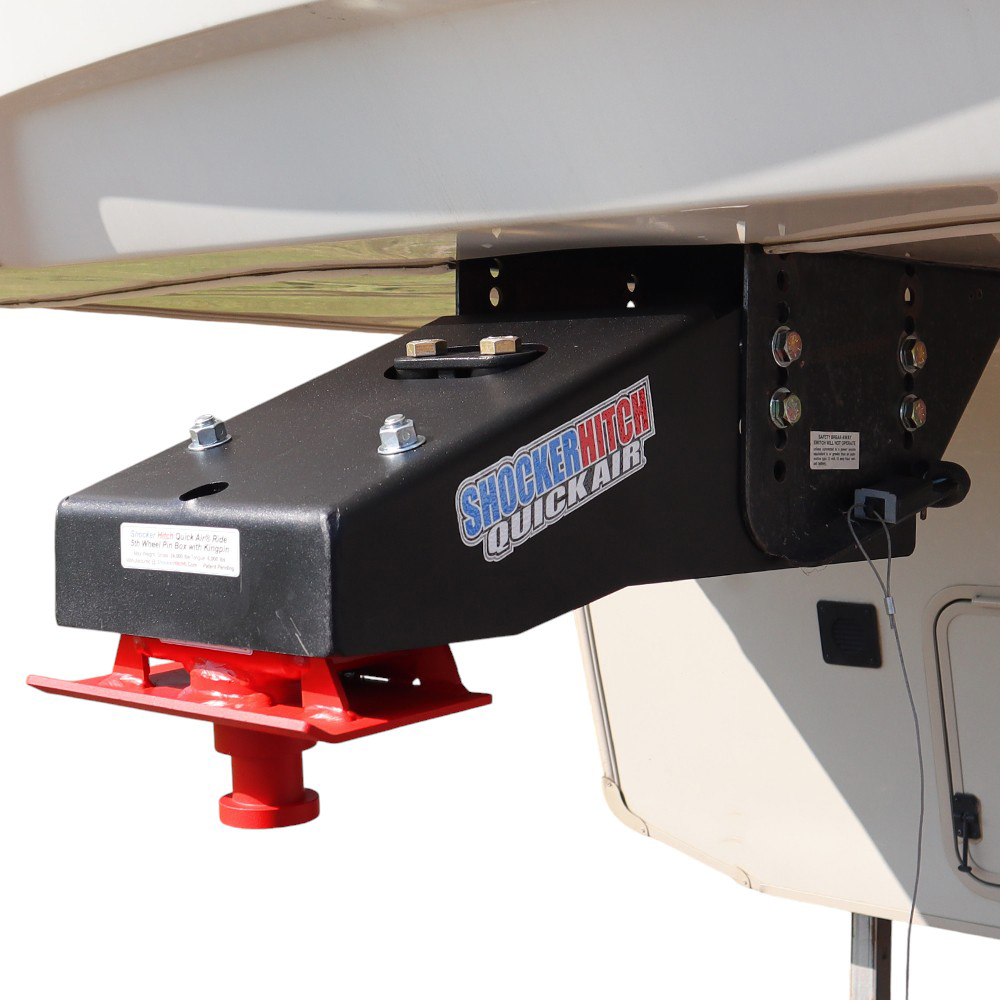
Replaces a compatible factory pin box with an air-ride pin box and kingpin. It connects to a compatible 5th wheel hitch in the truck bed.
Choose this when: you want adjustable air ride while retaining a conventional 5th wheel connection.
Shop Air Ride 5th Wheel Pin BoxesUse a gooseneck ball
Quick Air 5th Wheel to Gooseneck
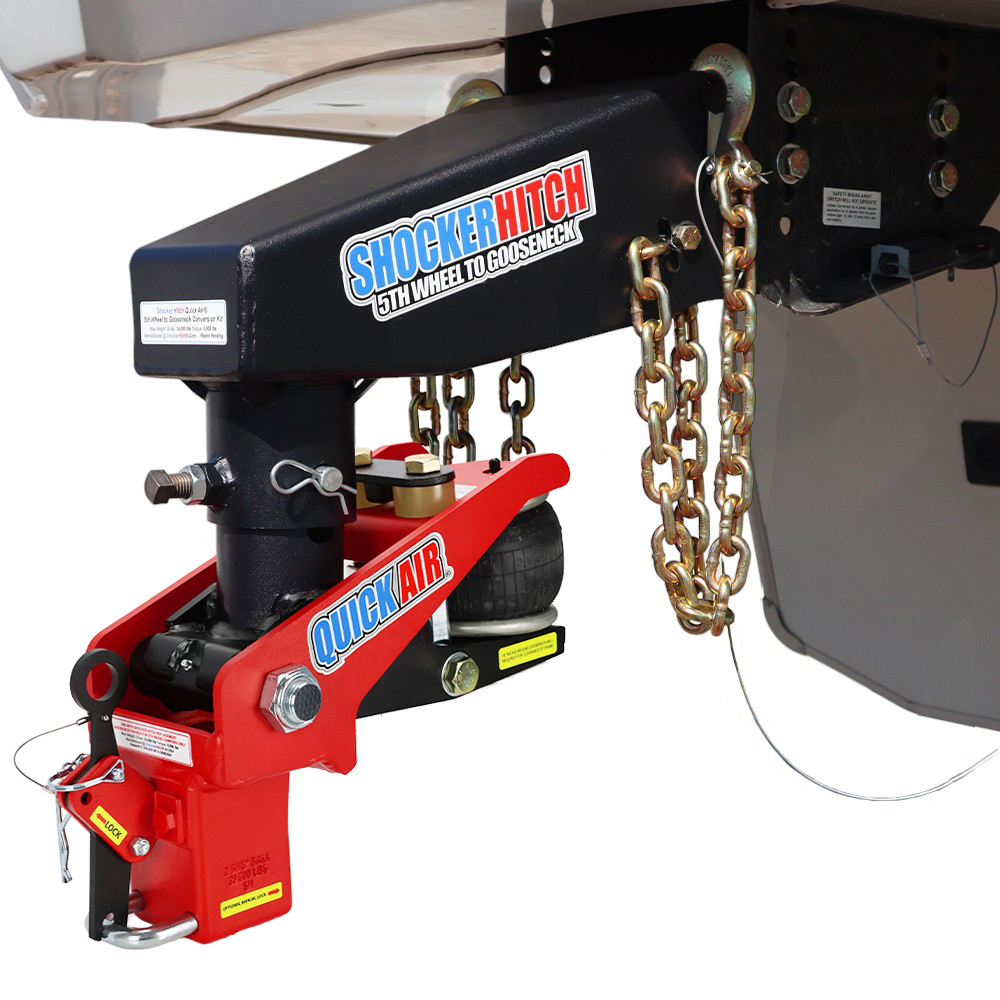
A compatible replacement pin box and air-ride gooseneck assembly connect the camper to a gooseneck ball in the truck bed.
Choose this when: you want an air-ride gooseneck connection for your 5th wheel camper.
Shop Air Ride Gooseneck Conversion KitsYou do not have to convert to a gooseneck to get air ride. Match the option to your existing pin-box model or mounting pattern, loaded camper and pin weight, truck-bed hitch or ball, and turning and bed-rail clearance. Confirm the specific kit’s compatibility and installation requirements.
See the suspension in action
How an Air Ride Receiver Hitch Works
This video shows the receiver-hitch design. Gooseneck Surge and Quick Air camper systems place the air suspension in the gooseneck assembly or pin box.
The air spring gives the towing connection room to move. When road conditions cause the truck and trailer to move differently, the spring compresses and recovers within the hitch’s engineered range of motion.
The key advantage is adjustability. Change the load and you can change the air pressure to match, following your hitch’s setup instructions.
The response depends on trailer weight, tongue weight, air pressure, speed, road conditions and hitch design.
Why Suspension Travel Matters
Stopping movement abruptly creates a sharp impact. Allowing controlled movement manages that force over more distance and time. That is why suspension travel matters at the towing connection.
The direction of travel matters, too. Shocker Gooseneck Surge and Quick Air camper systems focus on fore-and-aft movement to manage chucking. Do not assume every air hitch provides the same amount or direction of suspension travel.
Air ride: suspension travel
The air spring allows engineered movement, with air pressure adjusted for the towing load.
Cushion: limited movement
Rubber or urethane compresses or deforms. Available movement depends on the cushion design.
Solid: rigid connection
Essentially no suspension travel inside the hitch; forces have a direct mechanical path.
Truck Air Suspension vs. an Air Ride Hitch
Truck airbags support the vehicle
Air suspension or helper airbags work with the tow vehicle’s suspension. Depending on the system, they help support rear load, maintain ride height or reduce squat.
An air ride hitch cushions the connection
The air hitch adds suspension movement between the tow vehicle and trailer. Its job is to help isolate road shock, chucking and harsh movement at that connection.
You can have truck air suspension and still have a rigid hitch, or conventional truck suspension with an air ride hitch. Learn about truck squat and load support.
Smoother towing, every mile
What an Air Ride Hitch Does — and Doesn’t Do
An air ride hitch adds adjustable suspension where it matters: between your truck and trailer.
Its benefits go beyond softening one bump. A properly set up air ride hitch helps manage the repeated pushes, pulls, impacts and vibration you feel throughout a tow.
Drastically reduce trailer chucking
A Shocker air ride hitch can drastically reduce the harsh fore-and-aft push-and-pull between the truck and trailer, making towing feel smoother and more controlled.
Absorb road shock and harsh impacts
The air spring compresses and recovers as the hitch moves, helping soften the jolts from rough pavement, concrete joints and uneven roads.
Isolate bounce and repeated vibration
Controlled movement at the hitch helps isolate the truck and trailer from each other instead of passing every movement through a rigid steel connection.
Adjust for different trailer loads
Change air pressure to match your loaded trailer and tongue or pin weight, following the setup instructions for your specific hitch.
Fine-tune towing comfort
Adjustable cushioning lets you tune the hitch response for your towing setup, with less of the tugging and jerking that can make long trips tiring.
Be easier on your truck, trailer and cargo
By helping isolate harsh road inputs at the connection, the hitch reduces the shock passed between the tow vehicle, trailer and what you are hauling.
Explore the benefits of air ride towing or learn more about trailer chucking.
Keep the basics of your towing setup in place
An air ride hitch does not increase any component’s towing rating or correct overloading or improper trailer loading. It does not replace required trailer brakes, weight distribution or sway-control equipment.
Follow the vehicle, receiver, hitch, ball, coupler and trailer manufacturers’ ratings and instructions. The lowest-rated component limits the system.
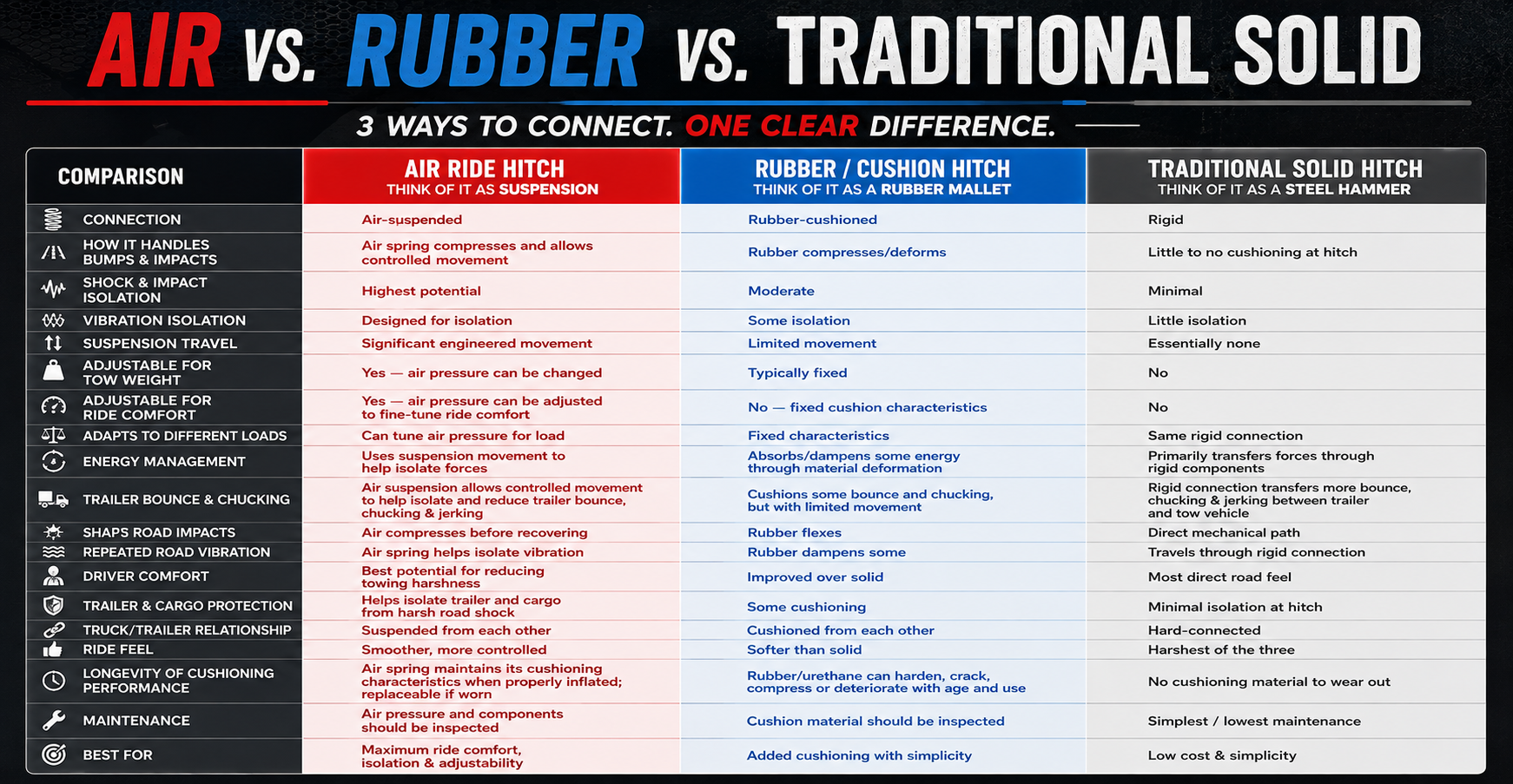
Detailed Air Ride vs. Cushion vs. Solid Hitch Comparison
These are the general differences in cushioning technology. The receiver, gooseneck and 5th wheel sections above explain where the suspension sits and which connections apply.
View the detailed comparison
| What matters | Air ride | Cushion | Solid |
|---|---|---|---|
| Basic design | Air-suspended connection | Rubber / urethane cushioned connection | Rigid steel connection |
| Hitch movement | Engineered suspension travel | Limited cushion deformation | Essentially none |
| Load & ride adjustment | Adjustable with air pressure | Fixed cushion characteristics | No cushioning to adjust |
| Sharp impacts | Air spring compresses and recovers | Cushion flexes | More direct transfer |
| Repeated road vibration | Air spring helps isolate | Cushion helps dampen | Little hitch-level isolation |
| Fore-and-aft chucking | Can drastically reduce trailer chucking | Helps soften movement | More directly transferred |
| Trailer bounce | Controlled hitch movement helps isolate it | Limited cushioning | No additional hitch cushioning |
| Different trailer loads | Air pressure can be retuned | Same cushion characteristics | Same rigid connection |
| Cushioning component wear | Inspect air spring and moving components | Inspect cushion for wear or deterioration | No cushioning material to wear out |
| Maintenance | Check pressure; inspect and service components | Inspect cushion and service components | Inspect and service hardware |
| Complexity & cost | More components; premium price | Moderate complexity; mid-range price | Simplest design; generally lower cost |
| Primary advantage | Ride quality and adjustability | Simplicity with cushioning | Simplicity and cost |
Swipe sideways on small screens. Capabilities depend on the specific hitch and towing setup.
Frequently Asked Questions
Is an air ride hitch better than a solid hitch?
If ride comfort, shock isolation and adjustability matter to you, an air ride hitch offers capabilities a rigid hitch does not. A solid hitch prioritizes simplicity and cost. The best choice depends on how often you tow, the roads you travel and your truck-and-trailer setup.
Is a cushion hitch the same as an air ride hitch?
No. A cushion hitch normally uses rubber or urethane that flexes when force reaches it. An air ride hitch uses an air spring and engineered suspension movement. Both can provide cushioning compared with a rigid connection, but the air system can be tuned by changing air pressure.
Does an air hitch eliminate chucking?
A Shocker air ride hitch can drastically reduce trailer chucking by adding suspension and cushioning at the connection between the tow vehicle and trailer. The air spring helps absorb and isolate the push-and-pull motion that would otherwise pass more directly through a rigid hitch, creating a noticeably smoother towing experience.
No hitch eliminates every towing force under every condition. Trailer design, loading, road conditions, speed, tongue or pin weight and correct hitch setup all affect the results.
Do I still need truck airbags if I have an air ride hitch?
Possibly. Truck airbags work with the truck’s suspension and load support. An air ride hitch cushions the connection between the truck and trailer. Whether your truck needs additional suspension support depends on the vehicle, trailer, loading and manufacturer’s requirements.
Does an air ride hitch increase towing capacity?
No. Adding an air ride hitch does not increase the tow rating of your truck, receiver, ball, coupler or trailer. Stay within every applicable rating; the lowest-rated component limits the complete towing system.
Does an air ride hitch require maintenance?
Yes. Check air pressure and inspect the hitch components as part of normal towing preparation. Follow the setup and maintenance instructions for your specific hitch. A cushion hitch also needs its cushioning material inspected, while a solid hitch has fewer cushioning components to maintain.
Which hitch should I choose if I tow different trailers?
An adjustable hitch is helpful when trailer heights vary. If the trailers also vary in weight, an air ride hitch adds another advantage: air pressure can be adjusted for different loads. Match the hitch to each trailer’s connection: receiver size and drop or rise for bumper pull, stem and coupler fit for gooseneck, or pin-box and truck-bed hitch compatibility for a 5th wheel. Also match every applicable weight rating.
Does air ride help gooseneck trailers and 5th wheel campers?
Yes. Shocker Gooseneck Surge and Quick Air camper systems use adjustable air suspension to help absorb fore-and-aft towing forces and can drastically reduce trailer chucking. Select the system built for your trailer connection and set it up for the load.
Do I have to convert my 5th wheel camper to a gooseneck to get air ride?
No. The Quick Air pin box with kingpin retains a compatible conventional 5th wheel connection. The Quick Air 5th wheel-to-gooseneck kit is a separate option for connecting a compatible camper to a gooseneck ball. Choose according to your camper’s pin-box fit and truck-bed setup.
Find Your Hitch by Trailer Type
Receiver / bumper pull
Compare Air Ride, Impact Cushion and XR solid receiver hitches.
Shop receiver hitches →Gooseneck trailer
Choose a Gooseneck Surge air hitch and coupler that fit your trailer.
Shop gooseneck air hitches →5th wheel camper
Choose an air-ride kingpin pin box or a compatible gooseneck conversion.
Shop 5th wheel camper hitches →Still Not Sure Which Hitch You Need?
We’ll help you narrow it down. Have these details ready:
- Truck year, make and model
- Receiver size or truck-bed hitch / ball setup
- Trailer type and loaded weight
- Approximate tongue or pin weight
- Ball, pintle or kingpin connection
- Drop / rise, gooseneck stem or camper pin-box model
- How often you tow
- Typical road conditions