



When hitching up your pickup truck or tow vehicle for towing, safety should always come first. One of the most important parts of a safe towing setup is making sure your trailer sits level with your tow vehicle. A properly leveled trailer improves handling, braking, stability, tire wear, and overall towing performance. If your trailer is not level, it can shift weight unevenly across your tow vehicle and trailer axles. This imbalance affects steering, braking, traction, and trailer control. In difficult situations, an improperly adjusted ball mount can increase the risk of trailer sway, blowouts, or even loss of vehicle control.
Below is a breakdown of the dangers of towing with your trailer too low (nose-down) or too high (nose-up).
The Dangers of Towing Too Low (Nose-Down)
If your ball mount is set too low, the trailer will lean forward. This creates a “nose-down” situation that drastically alters your vehicle’s weight distribution.
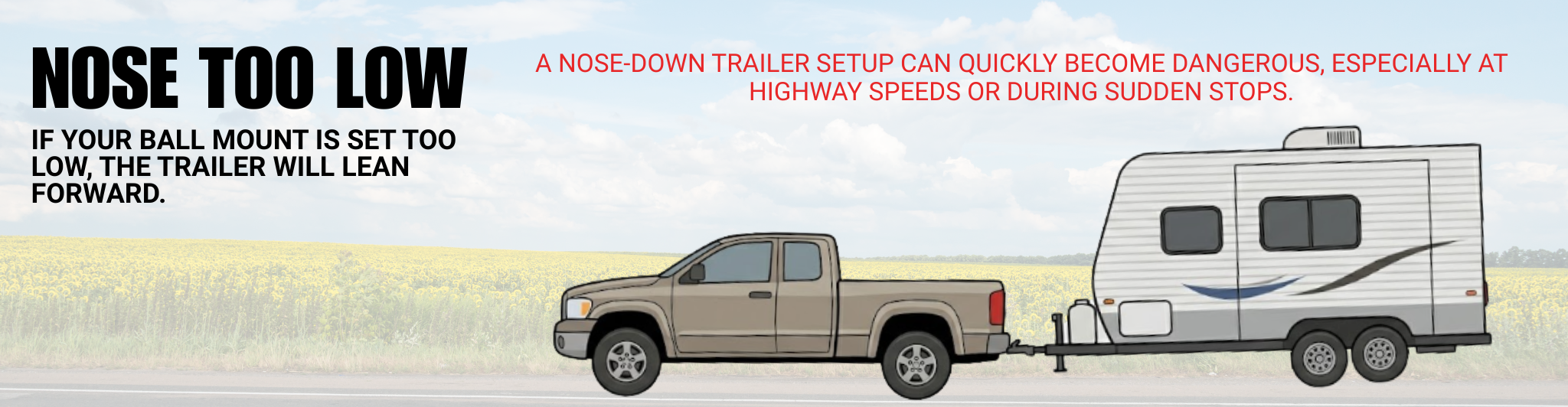
- Excessive Tongue Weight: A low setup forces too much of the trailer’s weight onto the hitch.
- Loss of Front-End Tractor: This excessive downward force acts like a lever, lifting the front end of your tow vehicle.
- Poor Steering and Braking: Because your front tires handle the majority of your vehicle’s steering and braking capabilities, lifting weight off of them results in a dangerous loss of control, reduced stopping power, and a highly unresponsive steering wheel.
Excessive Tongue Weight:
A trailer that sits too low places excessive tongue weight directly onto the hitch and rear suspension of the tow vehicle. Too much downward force can overload your hitch system and rear axle.
Loss of Front-End Traction:
The extra weight pushing down on the rear of the vehicle acts like a lever, lifting weight off the front tires. Since the front tires are responsible for steering and much of the braking, this reduction in front-end traction creates serious safety concerns.
Poor Steering and Reduced Braking:
With less weight on the front tires, steering response becomes sluggish, and braking performance decreases. Drivers may notice:
- Reduced steering control
- Longer stopping distances
- Increased front-end wandering
- Poor handling during emergency maneuvers
A nose-down trailer setup can quickly become dangerous, especially at highway speeds or during sudden stops.
The Risks of Towing Too High (Nose-Up)
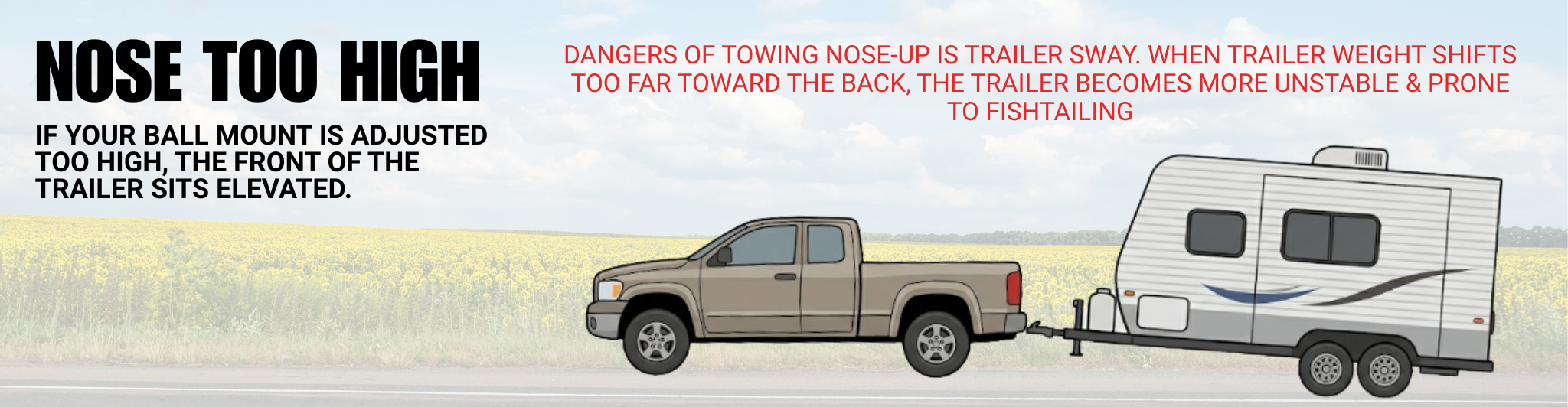
If your ball mount is adjusted too high, the front of the trailer sits elevated. This creates a nose-up towing position that shifts too much weight toward the rear trailer axle.
Rear Trailer Tire Overload:
Improper weight distribution places excessive load on the rear trailer tires. This added strain increases heat buildup, uneven tire wear, and the risk of trailer tire blowouts.
Reduced Rear Tire Traction on the Tow Vehicle:
A nose-up trailer can also reduce traction on the rear tires of your tow vehicle. Less traction means reduced towing stability and less control during acceleration or wet road conditions.
Increased Trailer Sway and Fishtailing:
One of the biggest dangers of towing nose-up is trailer sway. When trailer weight shifts too far toward the back, the trailer becomes more unstable and prone to fishtailing.
Trailer sway can become severe when:
- Driving at highway speeds
- Encountering strong crosswinds
- Passing large trucks
- Making sudden steering corrections
A properly leveled trailer helps keep weight balanced across all axles, dramatically reducing sway and improving towing confidence.

How to Properly Level Your Trailer
To achieve a safe and level towing setup:
- Park your tow vehicle and trailer on level ground.
- Measure from the ground to the top inside edge of your vehicle’s receiver hitch.
- Measure from the ground to the bottom of the trailer coupler while the trailer is level.
- Compare the measurements to determine the correct amount of drop or rise needed.
- Install the appropriate ball mount or adjustable hitch.
A properly adjusted hitch ensures your trailer rides level for safer towing, improved handling, and better weight distribution.
How To Check If Your Trailer Is Level Video
Why Proper Trailer Leveling Is Essential
A level trailer is not just about appearance – it directly impacts towing safety, vehicle control, tire life, braking efficiency, and trailer stability.
Benefits of proper trailer leveling include:
- Improved steering and braking
- Better tire wear
- Reduced trailer sway
- Safer highway towing
- Improved suspension performance
- Better overall towing stability
Before every trip, always double-check your hitch height and trailer angle to ensure your towing setup is level and safe.
How To Level Your Trailer Video
What Happens If Your Trailer Is Not Level Video
Frequently Asked Questions:
Should a trailer be perfectly level when towing? – Yes. A trailer should sit as level as possible while towing to maintain proper weight distribution, safe handling, and reduced trailer sway.
What happens if a trailer is nose-down? – A nose-down trailer places excessive tongue weight on the hitch, reduces front-end traction, and negatively impacts steering and braking.
What happens if a trailer is nose-up? – A nose-up trailer shifts too much weight to the rear trailer axle, increasing the risk of trailer sway, poor traction, and tire blowouts.
How do I know what drop or rise I need? – Measure the height difference between your tow vehicle receiver and the trailer coupler while both are level. The difference determines the amount of drop or rise required. See Video Here!
Ready to properly equip your vehicle? Read our step-by-step guide to figure out exactly ADD LINK How Much Drop or Rise you need for your ball mount to guarantee a safe, level tow every time.
How To Determine How Much Drop You Need for A Level Trailer
Conclusion
Proper trailer leveling is one of the most important parts of safe towing. Whether you are hauling a utility trailer, enclosed trailer, camper, or equipment trailer, taking the time to correctly adjust your ball mount can dramatically improve safety, handling, and towing performance.
Always tow at the correct level, check your hitch setup before every trip, and use the correct drop or rise to keep your trailer balanced and under control.