



Read more https://shockerhitch.com/trailer-towing-tips/what-size-drop-ball-mount/
Learn how to know what size drop or raised hitch you need for your vehicle and trailer. Here is a quick way to know what size drop or rise you need to get for your receiver hitch to tow a bumper (tag-a-long) trailer. If you have a lifted truck or a taller-than-stock pickup, you need to know what size drop ball mount you need to get for a level towing experience with your pickup and trailer. Here is a quick way to know what size drop you need to get for your receiver hitch. If you have a camper with a taller trailer tongue, you may need to get a raised ball hitch for your receiver hitch. Here is a quick and detailed what to determine the amount of drop or rise you need for the hitch for your receiver hitch. If the tow vehicle receiver hitch height at the top is greater than the trailer coupler height at the bottom of coupler, you will need a drop hitch. If the tow vehicle receiver hitch height at the top of the receiver is lower than the trailer coupler height at the bottom of the coupler, you need a hitch with a rise, also called a raised hitch. By dialing in the adjustment with your tow hitch and trailer, you create a level connection that improves handling and safety. Accuracy here makes all the difference in how comfortably your tow rig and trailer tow together.
Having a level towing setup is important. If your ball mount is set too low, that can take the weight off the front of your vehicle and put too much tongue weight on the setup, resulting in poor steering and braking. If your ball mount is set too high, it will displace the weight, putting too much on the rear trailer tires, causing your trailer to sway. That is why it is so important to have a level towing set up between your pickup or tow vehicle and the trailer you are towing.
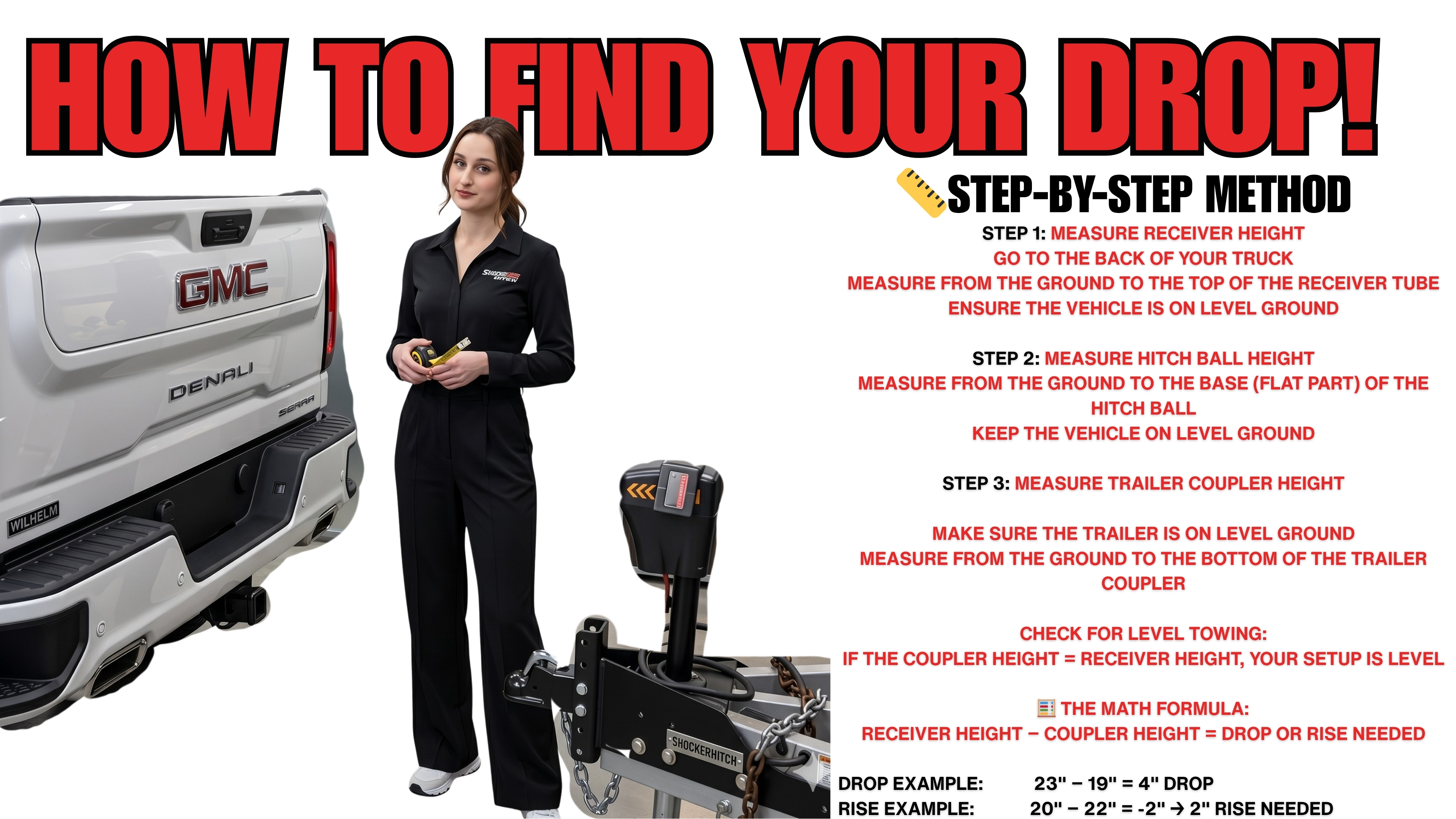
How Much Drop or Rise You Need (Quick Method)
- Measure to the top of the vehicle receiver hitch (Vehicle Should Be Level)
- Measure to Bottom of Trailer Coupler (Trailer Should Be Level)
- Math: Top of Receiver Minus Bottom of Trailer Coupler Equals Drop or Rise Needed. Example: Top of Receiver 23″ | Bottom of Trailer Coupler: 19″. (23″ – 19″ = 4″ of Drop Needed).
How Much Drop or Rise You Need (Detailed Method)
Step 1.
- Go to the back of your pickup and measure from the ground to the top of your receiver tube.
- Make sure your pickup or tow vehicle is on level ground.
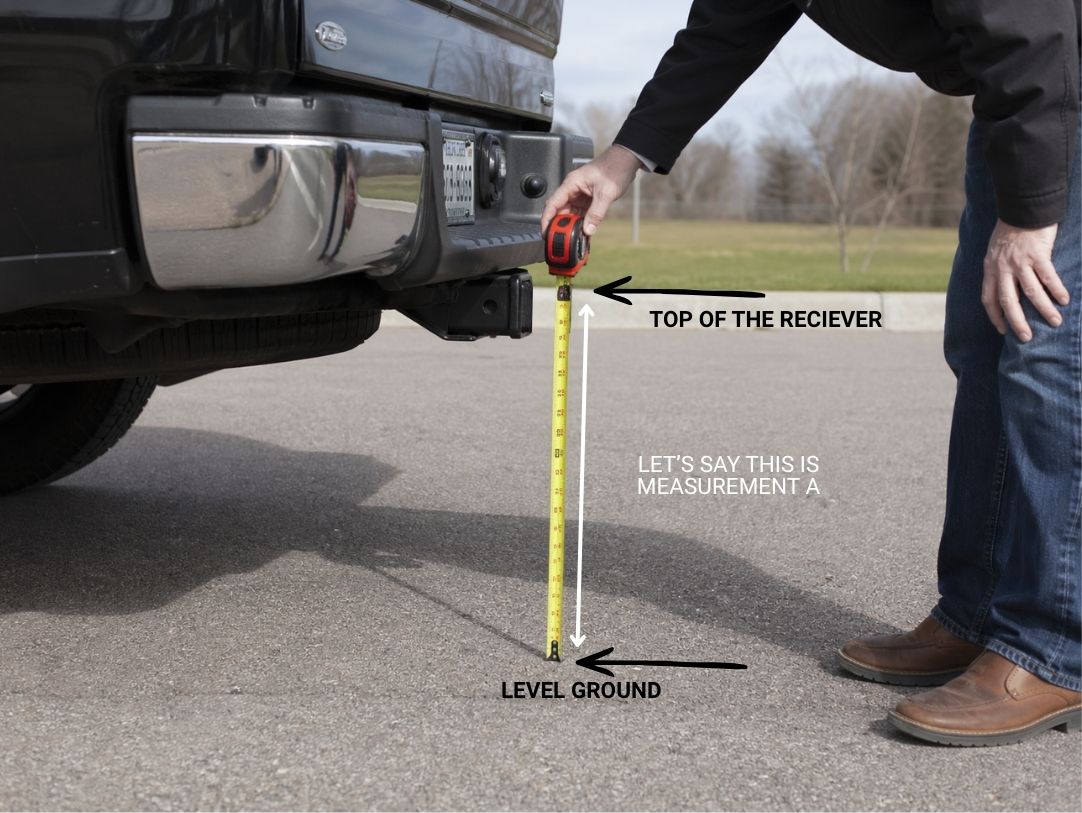
Figure A
Step 2.
- Measure from the ground to the base of the hitch ball (the flat bottom part of your ball).
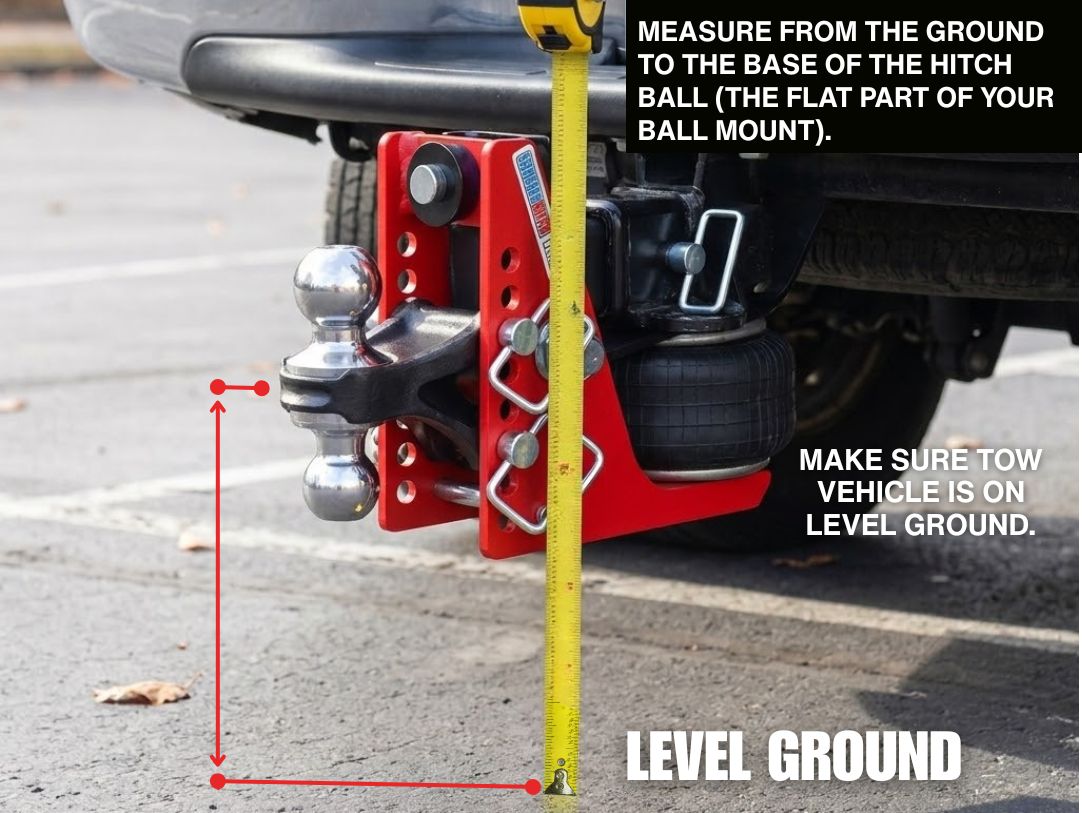
Figure B
Step 3.
- Make sure your trailer is on level ground.
- Go to the trailer, measure from the ground to the bottom of the trailer coupler.
- If the trailer coupler height equals the height of the top of the receiver tube on your tow vehicle, then you are tow level.
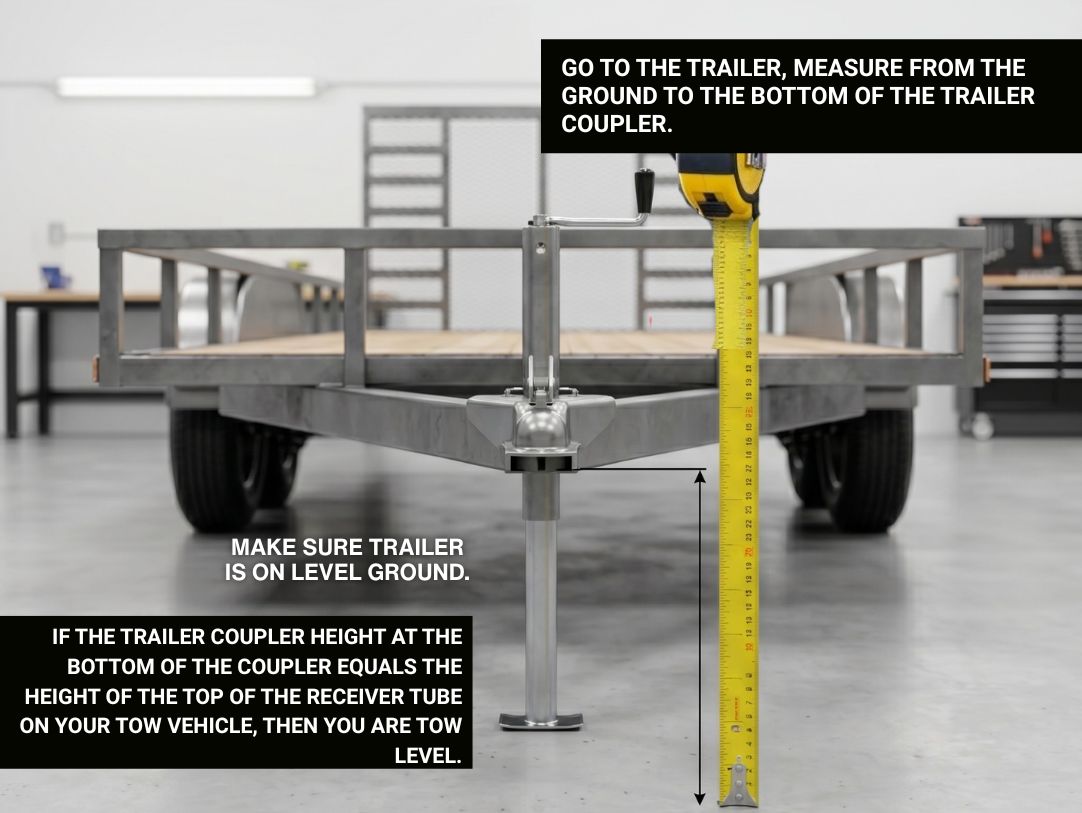
Figure C
The Math
Receiver Tube Height – Hitch Ball Height = Current Drop or Rise.
Example of Drop: 23″ from Top of Receiver to Ground – 19″ from Bottom of Coupler to Ground. (23″ – 19″ = 4″) = 4″ Drop.
Example of Rise: 20″ from Top of Receiver to Ground – 22″ from Bottom of Coupler to Ground. (20″ – 22″= -2″) = -2″ Drop, which means you need 2″ of Rise.
*One thing to consider is that the back of the truck is going to come down when you hook up the trailer coupler to the hitch ball because of the weight that the trailer tongue is putting on your tow vehicle. If you have air suspension, just add air to level. If you don’t, you would raise the ball the amount of inches the tow vehicle squats.
Step 4.
Last but not least, hook up your trailer & double-check that you are level.
If not, you can use the adjustable ball height to raise it an inch or drop it an inch as needed.
Note: One thing to consider is that the back of the truck is going to come down when you hook up the trailer coupler to the hitch ball because of the weight that the trailer tongue is putting on your tow vehicle.