



No matter what you’re towing, trailer sway is one of the most preventable and dangerous threats on the road. The best way to safely tow a trailer is to understand how trailer sway can occur and what you can do to prevent it. The top reasons for trailer sway are tool little tongue weight and poor load placement. Other common causes causing trailer sway includes wrong tire pressure, speed, wind, loose fitting hitch with slop, misaligned axle and suspension issues in tow vehicle or trailer. Here is a guide to help solve your trailer sway problems. We wish you safe and more travels.
What is Trailer Sway?
Trailer sway is when the trailer begins to move side to side behind the tow vehicle. This is not a normal movement and can lead to a whipping effect. It feels like the trailer is pushing and pulling the tow vehicle around. Some people sway is feels like it is “wagging” the vehicle around. Ultimately sway occurs when too much weight is displaced and put onto the rear trailer tires.
What is the Best Way to Prevent Trailer Sway?
The best way to prevent trailer sway is to have a level trailer, with the weight of the trailer properly distributed. In addition the proper trailer load and balance, the proper hitch set up is important along with using the properly rated tow vehicle for the trailer being towed.
What Causes Trailer Sway?
The 5 main things that can cause trailer sway include improper trailer load and balance, improper hitch setup, trailer condition factors, tow vehicle factors and driving & road conditions.
Improper Trailer Load & Balance
- Tongue Weight is Too Low: Try to set your trailers loaded weight that is on the ball to about 10% of the trailers total loaded weight. Up to 15% is ok. If you have too little tongue weight, then there is too much weight on the rear trailer tires. That makes the trailer want to move side to side while being towed, which causes the trailer sway. Note: If there is too much tongue weight, that takes too much weight off the front tires of the tow vehicle, which reduces steering and braking.
- Cargo is Too Far Back: If you have too much weight behind the axle(s) of the trailer it causes it to function like a pendulum and swing back and forth because of gravity and momentum, this movement of weight then increases sway.
- Trailer Not Level: The trailer should be attached to the tow vehicle with the trailer being level. If the tongue of the trailer is higher, it puts extra weight on rear trailer tires, which causes sway. If the tongue of the trailer is lower, it puts too much weight on the rear of the tow vehicle which reduces steering and braking. Both are amplified when you drive over a bump. So make sure trailer is level when hooked up to the tow vehicle.
- Loose or Shifting Cargo: If your trailer has loose, sliding, shifting or improperly tie-down items moving around on or inside the trailer, this shifting or loose cargo can suddenly trigger sway. Make sure gear is properly secured to prevent moving, shifting or sliding.
- Side-to-Side Load is Imbalanced: If one side of the trailer is heavier than the other, the trailer can lean & start swinging, vibrating and oscillating, which is ultimately transferring weight around, which can trigger sway.
Improper Hitch Setup
- Incorrect Hitch Height: A ball that is too low or too high change the tongue weight and overall stability. Make sure trailer is level with tow vehicle.
- Sloppy or Loose Fitting Receiver or Hitch: Slopping fitting hitch or ball mount between the tow vehicle receiver, hitch shank or ball mount can amplify weight movement.
- Wrong Coupler or Ball Size: Just because if hooks up, doesn’t mean it is a good fit. A poor fitting coupler or hitch ball can create instability and extra movement. Make sure the hitch ball and coupler are that same size and manufactured by a company with a good reputation.
Driving & Road Conditions
- Towing Speed: The faster you are towing increases the chances of sway and makes it hard to correct.
- Rough Roads & Bumps: The condition of the road you are towing on can shift load, weight and amplify movement through the hitch. Uneven concrete highways, gravel roads, pot holes, ruts and bumps can increase the movement of weight.
- Crosswinds: Winds blowing or gusting against the side of the tow vehicle & trailer can push the trailer into sway. Slowing down in will help with reducing sway in high crosswind conditions.
- Abrupt Braking or Steering: Sudden changes in how you are driving can trigger or worsen trailer sway. Fast braking and steering can trigger sway.
- Passing Large Trucks, Semi Trailers & RV’s: Air turbulence from large vehicles and trailers can trigger sway because of shifting the weight.
Trailer Condition Factors
- Low or Uneven Trailer Tire Air Pressure: Underinflated and unevenly inflated trailer tires will reduce stability and can make sway even worse. Always properly set the trailer tires air pressure.
- Axle Misalignment: A trailer with bent or misaligned axle(s) will make the trailer track poorly. Ensure trailer axle(s) are properly aligned and not bent.
- Damaged Trailer Suspension: Worn shackles, bad springs, loose U-bolts, worn bushings, ungreased hubs and suspension wear can cause the trailer to tow poorly and unsafely. Always make sure the trailer is properly maintained
- Trailer Brake Issues: Weak or uneven trailer brakes can create sway instead of helping control it. Inspect brake drums and shoes to cracks, uneven wear and grooved drums. Make sure brake controller is properly set and working. Make sure breaks are working evenly. If your trailer is pushing the tow vehicle, they are not working or set properly.
Tow Vehicle Factors
- Tow Vehicle Tire Pressure is Low: Tire pressure that is too low or uneven reduce control of the tow vehicle and stability. Make sure tires are properly inflated for the towing weight of the trailer.
- Tow Vehicle is Too Light for the Trailer: Make sure the tow vehicle and the receiver hitch on the tow vehicle is rated for the gross trailer weight of the trailer. Gross trailer weight is the trailer weight plus the weight of the cargo. If the tow vehicle is not rated to the gross trailer weight of the trailer that chances of sway increase greatly. It is unsafe. Towing capacity is always limited by the lowest rate component.
- Tow Vehicle Suspension Issues: Old or worn shocks and springs can make the towing set up less stable. In addition suspension alignment problems can also make the entire towing set up less stable.
Note: When driving roads all the bumps, ruts and uneven roads shift weight. This is either adding or reducing tongue weight while you are towing. Bigger the bump, bigger the shift. Our air receiver hitch absorbs this, which reduces sway. It has been tested and proven to reduce sway. Having a level towing set up is important. When you are towing a trailer, the road bumps and jerks displace the weight. An air hitch absorbs this and cushions this so when a bump causes the weight to come off the front of your vehicle which can put too much tongue weight on it. An air hitch absorbs this. Without an air hitch this can results in poor steering and braking. When a bump causes the weight to be displaced and put too much weight on the rear trailer tires. An air hitch absorbs this. Without an air hitch, this can cause your trailer to sway. That is why it is so important to have a air ride hitch along with a level towing set up between your pickup or tow vehicle and the trailer you are towing. It’s proven to be safer and smoother.
How to Control Trailer Sway While Driving:
- Stay calm. Rapid steering or braking can increase sway.
- Slowly lift your foot off the gas or accelerator pedal slowly and gradually.
- Do not step on the brake hard unless you’re in danger of hitting something.
- Firmly hold the steering wheel in a straight-ahead position.
- Manually apply the trailer brakes gradually if you have a brake controller
- Hold the vehicle steady until it stabilizes
- Once stable, pull over safely and find a safe place to park so you can rearrange your trailer contents, heavier items towards the front of the trailer. Review the causes of sway noted above and take the correctly actions. The number one fix is a level trailer with the weight properly distributed along with the appropriate tongue weight.
How to Prevent Trailer Sway:
- Slow down.
- Try to avoid any sudden or rapid steering or braking maneuvers.
- Load your trailer with 60% of the load spread evenly over the front portion of the trailer.
- Don’t exceed the trailer’s maximum gross weight, the tow vehicle towing capacity or the hitch capacity.
- Make sure your trailer is level with the tongue weight on the hitch ball 10% to 15% off the gross trailer weight.
- Check your tire pressure to make sure both the tow vehicle & trailer have the proper air pressure
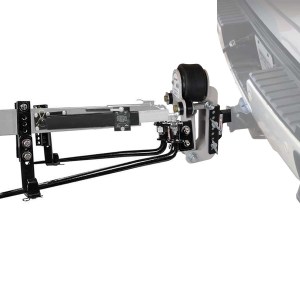
- Install an air receiver hitch. An air hitch will naturally reduce the tendency of trailer sway by absorbing the bumps and shift of weight put on and taken off the tongue weight while you are towing a trailer.
- Install sway control friction sway arm bar kit and/or a weight distribution hitch.
- Install sway control towing kit that has a hitch and ball mount with sway bar mounting tabs along with friction sway control arm bars.
- Contact us, we would be glad to help
FAQ
FAQ: Do I Need a Weight Distribution Hitch?
FAQ: What Receiver Hitch Size Does My Truck Have?
FAQ: How Do I Measure My Receiver Hitch Size?
FAQ: What’s the Benefit of an Air Hitch?
FAQ: How Much Drop or Rise Do I Need?