



Whether you tow campers, utility trailers, enclosed trailers, horse trailers, or heavy equipment, keeping your hitch ball lubricated is a simple maintenance step that can extend the life of your towing setup.
6 Reasons to Grease Your Hitch Ball
- Reduce Friction & Heat: Metal-on-metal contact creates immense heat. High-quality hitch grease acts as a barrier, allowing the coupler to rotate smoothly.
- Prevents Excessive Wear & Tear: Without lubrication, the steel on your ball and the inside of your coupler literally grind each other down, leading to a loose fit over time.
- Eliminates Binding & Jerking: Proper lubrication ensures the trailer follows your vehicle’s movements fluidly, especially when navigating tight corners or uneven terrain.
- Quiet Your Towing Experience: That “creaking” or “groaning” sound coming from your rear bumper? That’s the sound of dry metal. Grease provides a silent, smooth ride.
- Effortless Hookups & Disconnects: Grease prevents the coupler’s locking mechanism from “seizing” onto the ball, making it much easier to pull the lever and drive away.
- Corrosion & Rust Protection: A layer of grease seals the metal from moisture and road salt, preventing the rust that leads to structural failure.
Pro Tip for Better Hitch Ball Maintenance
Always wipe off the gritty grease before applying a fresh layer. Trapped dirt can act like sandpaper, defeating the purpose of the lubricant!
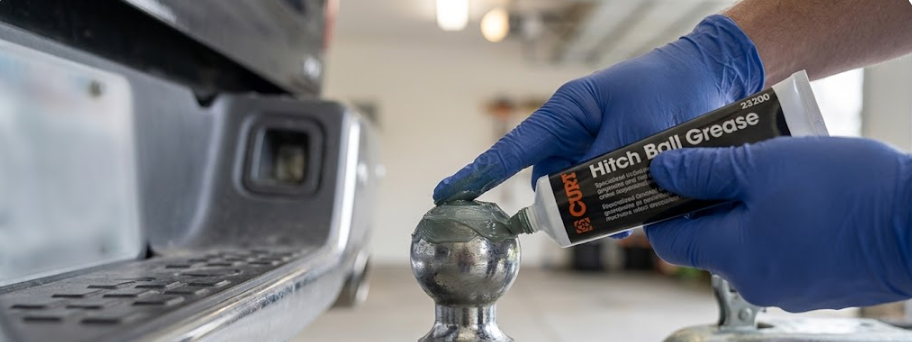
What Kind of Grease Should I Use?
Don’t just use any household lubricant. Look for a high-pressure water-resistant grease or specialized hitch ball lubricant. These are designed to stay in place even under heavy loads and rainy conditions.
How Often Should You Grease Your Hitch Ball?
You Should Grease Your Hitch Ball:
- Before long towing trips
- After driving in rain or snow
- When you notice squeaking
- After cleaning your towing equipment
- Anytime the hitch ball appears dry.
Why Grease Your Hitch Ball Video