



There are two main types of horse trailers. To effectively compare bumper pull and gooseneck horse trailers, it is best to evaluate several key metrics. These include hitch placement, type of hitch, tow vehicle compatibility, maneuverability, weight, overall costs, and horse capacity, as well as living quarters, safety, legal regulations, and long-term durability. The simplest way to understand it is that bumper-pull and gooseneck are the two trailer types, while straight-load, slant-load, stock, living-quarters and the others describe the trailer’s layout or design style.
Bumper Pull Horse Trailers
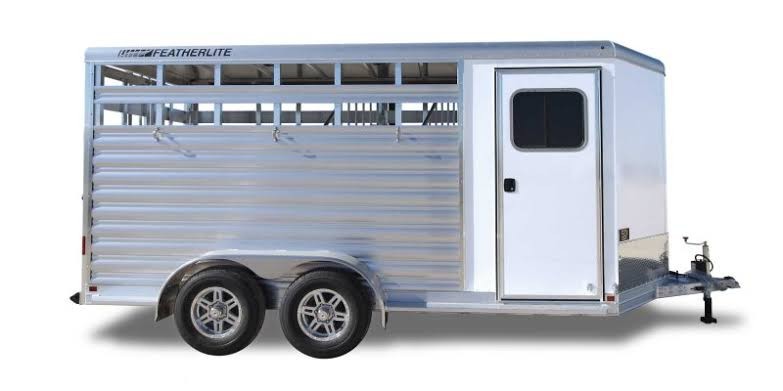
Bumper pulls are the simplest type of trailer and least complicated. Bumper pull horse trailers are towed directly behind a vehicle equipped with a receiver hitch, connected by a hitch and ball coupler on the front of the trailer’s a-frame. Bumper-pull horse trailers are generally more compact than goosenecks and rarely feature full living quarters. A bumper pull is often the better choice when you want lower cost, simpler hookup and full use of the truck bed. It is usually easier for occasional towing and works well for lighter trailers. A properly rated weight-distribution or cushioned air hitch can also improve the stability, ride quality and control of a bumper pull setup.
Styles of Bumper Pull Horse Trailers
- Straight-load
- Slant-load
- Reverse-load
- Box-stall
- Stock or livestock
- Step-up
- Ramp-load
Bumper Pull Horse Trailer Advantages
More Tow Vehicle Options: Depending on the trailer’s loaded weight, some bumper-pull models can be towed by a properly equipped SUV, half-ton pickup or heavy-duty truck.
Full Use of Truck Bed: Because the hitch is behind the vehicle, the pickup truck’s bed and cargo area remains available for normal use. And having a topper or tonneau cover won’t interfere with towing.
Lower Purchase Price: Bumper-pull horse trailers are generally more affordable than comparable gooseneck trailers.
Easier Hookup & Disconnect: The rear hitch and coupler connection is easier to hook up. Vehicles equipped with back up camera’s make it even easier..
Easier Trailer Storage: Since they are smaller size, finding a place to park and store them is simplier..
Good For Occasional Hauling: A bumper pull horse trailer is often practical for shorter trips and smaller numbers of horses.
Good For 1 or 2 Horses: If you only have one or two horse, it is much simpler to load, hook up and tow for shorter trips.
Bumper Pull Horse Trailer Disadvantages
Lower Weight & Horse Capacity: Bumper-pull horse trailers are generally best suited to lighter loads and fewer horses. Typical weight ranges are 4,000 lbs to 10,000 lbs GTW.
More Sensitive to Properly Loading & Weight Distribution: Horses, gear and equipment must be loaded correctly to maintain proper tongue weight and trailer balance.
Greater Potential for Sway and Chucking: Because the hitch is located behind the rear axle, trailer movement can exert more leverage on the tow vehicle. If the hitch and trailer are not level or the weight not distributed properly, the chances of trailer sway and chucking increase.
Possible Rear-End Squat: Excessive tongue weight can lower the rear of the pickup truck or tow vehicle and reduce weight on the front axle. If this is the case, you may need to add a weight-distribution hitch or a rear air suspension kit for your tow vehicle to handle the tongue weight.
Limited Living Space: Full living quarters are less common with a bumper pull trailer because of practical weight and length limitations.
Can Have a “Whip” Effect on Horses: Because the weight hangs off the very back of the truck, when a horse moves, it acts like a lever on your rear axle. This triggers trailer sway, “chucking,” and that dreaded tugging feeling in your steering wheel.
Trailer Bounce: Sometimes you will experience trailer bounce with a bumper pull trailer, particularly if the trailer is not level or the weight is not properly distributed. This can fix reduced or fixed with an air ride receiver hitch.
Understanding Bumper Pull Trailer Dynamics
A bumper-pull horse trailer places its tongue weight behind the pickup truck or tow vehicle’s rear axle. When the trailer is properly matched, loaded and hitched, this setup can be safe and dependable. However, too much tongue weight can cause the rear of the vehicle to squat and reduce the weight carried by the front axle. This imbalance can create trailer sway, as well as negatively affect steering, braking, headlight aim and overall stability. Because the connection is behind the axle, movement from the trailer and horses may also contribute to bouncing, sway and forward-and-back chucking. This severe imbalance is exactly what amplifies “the whip effect,” leading to excessive bouncing, dangerous trailer sway, and exhausting driver fatigue. If your tow vehicle is squatting under the load, a standard ball mount isn’t enough; you will need to add rear air suspension to your tow vehicle or a weight distribution hitch to leverage that weight back onto the front axles and restore safe control.. Proper loading, adequate tongue weight, correctly inflated tires, an appropriate brake controller and a properly rated towing system remain essential. Using a air receiver hitch or an air ride weight distribution hitch can also fix or greatly reduce these issues.
Gooseneck Horse Trailers
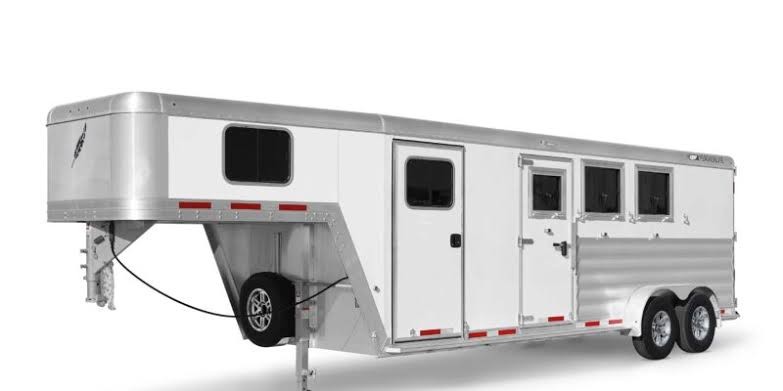
For equestrians hauling multiple horses or traveling long distances, gooseneck horse trailers are overwhelmingly the preferred choice. The secret lies in the hitch placement. Because a gooseneck hitch and gooseneck coupler anchors to a gooseneck hitch ball that is generally installed directly over the rear axle of your pickup truck. That difference in connection point changes how the trailer handles and how much weight it can safely carry. This connection point distributes the trailer’s pin weight more directly through the truck’s frame and rear axle area. It also reduces the leverage created by a bumper-pull connection located behind the axle. The result is typically greater towing stability, higher capacity and less sensitivity to trailer movement. Gooseneck horse trailers are a popular choice for hauling multiple horses, carrying substantial equipment and traveling long distances. Their additional space also makes them well suited for dressing rooms, tack storage and full living quarters.
Styles of Gooseneck Horse Trailers
Living-quarters
Straight-load
Stock or Livestock
Slant-load
Reverse-load
Head-to-head
Box-stall
Step-up
Ramp-load
Dressing-room
Gooseneck Horse Trailer Advantages
Greater Horse Capacity: Gooseneck horse trailers are well suited for hauling three or more horses.
Improved Stability: The gooseneck hitch and coupler location connecting to a gooseneck ball in the center of the truck bed provides a more balanced and stable towing experience than a bumper-pull connection.
Reduced Sway and Chucking: Positioning the connection in the center of the truck bed over the truck’s rear axle reduces the trailer’s leverage on the tow vehicle. This creates a more stable, controlled towing experience with less side-to-side sway and forward-and-back chucking than a typical bumper-pull setup. Learn more about trailer chucking.
More Storage: Gooseneck horse trailers are larger and have more room forgear, larger tack rooms, dressing rooms and equipment.
Living-Quarter Options: Gooseneck horse trailer designs provide the space similar to a camper including beds, kitchens, bathrooms and other overnight accommodations.
Tighter Turning Capability: A gooseneck trailer can pivot over the truck bed, allowing tighter turns than many drivers expect from a trailer of its size. Despite the size, they are relatively easy to maneuver
Higher Towing Capacity: Gooseneck trailers can be built to carry more horses, supplies and living accommodations. Typical weight ranges are 7,000 lbs to 25,000 lbs GTW.
Gooseneck Horse Trailers Disadvantages
Higher Purchase Cost: Gooseneck horse trailers generally cost more that bumper full because they are generally larger. Also more money when equipped with living quarters or higher end upgrades..
Requires a Suitable Pickup Truck: The truck must have the necessary payload, axle, tire and towing ratings for the trailer’s fully loaded weight.Typically a 3/4 ton, 1-ton or dually pickup truck.
Uses Truck Bed Cargo Space: Since the gooseneck hitch and coupler along with the gooseneck hitch ball, take up of the bed and limit cargo space. If you have a topper you will have to remove it. Rollup, retracting and select folding tonneau covers can be used, but will have to be opened past the gooseneck connection when hooked up.
Larger Overall Size: A gooseneck horse trailer is generally larger and longer than a bumper pull. It may be more trailer than necessary for someone hauling only one or two horses.
More Complicated Installation: To tow a gooseneck trailer, the pickup truck requires a properly installed and rated in-bed gooseneck hitch and gooseneck hitch ball.
Different Backing Response: A gooseneck horse trailer pivots differently than a bumper-pull trailer, so drivers may need time to become comfortable maneuvering it.
Potential for Forward & Back Chucking: Although gooseneck horse trailers generally experience less sway than bumper-pull trailers, their rigid connection can transfer forward-and-back movement, road shock and jerking directly between the gooseneck trailer and truck. This chucking may become more noticeable with heavier trailers, uneven roads or shifting horses. A properly adjusted air-ride gooseneck coupler can help absorb this movement and provide a smoother ride for the driver, truck, trailer and horses.
Understanding Gooseneck Trailer Dynamics
The downward force a gooseneck trailer places on the gooseneck hitch and coupler is commonly called pin weight or vertical load. It is often approximately 15% to 25% of the gooseneck trailer’s loaded weight, although the correct amount depends on the specific trailer and manufacturer. Because this weight is carried in the truck bed near the rear axle, the truck must have enough capacity.
- Payload Capacity
- Rear Gross Axle Weight Rating
- Tire and Wheel Capacity
- Gooseneck Hitch & Coupler Capacity
- Gross Combined Weight Rating
A truck can be within its advertised towing capacity while still exceeding its payload or rear-axle rating. The best way to verify the setup is to weigh the fully loaded truck and trailer at a certified vehicle scale.
Best Practices for Towing Horses
Horses are live cargo and continuously adjust their weight while the trailer is moving whether they are in a bumper pull or gooseneck trailer. In a multi-horse trailer, several horses shifting at once can create noticeable forces through the trailer and hitch. Slant-load, straight-load and box-stall configurations may each affect how horses balance. Best practices include:
- Accelerate gradually
- Brake early and smoothly
- Take turns slowly
- Leave additional following distance
- Avoid sudden lane changes
- Stop periodically on long trips
- For the best possible ride and towing experience for horses, upgrade to a gooseneck air hitch
FAQ
- Best Hitch for Horse Trailers
- Do I Need an Offset Gooseneck Coupler?
- Air Ride vs Cushion vs Solid Hitches
- Advantages of Air Hitches
- How to Back Up a Gooseneck Trailer?
- Do I Have a Gooseneck or 5th Wheel?
- Understanding Towing Capacity
- Shocker Gooseneck Hitch Uses
- Best Types of Gooseneck Balls
- Why Grease Your Hitch Ball?
- How To Level Trailer
- How To Fix Truck Squatting
- Type of Round Gooseneck Stems
- Air Ride Gooseneck Couplers by Trailer Brand